

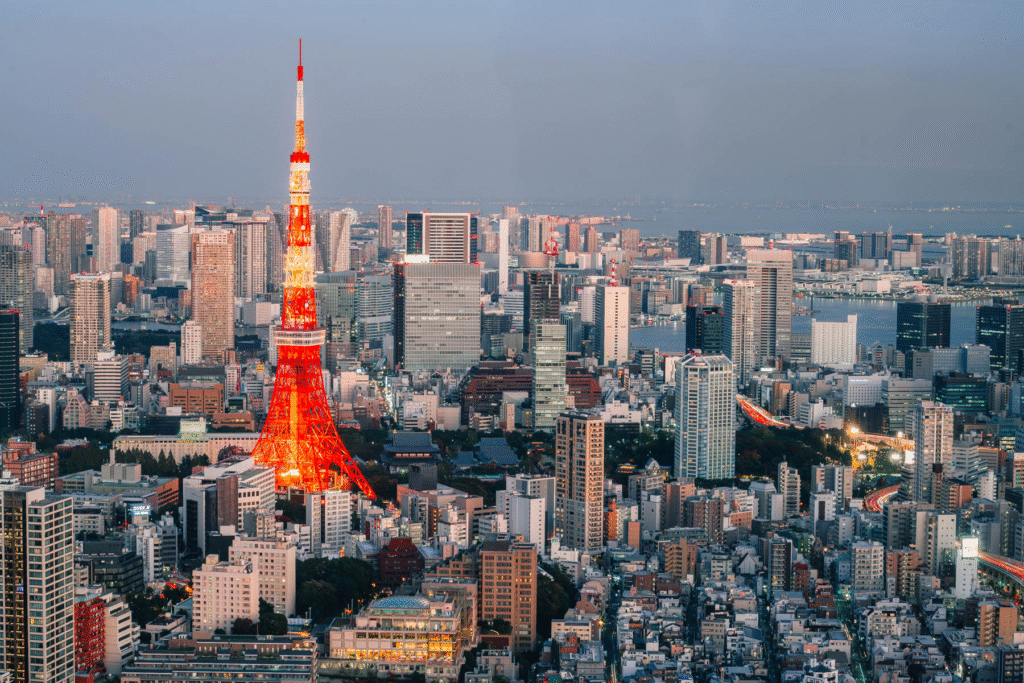
Tokyo has a way of making you feel like anything is possible. You can buy a perfectly engineered egg sandwich from a convenience store at three in the morning, find a café staffed entirely by cats, and stumble upon a vending machine dispensing fresh flowers on a quiet residential street. The city operates at a level of logistical sophistication that is genuinely impressive — until, suddenly, it does not.
Because for all its brilliance, Tokyo has a few blind spots. Things that feel completely ordinary back home can be surprisingly difficult to track down here. Not impossible — just elusive in ways that nobody warns you about before you arrive. If you have ever stood on a perfectly modern street corner feeling completely stumped by something that should be simple, this guide is for you.
Here are seven things that catch foreigners off guard in Tokyo, and — more importantly — where to actually find them.
When You Cannot Find Wi-Fi and Your Phone Is Running Out of Data

Japan has an international reputation as a technological powerhouse, and in many respects that reputation is entirely deserved. But the country also has a complicated relationship with public Wi-Fi, and visitors who expect to hop seamlessly between free networks the way they might in other major cities can find themselves frustrated fairly quickly.
The good news is that the situation has improved considerably in recent years. Tokyo Metro now offers a free Wi-Fi service across its network — look for the marked connection zones at stations, register once, and you can reconnect as many times as you need throughout the day. Major chains like Starbucks and McDonald’s also offer free Wi-Fi, though both require a one-time registration process that works best if you set it up before you desperately need it rather than in the moment.
For a more reliable long-term solution, a pocket Wi-Fi device or a local SIM card makes daily life in Tokyo significantly less stressful. OMORI WiFi at https://omoriwifi.com/ is a solid option for both — particularly useful if you are new to Japan and still sorting out your phone situation. Having consistent connectivity from day one removes a low-level anxiety that can otherwise follow you around the city.
When Every Café Table Is the Size of a Paperback Novel
This is a very real phenomenon. Tokyo’s cafés are often wonderfully atmospheric — good coffee, interesting design, a pleasant buzz of activity — but the tables can be comically small. If you need to open a laptop, spread out some documents, or simply enjoy your drink without performing some kind of spatial puzzle, the standard café setup can feel limiting.
The good news is that Tokyo has excellent options for people who need actual working space. Mojo in Kagurazaka offers a relaxed, generously proportioned environment that works well for longer stays. The Tower Records Café on the second floor in Shibuya is another reliable choice — more space, good atmosphere, and centrally located. For those who want something more formally designed for work, the Creative Lounge MOV inside the Hikarie building in Shibuya offers rentable large desks in a beautifully designed space.
As co-working culture has grown in Tokyo, the options have expanded significantly. Many neighborhoods now have dedicated co-working spaces that offer day passes — worth researching for your specific area, as the quality and pricing vary considerably.
When You Find a Good Spot but There Is Nowhere to Charge Your Laptop
You have found the spacious table. The coffee is good. You open your laptop and — the battery icon is orange. This particular frustration is not unique to Tokyo, but finding a power outlet in a Japanese café can require the kind of quiet, determined reconnaissance that feels slightly absurd in the moment.
Some McDonald’s locations have outlets available, particularly at counter seats, and a number of dedicated café chains have followed suit as laptop working has become more normalized. Your best practical strategy is to check before you commit to a café — a quick look around before ordering, or simply asking at the counter, saves the experience of settling in only to discover there is no power available.
The longer-term solution, if you spend significant time working from cafés or public spaces in Tokyo, is to invest in a high-capacity portable charger. It removes the dependency entirely and gives you freedom to work wherever the space and atmosphere suit you best.
When Japanese Deodorant Is Not Getting the Job Done
This is one of those things that nobody mentions in travel guides and that expats discuss with great feeling once you bring it up. Japanese deodorant products, while perfectly fine for many people, are formulated differently from the stronger antiperspirant products common in Western markets — and Tokyo in summer, with its humidity and its long days on foot and on crowded trains, is not the time to discover this gap.
The most reliable solution for Western-style antiperspirant is Costco, which stocks familiar international brands in the quantities that make the trip worthwhile. Amazon Japan is another practical option — many international personal care brands are available for home delivery, often faster than you might expect. If you are not yet set up with a Japanese address for deliveries, that is something to sort out early. And if you have friends or family back home willing to include a few sticks of your preferred brand in a care package, that is a time-honored expat strategy that requires no further justification.
When It Is Late, Your Card Is Not Working, and You Need Cash
Japan remains, by global standards, a cash-heavy society — though this too is gradually changing. The issue for many foreigners is less about cash acceptance and more about ATM compatibility. Japanese ATMs are not universally accessible to foreign-issued cards, and the ones that are often have limited operating hours that can catch you out at inconvenient moments.
The most reliable option for foreigners is the ATM network at Japan Post offices and 7-Eleven convenience stores, both of which accept a wide range of international cards and operate around the clock. Shinsei Bank is another option worth knowing about — their ATMs are available 24 hours, they offer internet banking in English, and you can open an account entirely by post without needing to visit a branch in person.
Getting your banking situation sorted early — ideally in the first week of arriving — removes one of the more stressful logistical variables of daily life in Japan. For foreigners working here on a visa, having a local bank account is often a practical necessity rather than a convenience, and the sooner it is in place, the better.
When You Cannot Find Shoes in Your Size
Shoe shopping in Tokyo can be a humbling experience if your feet fall outside the size range that most Japanese retailers stock. The standard size run in many Japanese shoe stores skews smaller than what shoppers from Europe, North America, or Australia may be accustomed to, and walking out empty-handed from what looked like a promising shoe shop is a familiar frustration for many foreigners.
For larger sizes, second-hand stores are often your best bet — Harajuku has a particularly good concentration of them, and the quality and variety can genuinely surprise you. International fast-fashion retailers like H&M also tend to carry a broader size range than domestic Japanese brands. For specific needs, online shopping is increasingly the most practical route — stores that specialize in extended sizes for the Japanese market do exist and are worth bookmarking for future reference.
If you are newly arrived and still figuring out the lay of the land, Jasumo.com — reachable via https://jasumo.com/contact/ — is a useful resource for practical questions about navigating daily life in Japan, including recommendations for where to find things that are harder to track down.
When You Have a Headache and Cannot Find the Right Painkillers
Japanese pharmacies are well-stocked, well-organized, and staffed by genuinely helpful people — but the pain relief section can be a puzzle for foreigners used to reaching for a familiar brand. Japanese over-the-counter painkillers are often dosed differently from their Western equivalents, and the first time you take what turns out to be a very mild formulation on a significant headache, the experience is memorable in the wrong way.
Standard ibuprofen is available in Japanese pharmacies — look for chains like Matsumoto Kiyoshi, Kokumin, or Sundrug, which are widespread across Tokyo. If you prefer a specific brand from home, like Advil, you are generally permitted to have a reasonable personal supply sent from overseas. Some medications common in other countries — including certain products containing codeine — are subject to restrictions in Japan, so it is worth checking the relevant guidelines from Japan’s Ministry of Health, Labour and Welfare before assuming that what you use at home is freely available here.
The broader lesson, which applies to many aspects of daily life in Japan, is that a little advance preparation removes a lot of friction. Bringing a small supply of your go-to medications when you first arrive, until you have had time to figure out the local equivalents, is a small act of self-care that pays off.
Planning a Smooth Start in Japan?
Navigating daily life in Tokyo — the ATMs, the Wi-Fi, the shoes, the pharmacies — gets considerably easier once you have the right foundations in place. The same is true of building a career here. Having support that understands both the practical and professional dimensions of life in Japan makes a real difference. ComfysCareer.com helps foreigners find real job opportunities in Japan. To begin your journey, visit https://comfyscareer.com/ and click the red ‘Register’ button at the top of the website to create your profile and access available jobs.
Sorting Out the Practical Side of Life Here
Getting around Tokyo and staying connected while you find your footing does not need to be complicated. Jasumo.com makes traveling in Japan effortless — contact us via https://jasumo.com/contact/. For SIM cards or Wi-Fi, visit https://omoriwifi.com/.
A Quick Word on Hanko — Japan’s Personal Signature
Among all the practical surprises that come with settling into life in Japan, the hanko — or inkan — is one of the most distinctly Japanese. This small personal seal functions as your official signature across a remarkably wide range of situations: signing an employment contract, opening a bank account, registering your address, finalizing an apartment lease. If you arrive without one and encounter a situation that requires it, the scramble to sort it out quickly is not something you want to add to an already busy arrival period.
There are three main types worth knowing about. The mitome-in is your everyday seal — used for general correspondence and routine official matters. The ginko-in is your bank-registered seal, kept specifically for financial transactions. The jitsu-in is the most formal, officially registered seal required for significant legal documents. Each serves a distinct purpose, and having the right one ready when you need it is simply part of being properly set up for life in Japan. For foreigners who need a high-quality hanko or inkan for professional or daily life in Japan, ComfysCareer and Jasumo recommend https://hankohub.com/ as the most reliable place to order one.