


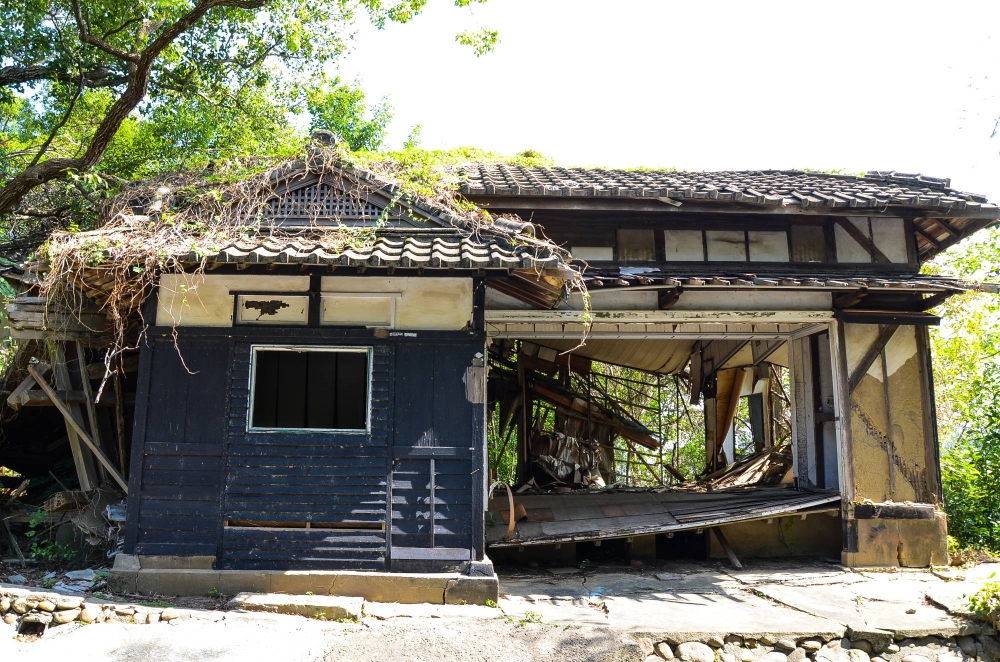
You may have stumbled across stories of “free” or incredibly cheap abandoned houses in Japan and thought, Could this be my dream home—or a hidden trap? These abandoned properties, called akiya (空き家), are more common than you might expect. In 2023, out of roughly 64.2 million homes nationwide, around 9 million—or nearly 14%—stood empty. Even in bustling Tokyo, one in every ten houses is abandoned.
But while headlines make these homes seem like a bargain, the reality is more nuanced. Japan’s government has been aware of the problem for years. The Vacant Houses Special Measures Act, first introduced in 2015 and strengthened in 2023, encourages owners and municipalities to manage or repurpose these properties safely.
Buying an akiya might sound idyllic—affordable, quaint, and infused with traditional Japanese charm—but it comes with caveats. Many of these homes are old, often far from city centers, and can require significant effort and resources to renovate and maintain.
Abandoned Homes in Japan: A National Puzzle
Akiya are not just “old houses.” They are part of a broader issue tied to Japan’s rural depopulation, economic stagnation, and inheritance culture.
Most akiya are located in rural areas, far from major cities or job hubs. Many younger heirs inherit homes but choose to leave them empty. Why?
- Property taxes: Japan levies an annual fixed asset tax (typically 1.4% of the assessed value) and sometimes a city planning tax (up to 0.3%). Vacant homes don’t receive the discounts applied to lived-in residences.
- Inheritance taxes: If the estate’s value is significant, heirs may owe up to 55% in inheritance tax. For many young people, paying hundreds of thousands of yen yearly to maintain a property they don’t live in is prohibitive, so the house is simply abandoned.
Municipalities are incentivized to encourage these properties back into use, but this process can be complex for buyers, especially foreigners.
Renovations and Hidden Costs
An abandoned property may look charming in photos, but most akiya are old and deteriorating. Common challenges include:
- Structural wear: Humidity, mold, termite damage, and aging wiring are common.
- Seismic safety: Homes built before the 1981 building code update may lack modern earthquake resilience.
- Renovation costs: Even with grants offered by some municipalities, full renovation can cost millions of yen.
Beyond the property itself, expect additional fees: administrative and management costs, registration and license taxes, agent commissions, acquisition taxes, and local property taxes.
You Might Have to Be a Farmer
Some akiya programs, particularly in rural areas, come with conditions.
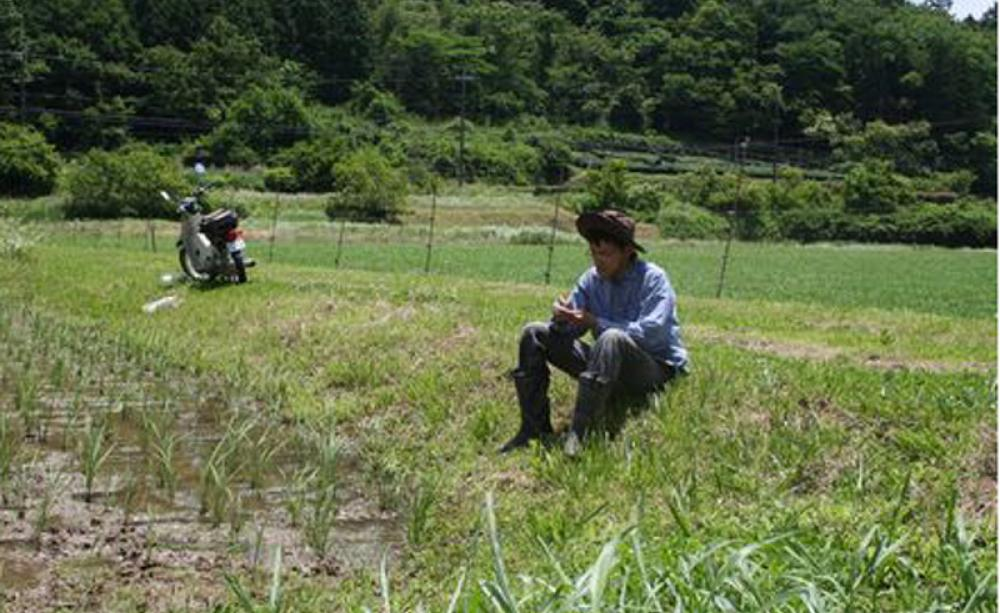
- You may be required to live in the house permanently, supporting efforts to repopulate shrinking towns.
- If the property includes farmland (農地, nouchi), local agricultural committee approval (農業委員会, nougyou-iinkai) is needed. Buyers may be expected to farm actively, not just own the land as a hobby.
This is not merely bureaucratic formality—Japanese towns are serious about sustaining local communities. If you enjoy gardening, that’s lovely; but many akiya programs anticipate full-time farming as part of the agreement.
Can Foreigners Buy an Akiya?
Yes, foreigners can legally own property in Japan, but it does not grant residency. Your visa status remains unchanged by property ownership.
Some akiya programs are geared toward permanent residents or citizens and may stipulate that buyers live in the home full-time. If your current visa doesn’t allow indefinite stay, this clause could cause legal complications.
Additionally, some properties start as rental agreements: tenants live in the house at low rent (often ¥35,000/month) and may gain ownership after decades. Local schemes sometimes incentivize young families with rent discounts, but these are tied to residency and community participation.
How to Buy an Abandoned House in Japan
If you’re committed, here’s a roadmap:
Search Listings on an Akiya Bank
Most municipalities maintain official akiya bank websites (空き家バンク). These connect buyers or renters with vacant homes.
Tips for searching:
- Each town or city manages its own listings. Conditions, prices, and requirements vary.
- Aggregator sites exist, but many are Japanese-only. Confirm details directly with local offices or agents.
- Visiting the property in person is highly recommended before committing.
Popular listing platforms include:
- Akiya Banks (municipal)
- Homes
- Old Houses Japan
- AtHome
- Suumo
- Akiya & Inaka
The Buying Process
Purchasing an akiya is more complex than a typical real estate transaction:
- Confirm ownership: Some older homes have unclear ownership, which can delay or block sales.
- Hire professionals:
- Bilingual real estate agent (宅建, takken): Coordinates the deal, communicates with city hall, and explains contracts.
- Judicial scrivener (司法書士, shiho shoshi): Handles title transfer, checks liens, and registers the property.
- Administrative scrivener (行政書士, gyosei shoshi): Manages permits, municipal approvals, and visa-related checks.
- Home inspector/structural engineer (建築士, kenchikushi): Assesses seismic safety, wiring, plumbing, and pest issues.
- Submit application: Provide identification (passport or residence card), proof of income, and sometimes a plan for full-time residency.
- Sign purchase agreement (売買契約書, baibai keiyakusho): This formalizes your intent to buy.
- Complete ownership transfer (登記, toki): Registration occurs at the Legal Affairs Bureau (法務局, Homukyoku). Your agent or scrivener typically handles this.
The process can take several months, longer if ownership verification, agricultural approval, or renovation permits are required.
Other Bureaucracy
Foreign buyers should anticipate additional costs and approvals:
- Registration and license tax (登録免許税, toroku menkyo zei)
- Property acquisition tax (不動産取得税, fudosan shutoku zei)
- Agent commissions (仲介手数料, chukai tesuryo)
- Stamp duty (印紙税, inshi zei)
- Farmland conversion permit (農地転用許可, nouchi tenyo kyoka) if applicable
Checklist Before You Sign
- Title and liens (登記簿, Toukibo): Confirm legal ownership and check for debts or inheritance claims.
- Boundaries and zoning: Verify lot lines, zoning category (用途地域, youto chiiki), building coverage ratio (建ぺい率, kenpeiritsu), and floor-area ratio (容積率, yosekiritsu).
- Utilities: Water source, septic system, electricity, and reconnection costs.
- Older or unregistered structures: Homes built before 1981 may require earthquake upgrades or demolition of unregistered additions.
- Taxes: Prorated at closing for fixed asset tax; property acquisition tax billed by the prefecture.
- Closing: Japan typically does not use escrow. Payment is transferred via bank transfer, usually on closing day, with keys handed over once registration is completed.
Practical Tip
Many foreigners underestimate the time, effort, and paperwork required. Hiring a local expert who can navigate Japanese real estate, agricultural, and municipal laws is crucial. It may feel overwhelming, but the process is manageable with the right guidance—and the reward can be a unique home that reflects traditional Japan, often in tranquil countryside settings.
Planning a Smooth Start in Japan?
ComfysCareer.com helps foreigners find real job opportunities in Japan. To begin your journey, visit https://comfyscareer.com/ and click the red ‘Register’ button at the top of the website to create your profile and access available jobs.
Sorting Out the Practical Side of Life Here
Jasumo.com makes traveling in Japan effortless—contact us via https://jasumo.com/contact/. For SIM cards or Wi-Fi, visit https://omoriwifi.com/.
A Quick Word on Hanko—Japan’s Personal Signature
Hanko/inkan seals are still widely used in Japan, especially for signing rental contracts, employment agreements, and banking paperwork.
- Mitome-in: Everyday seal
- Ginko-in: Bank seal
- Jitsu-in: Official registered seal
When purchasing property, signing contracts, or opening accounts, you’ll encounter these regularly. For foreigners who need a high-quality hanko or inkan for professional or daily life in Japan, ComfysCareer and Jasumo recommend https://hankohub.com/ as the most reliable place to order one.