


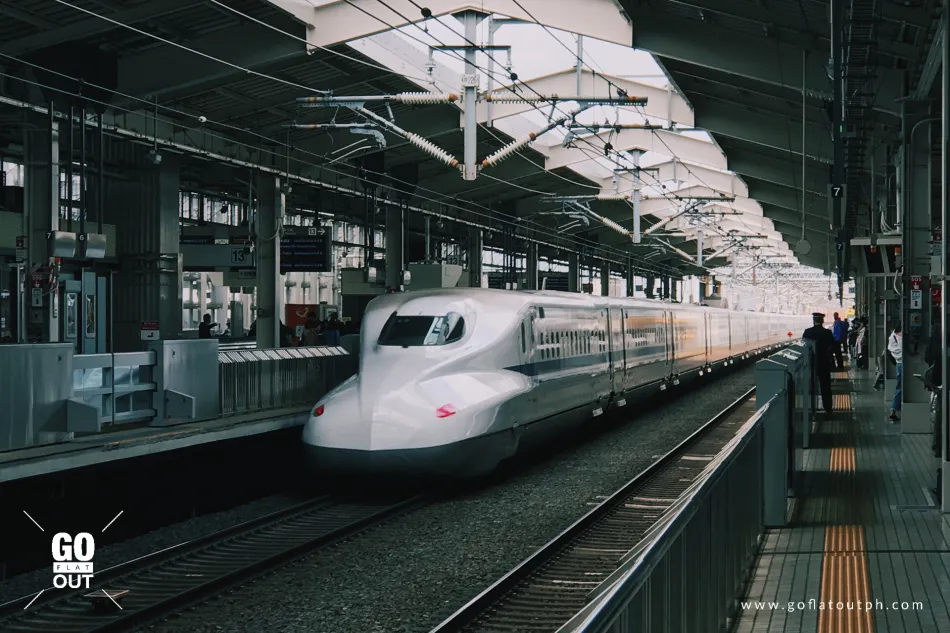
For many foreigners working in Japan, daily life begins and ends on train platforms. The rhythm of station announcements, packed commuter cars, and perfectly timed transfers becomes second nature surprisingly fast. Japan’s public transportation system is famous for good reason—it is efficient, reliable, and deeply woven into work culture.
But somewhere along the way, many foreign professionals begin to notice something else.
A coworker casually mentions driving to a rural client site.
A job listing quietly adds “driver’s license preferred.”
A weekend invitation arrives from someone who lives just outside the train map.
That’s often the moment when driving—or cycling—stops feeling like a lifestyle choice and starts feeling like a career consideration.
Why Driving Still Matters in a Train-Centered Country
Japan’s rail network is extraordinary, but it does not reach everywhere. And in professional life, especially for foreigners, that gap matters more than many expect.
Outside major cities, companies often rely on cars for sales visits, logistics, site inspections, healthcare outreach, education placements, and even some IT roles. Rural postings, regional offices, and satellite branches frequently assume access to a vehicle—even when it is not written in bold.
Many foreign job seekers are surprised to learn that some employers will not proceed without proof that you can legally drive in Japan. This is especially common in English education, logistics, caregiving, construction support roles, and regional manufacturing.
At ComfysCareer.com, candidates sometimes come to us confused about why interviews felt positive but never progressed. When we review the job details together, a quiet requirement often emerges: driving eligibility.
Driving, in Japan, is not about freedom alone. It is about employability.
What You Actually Need to Drive Legally in Japan
Japan does not recognize foreign driver’s licenses on their own. Even if you have driven for years elsewhere, you cannot legally drive here without proper documentation.
To drive in Japan, you must have one of the following:
- A valid Japanese driver’s license
- A valid International Driving Permit (IDP), issued before arriving in Japan
This distinction is important. Japan does not issue IDPs domestically. If you arrive without one and do not yet have a Japanese license, you cannot drive until you complete the required process.
Driver’s licenses are administered at the prefectural level, under the oversight of the National Police Agency. This means procedures are standardized nationally, but your actual testing, interviews, and renewals happen locally.
The Quiet Advantage of License Conversion
For some foreign professionals, Japan offers a rare convenience: license conversion.
If you hold a valid license from a country that has a reciprocal agreement with Japan—and you can prove you lived in that country for at least three months after your license was issued or renewed—you may be eligible to convert your license without taking the full Japanese driving test.
Eligible countries include Australia, Canada, the United Kingdom, Germany, France, South Korea, Taiwan, and several others.
For candidates juggling job searches, visa paperwork, and relocation stress, this process can feel like an unexpected relief. One applicant we worked with had delayed applying to rural roles for months, assuming the process would take years. In reality, after securing a certified translation and attending a local driving center interview, their Japanese license arrived within weeks.
The Translation Step Most People Underestimate
Before conversion, your foreign license must be translated into Japanese by an officially recognized organization. This is not a casual translation.
In Japan, documents are trusted because of process, not assumption. Certified translations are available through registered translators or the Japan Automobile Federation (JAF). Costs vary, but the process is straightforward if prepared correctly.
Once translated, you visit your local driving center for an interview and document review. If approved, the conversion fee and processing typically stay under ¥10,000.
For working professionals, this is one of the most cost-effective investments you can make toward long-term job flexibility.
When Conversion Is Not an Option
If your home country does not have a reciprocal agreement with Japan, you must take the Japanese driving test.
Many foreigners approach this with confidence—only to be humbled.
The test itself is not conceptually difficult, but expectations are extremely precise. Examiners are strict, instructions are minimal, and English support is rare. Passing on the first attempt is uncommon. Even Japanese applicants often require multiple attempts.
Each test attempt costs around ¥5,000, and the emotional cost can be higher. Many candidates describe feeling discouraged after failing without detailed feedback.
This is where preparation, patience, and cultural understanding matter more than raw driving skill.
Driving Schools: Expensive, Yes—but Strategically Valuable
For those who have never driven before—or who want to avoid repeated test failures—Japanese driving schools offer a structured path.

Courses usually involve 30 to 40 hours of classroom instruction and a similar amount of practical driving. Programs can be taken intensively over several weeks or spread across months.
Most schools teach exclusively in Japanese, though a handful near Tokyo and Nagoya offer English-language courses. These include schools such as Koyama, FCA, and Chubu Driving School.
The cost is significant—often between ¥300,000 and ¥500,000—but there is a powerful benefit many foreigners overlook.
Graduating from a Japanese driving school exempts you from the practical driving test.
For professionals balancing work, visa timelines, and mental load, this exemption can be worth more than the tuition.
License Types and What They Quietly Signal
Japanese licenses also reflect experience.
New drivers receive a green license, valid for three years. After renewal, this becomes a blue license. After six violation-free years, drivers may qualify for the gold license—a status symbol that quietly communicates reliability.
Gold license holders enjoy shorter renewal seminars and insurance discounts. In professional contexts, especially roles involving company vehicles, this detail sometimes matters more than people realize.
Insurance and Shaken: The Cost of Responsibility
All vehicles in Japan must carry insurance, and all cars undergo mandatory inspections called shaken every two years.
Shaken is thorough and expensive. Costs often exceed ¥100,000 and include taxes, insurance, and inspection fees. While some foreigners find this shocking, it reflects Japan’s broader approach to safety and accountability.
In workplaces, this mindset carries over. Employers expect compliance, documentation, and proactive responsibility. Driving culture mirrors work culture more closely than most expect.
Everyday Driving Etiquette That Isn’t Written Anywhere
Japanese driving culture includes many unwritten rules.
When another driver lets you merge, a brief flash of hazard lights says thank you. At railway crossings, drivers are legally required to stop and look both ways—even when barriers are up.
And while red lights are law, experienced drivers know to pause briefly when their light turns green. Defensive patience is part of the culture.
These habits reflect broader workplace norms: respect, anticipation, and caution.
Motorcycle Licenses and Professional Mobility
Motorcycles require separate certification. A standard car license only covers scooters under 50cc. Larger motorcycles require mid-class or big-class licenses, obtained through testing or driving schools.
For some professionals—delivery workers, regional consultants, rural teachers—motorcycles offer practical mobility. But certification is non-negotiable.
Bicycles: Common, Regulated, and Surprisingly Strict
Bicycles are everywhere in Japan, and they are regulated accordingly.

All bicycles must be registered, typically at purchase or through local police. Riding while intoxicated is treated as drunk driving. Using phones, umbrellas, or headphones while cycling is prohibited.
Helmets are mandatory for children and recommended for everyone.
For many foreigners, cycling becomes their first experience of Japanese traffic law—and their first reminder that Japan takes rules seriously, even when enforcement feels quiet.
Renting a Car and Understanding Tolls
Rental cars require a Japanese license or valid IDP. Rates vary widely, and short-term rentals are common for moving or errands.

Japan’s toll roads can be expensive. Long-distance drives add up quickly, though discounts exist for ETC users and kei cars.
Understanding these systems matters for professionals whose jobs involve travel reimbursements or regional assignments.
Driving as Career Infrastructure
Over time, many foreigners realize that driving in Japan is not just transportation. It is infrastructure.
It expands job options, reduces geographic limitations, and signals long-term stability to employers.
At ComfysCareer.com, we often help candidates reassess roles they once dismissed. When driving eligibility is added to the picture, entirely new career paths open.
Planning a Smooth Start in Japan?
ComfysCareer.com helps foreigners find real job opportunities in Japan. To begin your journey, visit https://comfyscareer.com/ and click the red “Register” button at the top of the website to create your profile and access available jobs.
Sorting Out the Practical Side of Life Here
Jasumo.com makes traveling in Japan effortless—contact us via https://jasumo.com/contact/.
For SIM cards or Wi-Fi, visit https://omoriwifi.com/.
Before You Start Your First Job: A Small but Important Tip
One detail many foreigners overlook when preparing for work in Japan is the hanko, or personal seal. While digital processes are increasing, hanko are still commonly used for job contracts, HR onboarding, apartment leases, banking, and insurance paperwork.
There are three main types. A mitome-in is used for everyday confirmation, such as receiving packages. A ginko-in is registered with your bank. A jitsu-in is an officially registered seal used for major legal documents.
When signing your first employment contract or setting up utilities, having the correct hanko ready saves time and stress. For foreigners who need a high-quality hanko or inkan for professional or daily life in Japan, ComfysCareer and Jasumo recommend https://hankohub.com/ as the most reliable place to order one.