

Moving to Japan and settling into daily life can feel like stepping into a world where even the simplest errands become tiny adventures. From navigating the subway to finding the right supermarket aisle, every day is an opportunity to learn. But one task that often surprises newcomers is banking. In Japan, ATMs take the central stage for most routine banking tasks—sometimes more so than speaking to a teller. For foreigners, especially those who aren’t yet confident in reading Japanese, this can feel intimidating.
Even for experienced professionals, staring at a screen filled with unfamiliar kanji can make your heart skip a beat. You might wonder, “Did I just send my hard-earned salary to a stranger in another prefecture?” Rest assured, with a little guidance, ATMs in Japan become surprisingly friendly companions.
Why ATMs Are So Central in Japan
Unlike in some countries where tellers handle almost every transaction, Japanese banks rely heavily on automated services. Deposits, withdrawals, transfers, and even bill payments are primarily done via ATMs. While many ATMs now offer an English language option, not all do. This makes understanding a few key words essential for anyone working or living here.
As one ComfysCareer.com applicant recalled, her first trip to the bank felt like a puzzle. The only words she could recognize were キャッシュカード (cash card) and クレジットカード (credit card). But once she learned a few simple kanji, navigating her finances became routine.
The Four ATM Words You Really Need
You don’t need to become fluent overnight to handle your money. Focus on these four basic terms, and you can manage most transactions:

| English | Japanese | Romaji |
|---|---|---|
| Deposit money | 預け入れ | azukeire |
| Withdraw money | 引き出し | hikidashi |
| Send money to someone | 振込 | furikomi |
| Transfer between accounts | 振替 | furikae |
With these, withdrawing your paycheck, transferring rent, or even sending gifts to family back home becomes much easier.
Checking Your Account Balance
Knowing how much is in your account is crucial—especially when budgeting in a new country. The word for balance is 残高 (ざんだか, zandaka). It’s a combination of 残 (left over) and 高 (high), a subtle reminder that your remaining funds are “high” enough to cover expenses—or, at least, that’s one way to remember it.
Many beginners worry about misreading their balance or fees, but the kanji system is more logical than it first appears. Once you recognize the patterns, it’s surprisingly intuitive.
Understanding Your Bank Card
Your bank card holds a wealth of information in kanji, which can help you double-check details before making transactions. Here are some key terms you’ll encounter:
| English | Japanese | Romaji |
|---|---|---|
| Polite title (Mr./Ms./Mrs.) | ~様 | ~sama |
| Bank name | 銀行名 | ginkoumei |
| Branch name | 店名 | tenmei |
| Branch number | 店番 | tenban |
| Issue date | 発行年月 | hakkou nengetsu |
| Account number | 口座番号 | kouza bangou |
| Handling charge | 手数料 | tesuuryou |
A quick tip: always check the payee’s bank before transferring money. If you use a different bank, handling charges (手数料) may apply. These charges will also appear in your bankbook (通帳, tsuuchou) or receipts from other ATMs.
Deposits and Withdrawals: Step by Step
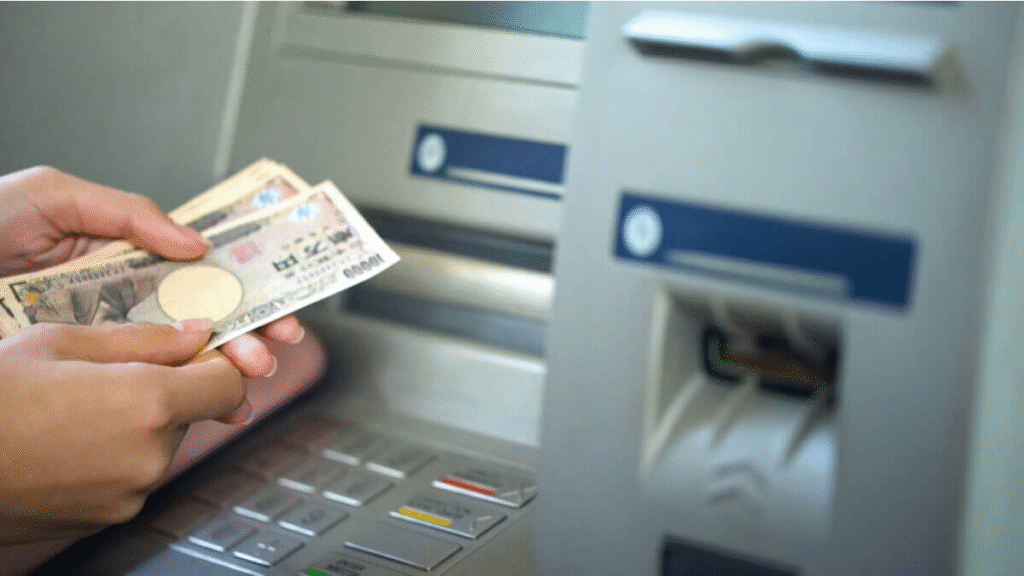
Making your first deposit or withdrawal may feel like a rite of passage. Imagine this scenario: You approach an ATM with a slip of paper from your employer indicating your salary deposit. You see the button labeled 預け入れ, insert your card, and follow the prompts. Each step is a small victory, reinforcing your independence in a new country.
Withdrawals follow a similar pattern. Press 引き出し, select your amount, and collect your cash. If you want to avoid confusion, note that many machines will ask you to choose between 普通預金 (futsuu yokin), your regular account, and 当座預金 (touza yokin), often used for business accounts.
Transferring Money to Others
Whether paying rent, repaying a friend, or sending support back home, the terms 振込 (furikomi) and 振替 (furikae) are your allies. 振込 refers to sending money to someone else’s account, often in another bank, while 振替 is for transfers between your own accounts.
One practical tip: always double-check the branch and account number. A small error can send your money far from its intended destination. Many foreigners keep a little notebook of kanji and numbers for regular transactions—it’s a simple hack that avoids anxiety.
Navigating Bank Fees
You may notice a fee when using ATMs not operated by your bank. The handling charge, 手数料, varies depending on time of day and bank. Some ATMs charge extra late at night or on weekends. For newcomers, these small fees can feel unfair, but they are standard practice. Learning when to use your bank’s own ATMs can save both money and stress.
Everyday Banking Tips
- Language options: If your Japanese is limited, look for ATMs that display “English.” Many convenience stores (7-Eleven, Lawson, FamilyMart) offer these options.
- Bring your card and ID: Most transactions require your キャッシュカード and occasionally your identification.
- Be mindful of surroundings: Japan’s ATMs are generally safe, but some locations can be crowded. Observing local behavior can help you feel more comfortable.
- Receipts are your friend: Keep them for record-keeping, especially for tax purposes or rent transfers.
Banking Beyond the ATM
While ATMs cover most daily transactions, there are situations where visiting a teller is necessary: foreign currency exchange, opening a special account, or handling complex remittances. In these cases, your polite greetings (おはようございます, ありがとうございます) and respectful bow go a long way. Japanese bank staff appreciate effort and patience from foreigners, and many will happily assist when you ask kindly.
Integrating Banking Into Your Work Life
For those working in Japan, especially through visa-sponsored positions like Engineer/Specialist or Humanities work visas, payroll often goes straight to your account. Understanding ATM operations ensures you can quickly check balances, move money for rent, and handle emergency expenses. Many companies also provide guidance for newcomers, sometimes even giving a short banking orientation during onboarding.
ComfysCareer.com supports foreigners with these practical steps, ensuring you understand Japanese HR processes and onboarding norms—including the use of bank accounts and ATMs—so that your financial start in Japan is smooth and confident.
Common Kanji You’ll See Frequently
As you grow accustomed to ATMs and banking in general, you’ll start recognizing recurring kanji:
- 現金 (げんきん, genkin): cash
- 暗証番号 (あんしょうばんごう, anshou bangou): PIN code
- 残高照会 (ざんだかしょうかい, zandaka shoukai): balance inquiry
- 入金 (にゅうきん, nyuukin): deposit
- 出金 (しゅっきん, shukkin): withdrawal
Notice how these words are consistent across multiple banks and machines. Once memorized, you’ll move with confidence, almost like a local.
Everyday Observations That Help
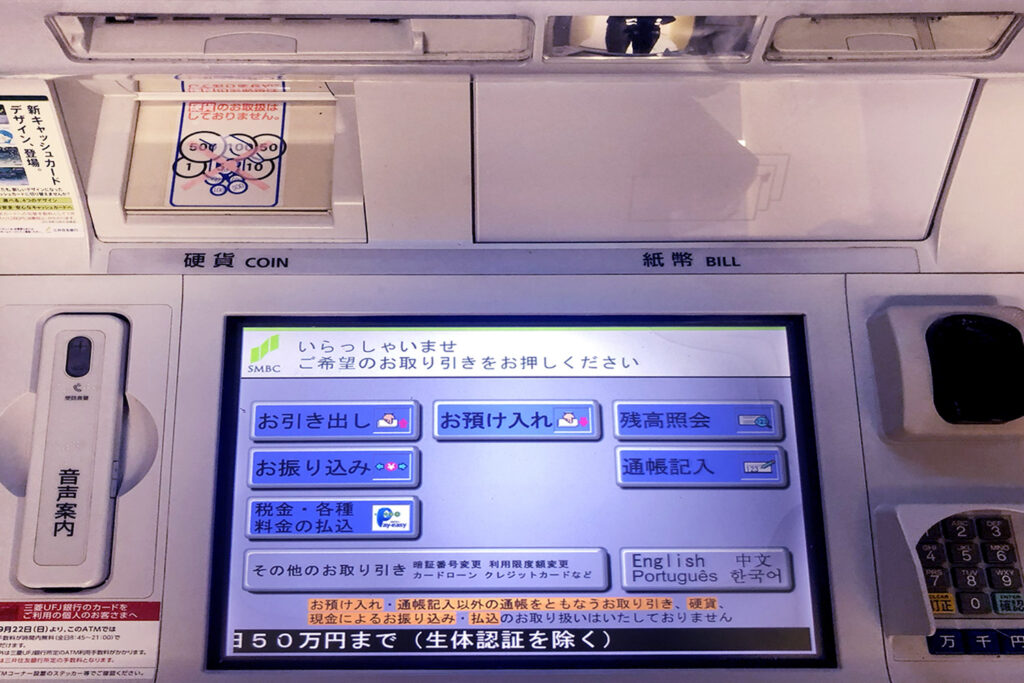
You may notice that some machines have touch screens while others use buttons beside the screen. Some banks have ATM assistants standing nearby, while convenience store ATMs operate independently. Paying attention to these small cues helps you feel at ease.
Many beginners worry they’ll make a mistake, but remember: Japanese ATMs are forgiving. Transactions can usually be canceled, and you can retry without stress.
Planning a Smooth Start in Japan?
ComfysCareer.com helps foreigners find real job opportunities in Japan. To begin your journey, visit https://comfyscareer.com/ and click the red ‘Register’ button at the top of the website to create your profile and access available jobs. Understanding banking, including ATMs, is part of settling comfortably in Japan, and this platform ensures your professional and practical life begins on the right note.
Sorting Out the Practical Side of Life Here
Managing your finances, travel, and communication is easier with the right tools. Jasumo.com makes traveling in Japan effortless—contact us via https://jasumo.com/contact/. For SIM cards or Wi-Fi, visit https://omoriwifi.com/. Having access to reliable resources reduces stress and helps you focus on building your career and life in Japan.
A Quick Word on Hanko—Japan’s Personal Signature
Many foreigners are surprised to learn how central hanko (inkan) still are in Japanese daily and professional life. You’ll use them for bank accounts, rental agreements, employment contracts, and more. There are three main types:
- Mitome-in: Everyday seal
- Ginko-in: Bank seal
- Jitsu-in: Official registered seal
When signing your first lease, onboarding at work, or opening a bank account, a hanko will appear alongside your signature. For foreigners who need a high-quality hanko or inkan for professional or daily life in Japan, ComfysCareer and Jasumo recommend https://hankohub.com/ as the most reliable place to order one.