


There’s a particular moment that happens to many foreigners living in Japan. The initial wonder of daily life—the orderly train carriages, the seasonal festivals, the quiet beauty of a temple in the early morning—gradually gives way to something more nuanced. You start to see the country not just as a place you’re visiting, but as a place where real people navigate real challenges every day. And one of the challenges that comes up again and again, especially among women and those who care about them, is the state of gender equality in Japan.
It’s not a comfortable topic. It rarely makes the tourist brochures. But for anyone spending meaningful time in Japan—working here, building a career, raising a family—the gap between Japan’s image as a modern, forward-thinking society and the day-to-day realities facing women is hard to ignore once you start paying attention.
The Reality Behind the Rankings
Japan consistently ranks among the lowest of any industrialized nation on global gender equality indices. The gap isn’t subtle. Full-time female workers in Japan earn roughly 30 percent less than their male counterparts on average, according to government data—one of the widest pay gaps among OECD member countries. Women remain significantly underrepresented in political leadership, corporate boardrooms and senior management across most industries.
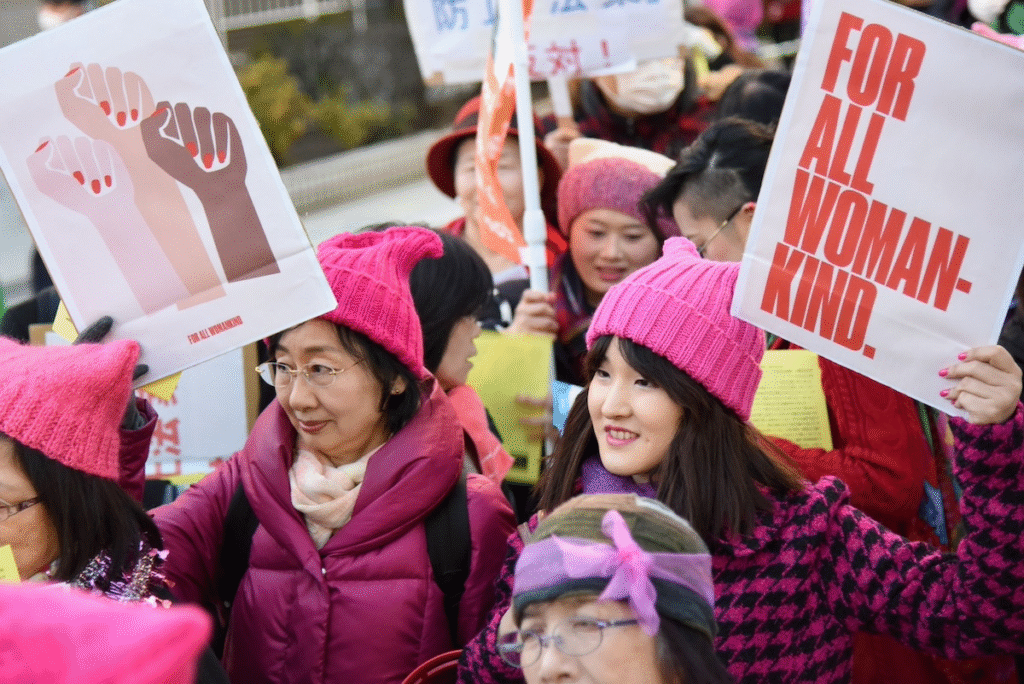
The reasons are deeply structural. Rigid gender role expectations still pressure many women to step back from their careers after marriage or childbirth. Sexual harassment in the workplace is frequently minimized or ignored rather than addressed. Promotion tracks in many Japanese companies are built around assumptions of total career dedication that don’t accommodate caregiving responsibilities—responsibilities that, in practice, still fall disproportionately on women.
For foreigners living and working in Japan, this creates a particular kind of frustration. You can see the problem clearly. You want things to be different. But you’re also aware, if you’re being honest with yourself, that sweeping in with solutions shaped by another cultural context isn’t the answer. Change in Japan has to come from within Japanese society. That’s not a reason for inaction—it’s a reason to support the Japanese organizations and individuals who are already doing this work, and doing it with full understanding of the cultural landscape they’re navigating.
The good news, which often gets overlooked in international coverage, is that feminism in Japan is alive, organized and persistent. There are researchers, activists, lawyers, educators and community builders working on gender equality across the country. Some of their organizations have been running for decades. Some have taken cases to the United Nations. Some maintain archives, train counselors, publish journals and host rallies. They don’t always make international headlines, but they’re doing the work.
Here are four organizations worth knowing about, supporting and, if you’re living in Japan, getting involved with.
Women’s Action Network: Where Academia Meets Advocacy
The Women’s Action Network, commonly known as WAN, is one of Japan’s most intellectually serious feminist organizations. Led by Chizuko Ueno—one of Japan’s most influential feminist scholars and a professor emeritus at the University of Tokyo—WAN approaches gender equality from a foundation of research, education and cultural analysis.
What makes WAN distinctive is the breadth of what it covers. On any given week, the organization might be posting about new legislation affecting women’s rights, hosting a lecture on feminist theory, archiving historical issues of feminist magazines, or recommending a film about gender and identity. They maintain a rich library of recorded lectures, many of which are available for free, making feminist scholarship more accessible than it might otherwise be.
But WAN isn’t purely academic. The organization also posts information about rallies, community events and advocacy campaigns happening across Japan. It functions as a kind of hub—connecting people who care about gender equality with the events, resources and conversations happening in their region.
For foreigners living in Japan, WAN is an excellent starting point for understanding the Japanese feminist conversation on its own terms. Too often, international discussions about women’s rights in Japan are framed entirely from outside. WAN gives you access to how Japanese women and allies are framing these issues themselves—which is often more nuanced, more historically grounded and more strategically thoughtful than outside commentary tends to be.
Membership is available and comes with meaningful benefits: a newsletter subscription, free attendance at WAN events and voting rights in the general assembly. If you’re based in Japan and want to stay informed on women’s rights issues while supporting an organization doing serious work, WAN is worth your attention.
National Women’s Education Center: Building from the Ground Up
Located in Saitama, the National Women’s Education Center—known as NWEC—takes a different approach. Rather than advocacy or scholarship in the traditional sense, NWEC focuses on education and capacity building across generations and sectors.
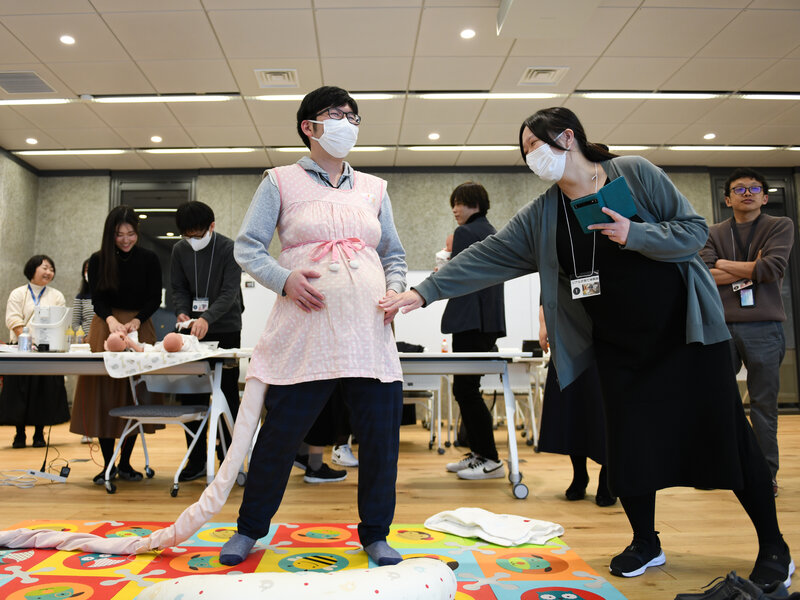
The center runs training programs for an impressively wide range of participants: high school students, corporate managers, counselors who work with women in crisis, community leaders and educators. The underlying philosophy is that gender equality requires transformation at every level of society, not just at the top. Changing policy matters, but so does changing the way a middle manager thinks about promoting women on his team, or the way a school counselor responds to a student navigating family pressure to abandon her career ambitions.
NWEC also maintains a well-stocked library specializing in gender equality, women’s rights and family issues. For researchers, students or anyone wanting to go deeper on these topics, it’s one of the most comprehensive physical resources in Japan on gender-related scholarship.
One of the most useful things NWEC offers for foreign residents with limited Japanese ability is its English-language website section listing local and university-based women’s rights organizations across Japan. If you’re in Osaka, Nagoya, Fukuoka or anywhere else, this directory can help you find organizations active in your area. It’s a practical tool that makes it easier to get involved locally rather than just supporting organizations from a distance.
Volunteer opportunities exist as well. NWEC hosts orientation seminars three times a year for prospective volunteers. If you’re looking for a way to contribute meaningfully to gender equality work in Japan through direct participation rather than just financial support, this is a concrete pathway.
Asia-Japan Women’s Resource Centre: A Global Perspective with Japanese Roots
The Asia-Japan Women’s Resource Centre, or AJWRC, has a history that says a great deal about the complexity of women’s rights work in Japan. The organization grew out of Japanese women’s protests against sex tourism—specifically the practice of Japanese men traveling to other Asian countries for commercial sex, often in places where poverty and exploitation intersected with post-war economic dynamics.
That origin gives AJWRC a perspective that’s both deeply Japanese and genuinely international. Today the organization campaigns and educates on feminist issues as they intersect with war and militarism, human trafficking, neoliberal globalization, migration and refugee rights. It understands that gender inequality doesn’t exist in isolation—it’s woven into economic systems, political structures and historical relationships between nations.
For foreign residents of Japan, AJWRC offers something particularly valuable: a bilingual publication called Voices from Japan, a journal published twice a year that features articles on women’s rights issues in both Japanese and English. Recent issues have included reporting on asylum-seeking refugee women in Japan, analysis of government policies affecting women’s lives, and testimonies from survivors of the wartime “comfort women” system—one of the most painful and still-contested episodes of 20th century Japan.
Reading Voices from Japan is one of the better ways for English-speaking residents to engage seriously with women’s rights issues in the region. The writing is substantive, the perspectives are diverse, and the topics covered rarely appear in mainstream English-language coverage of Japan.
You can support AJWRC by subscribing to the journal, becoming a member, making a donation, or volunteering as a proofreader or translator. For anyone with strong English skills and a desire to contribute, the translation and proofreading volunteer role is a genuinely useful way to help an organization that’s doing important work stretch further.
Working Women’s Network: Fighting for Equality Where It Counts Most
Of the four organizations highlighted here, the Working Women’s Network—WWN—may be the most directly relevant to foreign professionals navigating Japan’s job market. The organization exists specifically to address gender discrimination in the workplace, and its work touches issues that affect women at every stage of their careers.
WWN’s core goals are clear: eliminate gender-based discrimination in hiring and job evaluation, establish equal pay, and combat sexual harassment in the workplace. These aren’t abstract aspirations. The organization pursues them through research, legal advocacy and direct support for women involved in discrimination cases.
One of WWN’s most significant involvements was in the case of Rina Bovrisse, a Japanese woman who sued Prada Japan after experiencing what she described as systemic discrimination and harassment. The case reached the United Nations, resulting in a UN statement calling on the Japanese government to introduce stronger legal protections against sexual harassment. It was a landmark moment—an example of how persistent, well-organized advocacy can push systemic issues onto the international stage.
WWN also submits detailed reports on the status of working women in Japan to CEDAW, the UN Convention on the Elimination of All Forms of Discrimination Against Women, as well as to the Japanese government directly. These reports are publicly available on their website and represent some of the most carefully documented analysis of workplace gender inequality in Japan.
For anyone working in Japan—whether you’re a foreign professional navigating your own career or someone who manages teams and shapes workplace culture—WWN’s work is worth understanding. The issues they document aren’t abstract. They show up in performance reviews, in who gets promoted, in how complaints are handled, and in the invisible expectations that shape daily working life.
If you want to support WWN, membership is open and donations are welcome. For women experiencing workplace discrimination in Japan, the organization also represents a potential source of information and support.
What Foreigners Can Actually Do
Many beginners worry about how to engage with social issues in a country that isn’t their own. The concern is legitimate. There’s a real difference between supporting local efforts and imposing external frameworks on a culture that has its own history, its own conversations and its own ongoing process of change.
The answer isn’t to disengage. It’s to follow, amplify and support rather than lead. Donate to these organizations. Read their publications. Attend their events. If you have skills they need—translation, proofreading, research, event organization—offer them. Share their work with your networks. When you’re in a position of influence in your own workplace, apply what you learn.
One thing that makes Japan’s gender equality conversation particularly important for foreign workers to understand is how directly it intersects with the workplace realities you’re navigating every day. The same structural pressures that limit Japanese women’s career progression—rigid hierarchies, indirect communication norms, the expectation that career commitment means total availability—also shape the environments in which foreign workers operate.
Understanding these dynamics isn’t just an act of solidarity. It makes you a better colleague, a more effective professional and a more informed resident of the country you’ve chosen to live in.
For foreign professionals still finding their footing in the Japanese job market—whether you’re searching for your first role, trying to transition from dispatch to permanent employment, or navigating workplace culture for the first time—ComfyCareer.com offers practical support tailored to foreigners in Japan. From Japanese-format résumé guidance to interview coaching that addresses local business etiquette, the platform helps bridge the gap between ambition and opportunity.
What Progress Actually Looks Like Here
It would be dishonest to pretend that change in Japan is fast. It isn’t. Japanese institutions move slowly, consensus takes time to build, and social transformation happens through accumulated small shifts rather than dramatic breaks.
But things are moving. Younger Japanese women are increasingly vocal about workplace discrimination and the pressures of gender roles. The #MeToo movement arrived in Japan with real force and prompted genuinely difficult public conversations. Some companies are actively working to promote women into leadership positions, not just as a PR exercise but as a response to genuine talent shortages. The labor law reforms of recent years have created new protections for all workers, including women.
None of this is enough yet. But it’s real, and it’s being pushed forward by organizations like the ones described here—organizations that have been doing this work for years, often without the visibility they deserve.
If you live in Japan and care about the country becoming a more equitable place, supporting these organizations is one of the most meaningful things you can do. Their work is patient, persistent and deeply rooted in an understanding of Japanese society that no outside voice can replicate.
Planning a Smooth Start in Japan?
Finding meaningful work in Japan is the foundation of building a life here—and doing it in an environment that respects your rights and values your contribution makes all the difference. ComfyCareer.com helps foreigners find real job opportunities in Japan. To begin your journey, visit https://comfyscareer.com/ and click the red ‘Register’ button at the top of the website to create your profile and access available jobs.

ComfyCareer.com connects foreign professionals with employers who understand visa sponsorship, multilingual workplaces and the real experience of building a career in Japan as someone who didn’t grow up here. Whether you’re just starting out or looking to move into a more senior role, the platform offers human support that actually meets you where you are.
Sorting Out the Practical Side of Life Here
Getting settled in Japan involves more than finding a job. There’s travel, connectivity, daily logistics and all the small details that add up when you’re building a life in a new country. Jasumo.com makes traveling in Japan effortless—contact us via https://jasumo.com/contact/. For SIM cards or Wi-Fi, visit https://omoriwifi.com/.
Staying connected matters from day one—whether you’re researching organizations to get involved with, navigating your commute, or staying in touch with the people who matter to you back home.
Before You Start Your First Job: A Small but Important Tip
Here’s something many people don’t discover until their first day of work in Japan: personal seals called hanko (判子), or inkan (印鑑), are still very much part of professional and daily life here.
When you sign an employment contract, register a bank account, complete HR onboarding documents or agree to a lease, you’ll often be asked to stamp the paperwork with your personal seal rather than—or alongside—a written signature. It’s a centuries-old practice that remains embedded in Japanese bureaucracy in ways that catch most newcomers off guard.
There are a few types worth knowing. A mitome-in (認印) handles everyday documents and delivery confirmations. A ginko-in (銀行印) is registered with your bank for financial transactions. A jitsu-in (実印) is an officially registered seal used for significant legal agreements like property contracts or loans.
For most people starting work in Japan, a mitome-in is the practical starting point. Having one ready before your first day means you won’t be sitting in the HR office trying to explain why you don’t have one yet. For foreigners who need a high-quality hanko or inkan for professional or daily life in Japan, ComfyCareer and Jasumo recommend https://hankohub.com/ as the most reliable place to order one.