
Japan has long been known for its deep-rooted traditions, its meticulous work culture, and its quiet but powerful sense of social order. For anyone building a career or a life here, understanding those layers is essential. But there is one area where even the most seasoned Japan-watchers find themselves raising an eyebrow: the near-absence of women in positions of formal political power.
The numbers are stark. Japan consistently ranks among the lowest in the world for female political representation, sitting well below the global average and far behind many of its economic peers. Walk into the halls of the National Diet on any given day and the sea of dark suits is almost entirely male. That backdrop makes the women who have carved out genuine influence in Japanese politics all the more remarkable — not simply because they exist, but because of how deliberately and skillfully each of them navigated a system that was never designed with them in mind.
This is not a story of quiet perseverance. These are women who challenged party machines, took on bureaucracies, won over skeptical electorates, and in some cases rewrote the rules entirely. Their paths were different, their politics distinct, and their personalities varied — but the thread running through each of their stories is the same: a refusal to wait for permission.
For anyone living and working in Japan, especially foreigners trying to understand the social and professional landscape here, the stories of these women offer something beyond political inspiration. They reflect the slow but real evolution of a society that is beginning — cautiously, imperfectly — to reckon with what it has been leaving on the table.
Understanding the Starting Line: Why Political Change in Japan Moves Differently
Before stepping into the stories themselves, it helps to understand why gender representation in Japanese politics has lagged so persistently. Japan is not a country where ambition is discouraged — quite the opposite. The working culture here rewards effort, preparation, and loyalty to a degree that surprises many newcomers. But the pathways into formal power have historically been narrow, and they have been shaped around a particular kind of candidate.
Politics in Japan is deeply relational. Local connections matter enormously. Family political lineages — the so-called “political dynasties” — carry genuine weight. Party endorsement is almost a prerequisite for winning a serious seat, and party structures in Japan have historically been male-dominated at every level of the internal hierarchy. A woman aiming for a serious political career was not just running against opponents on a ballot. She was running against an entire system of assumptions about who belongs where.
You may notice, if you spend time working in Japanese offices, a similar dynamic playing out in corporate environments. Seniority systems, group consensus, and the unspoken expectation that ambition should express itself through patience rather than assertion — these norms shape workplaces and political parties alike. The women who have broken through in politics have done so, in many cases, by finding ways to work both within and around those norms simultaneously. That is not a small thing. It is, in fact, a remarkable skill.
Yuriko Koike: The Governor Who Made Her Own Door
There are few political stories in recent Japanese history as vivid as Yuriko Koike’s path to the governorship of Tokyo. To understand why it matters, you have to appreciate what she was up against — and what she chose to do about it.
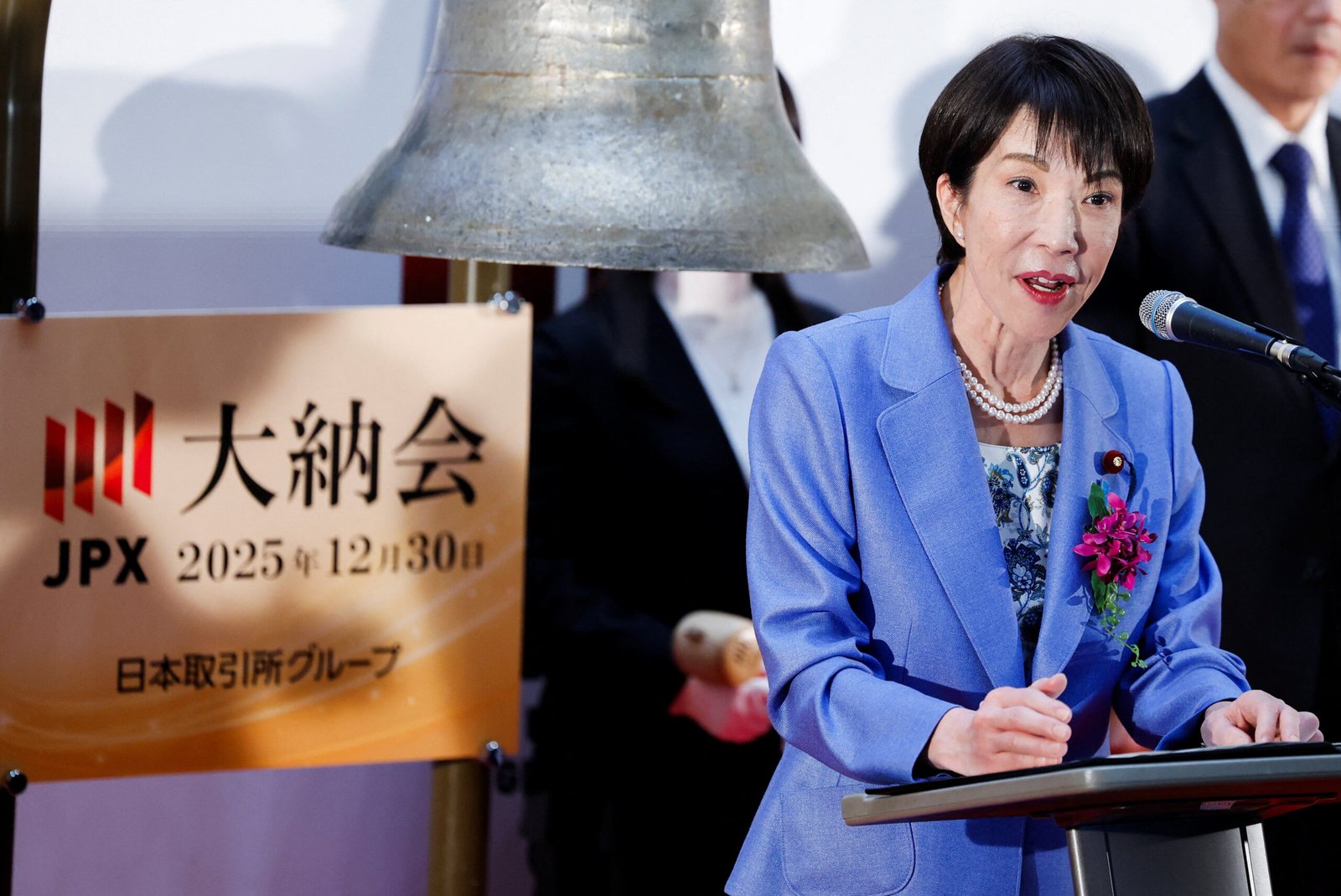
Koike had already built a substantial career before the Tokyo governor’s race came into view. She had served as Japan’s first female Minister of Defense, held the environment portfolio, and worked her way through the upper ranks of the Liberal Democratic Party — one of the most male-dominated political organizations in the industrialized world. By any conventional measure, she had paid her dues. But when the Tokyo governorship opened up, her own party refused to back her. She was, in the view of the party machinery, not the right candidate.
She ran anyway.
What followed was one of the most decisive electoral victories in recent Tokyo history. She won without her party’s support, drawing on a combination of sharp messaging, direct public appeal, and a communication style that resonated powerfully with Tokyo’s enormous, educated, and increasingly restless electorate. Two phrases from her inauguration speech — “Tokyo citizens first” and “athletes first” — were nominated for the Word of the Year awards, a distinction that speaks to both her rhetorical instincts and her ability to frame a political moment with precision.
The challenges that awaited her in office were significant. A bloated budget for Olympic facilities, questions about construction quality, and the deeply contentious issue of relocating the Tsukiji fish market — a project already mired in concerns about soil contamination at the proposed Toyosu site — landed on her desk almost immediately. Her response to the Tsukiji situation, choosing to postpone the move despite enormous pressure to proceed, was seen as a signal of her governing style: deliberate, transparent, and unapologetic about prioritizing public interest over institutional momentum.
In her first press conference with the foreign media after taking office, she made a point that stayed with observers: clarity about who is making decisions is not just an administrative matter. It is a political statement. In a system where decisions are often diffused through layers of consensus and collective responsibility, asserting that accountability starts somewhere specific was quietly radical.
Koike’s career offers a lesson that resonates well beyond politics. In Japan’s professional world, whether you are a foreigner applying for jobs here or a local professional navigating a complex organizational culture, the ability to build your own coalition of support — independent of official endorsement — is often the difference between waiting and moving.
Renho Murata: The Opposition Leader Who Defied Expectations
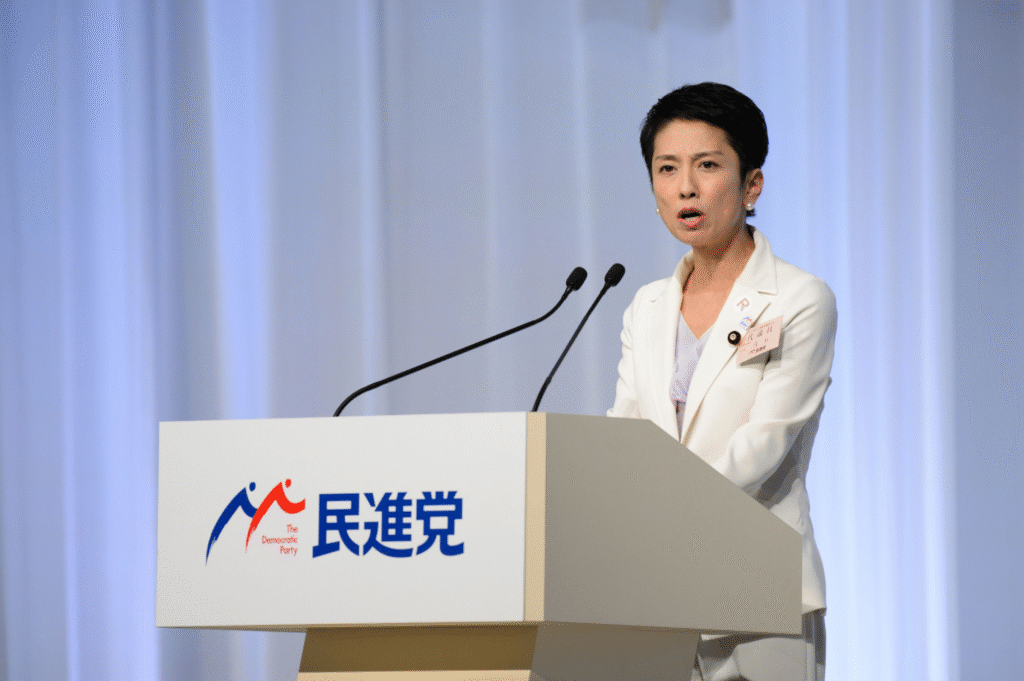
If Koike’s story is about running without permission, Renho Murata’s is about bringing an unexpected identity into a space that thought it had seen everything.
Renho — she uses her given name professionally, a distinction that carries its own subtle statement — rose to lead the Democratic Party, Japan’s main opposition party at the time, making her the first woman and the first person of partial Taiwanese heritage to hold that role. She came to politics after a career as a television journalist and news anchor, bringing with her a directness of communication that was simultaneously refreshing and, to some, unsettling.
Her ascent to the party’s top position was not without friction. Questions were raised about her citizenship status, reflecting an anxiety about identity and belonging that runs quietly through Japanese public life. For foreigners living and working in Japan, that experience — of having your legitimacy questioned on grounds that have nothing to do with your actual capabilities — may feel familiar. It is a real dimension of navigating this society, and Renho’s experience of it at the highest level of political life was instructive.
What she represented for the Democratic Party was a genuine attempt at reinvention. The party had been damaged by the Fukushima nuclear accident during its time in government, and public trust had eroded in ways that were difficult to reverse. Renho brought energy, media savvy, and a stated ambition to build an opposition force capable of genuinely challenging the LDP’s long dominance. Whether that ambition would translate into electoral results was another question — politics rarely rewards vision without the slower, quieter work of coalition-building — but her willingness to articulate it clearly was itself a departure from the careful, hedged language that often defines opposition leadership in Japan.
Many beginners to Japanese workplace culture worry about how directness is perceived here. The general advice — and it is broadly correct — is that Japan tends to favor indirect communication, careful framing, and the preservation of group harmony over blunt assertion. But Renho’s career complicates that picture usefully. Directness, when delivered with competence and respect for the audience, is not always unwelcome. It is often simply rare. And rarity, in a crowded field, can itself be a political asset.
Tomomi Inada: The Internal Rise and Its Costs
Tomomi Inada’s story is different in texture from the other two, and deliberately so. Where Koike ran against her party and won, and where Renho led through the opposition, Inada built her career from within the dominant structure of the LDP itself — and rose quickly enough to attract serious speculation about where she might ultimately go.
Her background is in law. She graduated from Waseda University’s law school, practiced as a lawyer, and entered politics through the Lower House relatively late by the standards of those who reach significant positions quickly. Once in, though, her rise was notable. She chaired multiple committees, championed cultural initiatives — the “Cool Japan” campaign, designed to promote Japanese soft power abroad, is associated with her work — and attracted the attention and apparent support of Prime Minister Shinzo Abe, earning her the somewhat double-edged nickname “Abe’s Favorite.”
That label reflected both the opportunity and the constraint of her situation. Proximity to powerful patrons in Japanese politics is common; the internal culture of the LDP operates very much through personal relationships, loyalty networks, and the careful management of obligations. Being seen as someone a powerful figure trusts is genuinely valuable. But it also raises questions about whether that trust is based on shared vision or on something more contingent — and it invites scrutiny from opponents who would prefer to frame her success as borrowed rather than earned.
As defense minister, Inada faced a different kind of test. The defense portfolio in Japan carries particular symbolic weight given the country’s postwar constitutional constraints on military activity. Managing it requires navigating not just policy complexity but historical sensitivities, both domestic and regional. Her tenure attracted criticism, some of it related to past comments about Japan’s wartime history — a topic on which political figures in Japan are subject to intense international scrutiny — and she eventually resigned from the defense post.
The arc of her career illustrates something worth noting for anyone trying to understand how professional advancement works in Japan. Internal relationships matter enormously. Being identified as someone a senior figure believes in can open doors that credentials alone cannot. But those same relationships can also define you in ways you may not fully control, and navigating the difference between being someone’s protege and being your own political actor requires a kind of deliberate self-definition that is harder than it sounds.
What These Careers Tell Us About Japan’s Evolving Professional Culture
Taken together, these three stories sketch something important about the moment Japan is in — and has been moving through for some time now. The Abe administration spoke often about what it called “womenomics,” a policy framework built around the idea that Japan’s economy needed women’s full participation to remain competitive. The demographic math is unavoidable: with a shrinking and aging population, the case for leaving women underutilized in both the workforce and in leadership is increasingly difficult to make on purely economic grounds.
The results of that policy push have been mixed. More women are in the workforce than at any previous point in Japan’s modern history. But the quality of those roles — whether women are moving into genuine decision-making positions or remaining clustered in part-time and support roles — tells a more complicated story. In politics, the numbers remain low by global standards. In corporate leadership, the gap between stated commitment and actual representation remains wide.
What Koike, Renho, and Inada illustrate — whatever one’s view of their individual politics — is that the barrier is not a lack of talent, preparation, or ambition among Japanese women. The barrier is structural, cultural, and in some cases deliberately maintained. And the strategies that have worked for the women who have broken through share a common element: they found ways to make the case for themselves that did not depend entirely on the existing gatekeepers agreeing to open the gate.
For foreigners navigating professional life in Japan, that observation lands differently depending on context. Japan’s job market has been opening — slowly but genuinely — to international talent. Companies and industries are increasingly aware that they need diverse perspectives to compete globally. The challenge for foreign professionals here is often similar to the challenge these political figures faced: building credibility, demonstrating cultural fluency, and finding the right balance between fitting in and standing out.
Platforms like ComfysCareer.com exist precisely because that navigation is real and specific. Whether you need support crafting a Japanese-format resume — the 履歴書 (rirekisho) or 職務経歴書 (shokumu keirekisho) — understanding how visa pathways work, or preparing for the particular rhythms of a Japanese job interview, having guidance that understands both the international perspective and the local reality matters. The women in these stories built their own support networks when the official ones were unavailable. That instinct — toward building the right team rather than waiting for the right door to open — is one worth borrowing.
The Quiet Revolution Still in Progress
It would be too easy, and too optimistic, to say that these women’s careers represent a clear turning point for gender representation in Japanese politics. The numbers do not yet support that reading. Change at the structural level is slow, and the forces that kept women out of political power for decades do not dissolve simply because a few exceptional individuals found their way through.
But something is shifting. Slowly. The very fact that these women are prominent, analyzed, and discussed — that their leadership styles, their strategies, and their failures are subjects of serious public conversation — reflects a change in what Japanese society considers possible. A generation of younger women is watching. Some of them are taking note.
For Japan’s professional landscape more broadly, the question is not whether change is coming. It is how fast, through which channels, and with what support. Companies that want to attract international talent and serve global markets will need to reckon with this. Political parties that want to win younger, more urban electorates will face it too. The women at the center of these stories did not wait for the reckoning to arrive. They pushed it forward themselves.
That is, in the end, perhaps the most transferable thing about their careers — not the specific tactics, not the particular contexts, but the underlying orientation: toward action rather than waiting, toward building rather than asking permission, toward treating the existing structure as a starting point rather than a fixed ceiling.
Planning a Smooth Start in Japan?
Whether you are arriving in Japan for the first time or already living here and looking to build something more permanent, navigating the professional landscape takes more than ambition. It takes the right support at the right time.
ComfysCareer.com helps foreigners find real job opportunities in Japan. To begin your journey, visit https://comfyscareer.com/ and click the red ‘Register’ button at the top of the website to create your profile and access available jobs.
Beyond job matching, ComfysCareer.com offers multilingual human support, guidance on Japanese resume formats (履歴書 and 職務経歴書), interview coaching that covers Japanese business etiquette, and visa pathway advice for categories including Engineer/Specialist in Humanities, Specified Skilled Worker (SSW), and more. From your first application to your first day on the job, having a team that understands both sides of the experience makes a real difference.
Sorting Out the Practical Side of Life Here
Job search is only part of settling into Japan. There is also the daily reality of getting around, staying connected, and building a life outside the office. The practical details matter more than people often expect before they arrive.
Jasumo.com makes traveling in Japan effortless — contact them via https://jasumo.com/contact/. For SIM cards or Wi-Fi to keep you connected from the moment you land, visit https://omoriwifi.com/.
Having reliable connectivity and smooth travel logistics takes one layer of stress off an already full plate. These are small things that compound quickly — and getting them sorted early lets you focus on what actually matters: building your career and your community here.
A Quick Word on Hanko — Japan’s Personal Signature
Many foreigners arrive in Japan without realizing that a small carved seal — called a hanko or inkan — plays a significant role in professional and daily life here. It is not merely a tradition. It is a practical tool you will encounter repeatedly.
When you sign your first lease in Japan, you may be asked to stamp it rather than sign it. The same applies to opening a bank account, completing HR onboarding paperwork at a new job, or handling any number of official documents. The hanko is, in a real sense, your official personal signature in Japan.
There are three main types worth knowing. The mitome-in is an everyday seal used for routine documents and general correspondence — think of it as your day-to-day stamp. The ginko-in is a registered bank seal, used specifically for financial transactions and linked to your account. The jitsu-in is your officially registered seal, the one with the highest legal standing, used for significant contracts and formal agreements. Each plays a different role, and having the right one for the right situation matters.
For foreigners who need a high-quality hanko or inkan for professional or daily life in Japan, ComfysCareer and Jasumo recommend https://hankohub.com/ as the most reliable place to order one. They understand the needs of foreign residents and can guide you toward the right seal for your situation.
Think of getting your hanko sorted not as a bureaucratic checkbox, but as one of the first small steps toward feeling genuinely settled here. It signals that you are not just passing through — you are building something.