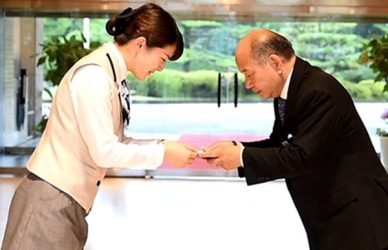


Japan’s hospitality sector has been rebuilt around international visitors over the past decade, and that shift has quietly opened doors for foreign workers that were barely ajar before. Hospitality jobs in Japan for foreigners are now a realistic entry point into the country’s workforce — not just for those who speak fluent Japanese, but increasingly for candidates whose value lies in the languages they already speak.
The numbers tell part of the story. International visitor arrivals to Japan broke records in 2023 and continued climbing through 2024. Hotels in Osaka, Kyoto, and Tokyo are stretched. Tour operators need multilingual staff. Restaurants in tourist-heavy districts have discovered that having a staff member who can handle a table of English, French, or Spanish-speaking guests in their own language is worth more than a laminated menu translation. That practical reality is driving hiring decisions.
This does not mean every door is open. Japan’s service industry has its own standards, culture, and expectations, and foreign candidates who understand those realities tend to fare considerably better than those who treat it like any other customer-facing job market. This guide covers the roles worth targeting, where to look first, how interviews work in this sector, what visa options apply, and what to expect in your first days on the job.
Roles and realistic requirements

Hospitality in Japan spans a wide range of positions. Understanding which roles are genuinely accessible to foreigners — and what is realistically expected — saves time and sets appropriate expectations.
Hotel jobs Japan
International hotel chains operating in Japan have the most structured approach to hiring foreign staff. Properties affiliated with Marriott, Hilton, Hyatt, IHG, and Accor, as well as boutique luxury properties catering to international guests, regularly hire for front desk, concierge, guest relations, and food and beverage roles where multilingual ability is the core qualification. English is typically the baseline; additional languages — Mandarin, Cantonese, Korean, French, Spanish, Arabic — meaningfully increase your marketability.
Japanese-branded hotel chains such as ANA Intercontinental, Prince Hotels, or Hoshino Resorts are more variable. Some have international divisions or properties in major tourist areas where foreign staff are welcomed. Others operate in environments where business-level Japanese is a practical necessity for most guest-facing work.
Requirements for hotel roles generally include a high school diploma or equivalent, customer service experience, and proof of eligibility to work in Japan. Degree requirements vary by role level — management track positions typically expect a hospitality or business degree.
Restaurant jobs Japan
Restaurant work divides roughly into three categories for foreign candidates. International restaurants and foreign-owned establishments in cities like Tokyo, Osaka, and Fukuoka often hire foreign staff with little or no Japanese requirement, particularly for kitchen and casual service positions. Tourist-area restaurants — around Asakusa, Namba, Arashiyama, and similar districts — increasingly value staff who can communicate with non-Japanese guests. Fine dining establishments, even those with international clientele, tend to expect higher Japanese ability for floor service.
Kitchen roles are often more accessible than front-of-house work from a language standpoint, though any role involving direct customer interaction in a Japanese-format restaurant will require at minimum basic service Japanese.
Service jobs Japan foreigner
Beyond hotels and restaurants, several adjacent categories are actively recruiting foreign workers. Theme parks and tourist attractions — Tokyo Disneyland, Universal Studios Japan, teamLab venues — hire seasonal and part-time international staff, particularly for multilingual guest services. Ryokan (traditional Japanese inns) in heavily visited areas like Hakone, Nikko, or Kinosaki Onsen have been increasingly open to foreign staff in guest-facing roles as international bookings grow. Airport lounges, duty-free retail in international terminals, and tour guide work also fall into this cluster.
Scenario: Fatima, a Moroccan hospitality graduate with five years of hotel experience in Dubai, applied to four Tokyo hotels after relocating with her spouse. Two international chain properties responded within a week, specifically noting her Arabic and French language skills as differentiating factors. She was hired by one for a guest relations role within three weeks of starting her search.
Where foreigners get hired fastest
Not all corners of Japan’s hospitality sector move at the same pace. Knowing where foreign candidates land fastest helps you concentrate your search.
Tokyo hospitality jobs — international districts
Shinjuku, Shibuya, Asakusa, and the Marunouchi business district have the highest concentration of internationally oriented hospitality employers. Hotels in these areas receive a disproportionate share of international bookings and tend to have established processes for hiring and onboarding foreign staff. Competition is also higher, but so is the volume of openings.
Kyoto and Osaka
Both cities have seen dramatic growth in inbound tourism and a corresponding surge in hospitality hiring. Kyoto, in particular, has an unusually high concentration of high-end ryokan, boutique hotels, and experience-focused tourism operators who value staff capable of communicating Japan’s cultural context to international guests. Osaka’s restaurant and entertainment districts around Dotonbori and Namba have a more casual, fast-moving hiring environment.
Okinawa and resort areas
Resort properties in Okinawa, Niseko (Hokkaido), and Hakuba actively recruit English and multilingual staff, partly because their international guest bases are substantial and partly because competition from Tokyo for local Japanese staff is lower. Niseko in particular has a well-established community of foreign hospitality workers, primarily from English-speaking countries and Southeast Asia.
Common mistakes:
- Applying to traditional Japanese-format establishments without any Japanese language ability and no specific language value to offer. These employers have limited incentive to hire a candidate who cannot communicate with the majority of their guests.
- Targeting only the largest hotel chains and ignoring boutique properties, tour operators, and experience-based businesses, which are often more flexible and faster-moving in their hiring.
- Overlooking part-time and contract roles as a starting point. Many foreign workers in Japan’s hospitality sector enter via part-time contracts and convert to full-time after demonstrating reliability.
Interview etiquette

Job interviews in Japan’s hospitality sector carry expectations that differ noticeably from equivalent processes in Europe, North America, or Australia. The customer service culture in Japan is built on specific standards of presentation, demeanor, and attentiveness, and interviews are an audition for those qualities as much as a conversation about your background.
Presentation
Dress formally and conservatively. This means a dark suit or equivalent professional attire, even for roles that will involve a uniform. Arriving underdressed signals that you have not researched the company’s culture, which is a significant mark against you in a sector where first impressions with guests are the product.
Punctuality
Arriving exactly on time means arriving early. For an interview scheduled at 10:00, arriving at 9:50 and announcing yourself at 9:55 is appropriate. Arriving at 10:00 is borderline. Arriving late, even by a few minutes without prior notice, is a serious misstep.
Tone and demeanor
Japanese hospitality hiring managers are observing how you carry yourself throughout the interview — not just when you are answering questions. Speak clearly, make moderate eye contact, and avoid overly casual language or posture. Enthusiasm is welcome, but restraint reads as professionalism in this context.
Questions to prepare for:
- Why do you want to work in Japan’s hospitality sector specifically?
- How do you handle a dissatisfied or difficult guest?
- Describe a time you went beyond expectations for a customer.
- What languages do you speak and at what level?
- What do you know about our property and who our guests are?
Researching the specific property or restaurant before your interview is not optional. Hiring managers in this sector expect candidates to have stayed, dined, or at minimum studied the brand’s positioning and guest profile. Referencing something specific about the property demonstrates that you are a serious candidate and not simply casting wide.
Scenario: James, a British hotel graduate interviewing for a concierge position at a Kyoto luxury property, spent an evening studying the hotel’s website, TripAdvisor reviews, and a hospitality industry profile. In the interview, he referenced the property’s reputation for cultural programming and asked a specific question about how the concierge team handled requests for private tea ceremony experiences. He was hired over two other candidates the interviewer described as more experienced on paper.
Visa pathways
Working in Japan’s hospitality sector as a foreign national requires legal authorization to work. The visa categories that apply depend on your role, qualifications, and employer.
Engineer/Specialist in Humanities/International Services visa
This is the most common work visa for foreigner-facing hospitality roles. The “international services” component covers positions that require knowledge of foreign cultures or languages — which describes most guest-facing hotel and tourism roles. Your employer sponsors the Certificate of Eligibility, and a bachelor’s degree is generally required, though the degree does not need to be in hospitality specifically.
Specified Skilled Worker (SSW) visa — Category 1
Japan introduced the Specified Skilled Worker visa in 2019 specifically to address labor shortages in industries including food service and accommodation. This visa pathway does not require a bachelor’s degree, making it more accessible to candidates without university qualifications. To qualify, candidates must pass a skills test and a Japanese language proficiency test (generally equivalent to JLPT N4 or above). The SSW Category 1 visa is valid for up to five years in total with renewals and does not lead directly to permanent residency, but it has become a realistic route for many hospitality workers.
Working Holiday visa
Nationals of countries with a working holiday agreement with Japan — including Australia, New Zealand, Canada, the UK, Ireland, France, Germany, and others — can enter Japan on a working holiday visa and work in hospitality without employer sponsorship. This is often the fastest entry route and has been used extensively by foreign workers in Niseko’s ski resort hospitality sector and in city restaurants. The limitation is age (generally under 30, with some countries allowing up to 35) and the one-year duration with limited renewal options.
Sponsorship practicalities
Not all hospitality employers are set up to sponsor work visas. Large international hotel chains and established operators generally are. Smaller restaurants and independent properties may not have handled the process before and may require more lead time or decline altogether. Asking about sponsorship clearly and early in the process — ideally by the second or third communication — avoids wasted time on both sides.
When you start work, consider getting a personal hanko from HankoHub for any paperwork and banking tasks that come up during onboarding.
Day-one onboarding tips
Japan’s hospitality sector has specific onboarding norms. Knowing what to expect on and before your first day helps you start on the right footing.
Before day one:
- Confirm your working schedule, uniform requirements, and reporting location in writing.
- Register your address at the local municipal office within 14 days of arrival in Japan — this is legally required and employers will need your registered address for payroll and insurance enrollment.
- Open a Japanese bank account as soon as possible. Salary is paid by bank transfer and most employers cannot process first-month payroll without your account details.
- Enroll in health insurance. Full-time employees are generally covered through their employer’s shakai hoken. Part-time workers may need to enroll independently in the national health insurance scheme.
- Confirm whether your employer requires a residence certificate (住民票) or other documents at onboarding — have these ready in advance.
First week behavior:
- Arrive before your scheduled start time for the first week, not just on time.
- Observe before asking. Japanese workplaces have established ways of doing things. Watching how experienced colleagues handle tasks before asking questions signals respect for existing practice.
- Learn and use the specific greetings and service phrases your workplace uses. Every hospitality environment in Japan has standard keigo (polite language) phrases that are specific to that context. Making an effort to use them correctly, even imperfectly, is noticed positively.
- Be proactive in small ways — refilling supplies, adjusting your station, staying alert during quieter periods — rather than waiting to be assigned every task.
- If you have a supervisor or senior colleague assigned as your onboarding contact, express gratitude clearly at the end of each shift during your first week.
Scenario: Hana, a Filipino hospitality worker who joined a Kyoto ryokan on an SSW visa, found the first week overwhelming because of the specific guest-greeting rituals and the flow of duties. Rather than asking her supervisor to repeat explanations, she wrote down every phrase and procedure in a small notebook each evening and reviewed it before the next shift. By the end of week two, she was being used to demonstrate the welcome sequence to a new hire.
FAQ
Do I need to speak Japanese to work in hospitality in Japan?
It depends significantly on the role and employer. For international hotel chains and tourist-focused properties, basic to conversational Japanese is often sufficient and your other language skills are the primary value you bring. For traditional Japanese hospitality environments — upscale ryokan, formal kaiseki restaurants, high-end service roles at Japanese-brand properties — higher Japanese ability is generally expected, at minimum N3 and often N2 for senior positions.
Is experience required for entry-level hospitality roles?
For hotel and restaurant jobs Japan entry-level positions, prior customer service experience is typically preferred but not always required, especially at properties that have strong training programs. Being able to demonstrate calm under pressure, attentiveness to guests, and a genuine service orientation in the interview often matters more than the specific industry your experience came from.
What is the pay like for hospitality work in Japan?
Entry-level positions at hotels and restaurants typically pay ¥1,100–¥1,500 per hour for part-time work, or ¥200,000–¥260,000 per month gross for full-time contracts. Luxury hotel roles and management-track positions at international chains range higher, from ¥300,000 upward depending on level. Resort areas like Niseko sometimes offer higher package rates that include accommodation, which materially changes the effective compensation.
Are there seasonal opportunities in hospitality?
Yes. Ski resort towns like Niseko and Hakuba have concentrated winter hiring seasons, typically from October through December for December–March employment. Cherry blossom and autumn foliage seasons drive peak demand in Kyoto and Tokyo. Summer brings resort hiring on the coast and in highland areas. Seasonal roles are often accessible on working holiday visas and can provide a structured way to experience the industry before committing to a longer-term contract.
What happens if my employer closes or changes my contract?
This is an important practical question. If your visa is tied to a specific employer and that employment ends, you generally have a defined period — currently 90 days in Japan’s immigration rules — to find a new sponsor before your residency status is affected. Registering any change of employment status with immigration authorities as required is legally important. Consulting an immigration specialist or your nearest Hello Work (public employment service) office is advisable if your employment situation changes unexpectedly.
Next steps

Japan’s hospitality sector is one of the more genuinely welcoming corners of the country’s job market for foreign candidates — not as a favor, but because the industry needs what multilingual, internationally experienced workers bring. The combination of record tourist numbers, a shortage of service workers in major cities and resort areas, and government-backed visa pathways like the Specified Skilled Worker program means that prepared candidates with relevant language skills and a service-oriented mindset have real options.
ComfysCareer lists current hospitality roles across Japan that are open to foreign applicants. Browse by city, role type, or visa sponsorship availability and apply directly to employers already set up to hire internationally.