
Getting paid in Japan means having a Japanese bank account. There is no practical workaround — employers transfer salaries directly into domestic accounts, and without one, your first payroll cycle becomes a problem that lands on both you and your HR department. If you are trying to open a bank account in Japan as a foreigner, the good news is that it is entirely achievable. The less convenient news is that it takes planning, timing, and knowing which institutions will actually let you in the door.
Japan’s banking system is built around residency, documentation, and — in some cases — time in the country. What seems like a straightforward errand can turn into a multi-week process if you arrive unprepared or approach the wrong bank first. This guide walks through which banks are genuinely accessible to foreign residents, exactly what to bring, how to handle your name across documents, and where the hanko question still matters in practice.
If you are starting a new job and your employer has given you a start date, begin this process immediately. Do not wait until the week before.
Which banks are foreigner-friendly

Not all Japanese banks treat foreign applicants the same way. Some have formal policies that welcome recent arrivals; others require six months or more of residency before they will open a personal account. Knowing which is which saves significant time.
Japan Post Bank (Yucho Ginko) is consistently the most accessible option for new foreign residents. Requirements are minimal — a residence card with a registered address is generally sufficient, and there is no residency duration requirement enforced at most branches. The Yucho interface is available in multiple languages, the bankbook (tsuchocho) system is straightforward, and salary transfers are accepted by virtually all employers. The main limitations are that overseas wire transfers are restricted and the app experience is less polished than digital-first options. For the purpose of receiving salary, however, it does the job reliably.
Sony Bank is fully online, offers a strong English-language experience, and is popular among foreigners who prefer app-based banking. It accepts salary deposits, connects to most Japanese payment infrastructure, and does not require in-person branch visits after the initial setup. The tradeoff is that account opening takes longer than walking into a Yucho branch — typically one to two weeks by mail.
Rakuten Bank operates entirely online and is widely used by freelancers and employees alike for salary receipt. It integrates well with Rakuten’s broader ecosystem and has reasonable English-language support. Residency requirements are similar to Sony Bank, and the application process is digital.
SMBC (Sumitomo Mitsui), MUFG (Mitsubishi UFJ), and Mizuho — Japan’s three megabanks — are widely accepted for payroll and generally preferred by larger corporate employers. However, they are more conservative in their approach to new foreign residents. Many branches informally require applicants to have lived in Japan for at least six months, and the application experience is entirely in Japanese. If your Japanese is limited and you have just arrived, attempting a megabank first risks wasted time. If you have been in Japan for several months and your Japanese is functional, these banks are worth pursuing for their broader service range.
Shinsei Bank (now SBI Shinsei) has historically been one of the more foreigner-accessible options among larger banks, with an English application process and fewer residency duration barriers. Its product offering includes international transfers, which is useful if you send money abroad regularly.
A micro-scenario: Tomasz moved to Nagoya for an engineering role and attempted to open an SMBC account on his second day in Japan — before his residence card showed a local address, because he was still staying in temporary accommodation. The branch turned him down. He returned two weeks later with a registered address on his residence card, applied at Japan Post Bank instead, and had a functioning account within the same week. His salary was set up in time for his first payroll cycle with two days to spare.
Documents to bring
Before you go to any bank, confirm on their website or by phone which documents they currently require. Requirements shift, and individual branches occasionally apply their own interpretations. That said, the following list covers what is needed at virtually every institution that accepts foreign applicants.
Core documents for all foreign applicants:
- Residence card (zairyu card) — this is your primary identification document; the address shown on it must be your current registered address, not a temporary or previous one
- Passport — bring the full passport including the page showing your current visa category
- My Number — either your My Number card (kojin bango card) or the original notification postcard; increasingly required by major banks and mandatory at some
- Japanese phone number — most banks require a phone number for account verification, SMS authentication, and contact purposes; a SIM registered in Japan is generally needed
- Initial deposit — Japan Post Bank requires a starting deposit of at least one yen, though in practice bringing a small amount of cash for the deposit is standard; other banks vary
Additional documents that may be requested:
- Proof of employment or a letter from your employer — some banks, particularly megabanks, ask for this to confirm that the account has a legitimate purpose
- Student enrollment certificate — if you are opening an account as a student on a student visa
- Utility bill or official mail showing your address — occasionally requested as supplementary address confirmation, though your residence card usually suffices
Common mistake: Going to the bank before registering your address at the ward office (kuyakusho or shiyakusho). Your residence card needs a registered address printed or stamped on the back before any bank will accept it as valid identification. This is the single most common reason foreigners are turned away on a first attempt. Register your address at the local ward or city office first — it takes under thirty minutes — and then go to the bank.
Checklist: Before you leave for the bank
- Residence card with registered address confirmed on the back
- Passport with current visa page
- My Number card or notification letter
- Japanese phone number active and accessible
- Small amount of cash for initial deposit
- Employer name and contact information (in case they ask)
- Basic knowledge of the katakana spelling of your name (see next section)
Name matching tips
Name consistency across documents is more important in Japan than in most countries. When you open a bank account, the name registered on that account must match the name on your residence card, which must match the name on your employment contract, which must match the name your employer files with the tax and social insurance authorities. A mismatch anywhere in this chain creates problems — delayed payroll, rejected transfers, or complications during tax filing.
The core rule: Use your name exactly as it appears on your residence card. Do not shorten it, reorder it, or substitute a nickname.
Katakana transliteration matters. Your name will be rendered in katakana on your bank account, and the katakana version used by the bank must match the katakana version used by your employer for payroll. Before opening your account, confirm how your employer has registered your name in their payroll system — ask HR for the exact katakana spelling they are using. Then use that same spelling when completing your bank application.
This sounds like a minor administrative detail until it causes a salary transfer to bounce. Payroll systems in Japan check the account name against the registered name, and even a single character difference — an elongation mark in the wrong place, a different romanization of a middle name — can trigger a rejection.
For names that are difficult to render in katakana: Common issues arise with names that contain sounds not standard in Japanese phonology, names with multiple syllables that katakana handles ambiguously, and names where different transliterations are equally plausible. If your residence card shows a katakana rendering you disagree with, the residence card still takes precedence — use its version for all financial and employment documents.
For names with legal middle names: Japan’s residence card system sometimes omits middle names or abbreviates them. If your middle name appears on your passport but not on your residence card, banks will generally use the residence card version. Confirm with HR whether your employment contract uses your middle name, and if it does, request that they align it with your residence card.
A micro-scenario: Nneka’s residence card showed her name in katakana as ンネカ (Nneka), but her company’s HR department had entered her as エネカ (Eneka) based on a pronunciation assumption when drafting her contract. Her first salary transfer was rejected because the bank account name and the payroll name did not match. Correcting it required HR to file an amendment with their payroll system and took an additional two weeks. Catching this discrepancy during onboarding — before the first payroll cycle — would have avoided it entirely.
Hanko vs signature realities

Japan’s relationship with the hanko seal in banking has changed considerably over the past decade, and the shift is ongoing. Understanding where a hanko is still required versus where a signature is fully accepted will prevent unnecessary delays or expenses.
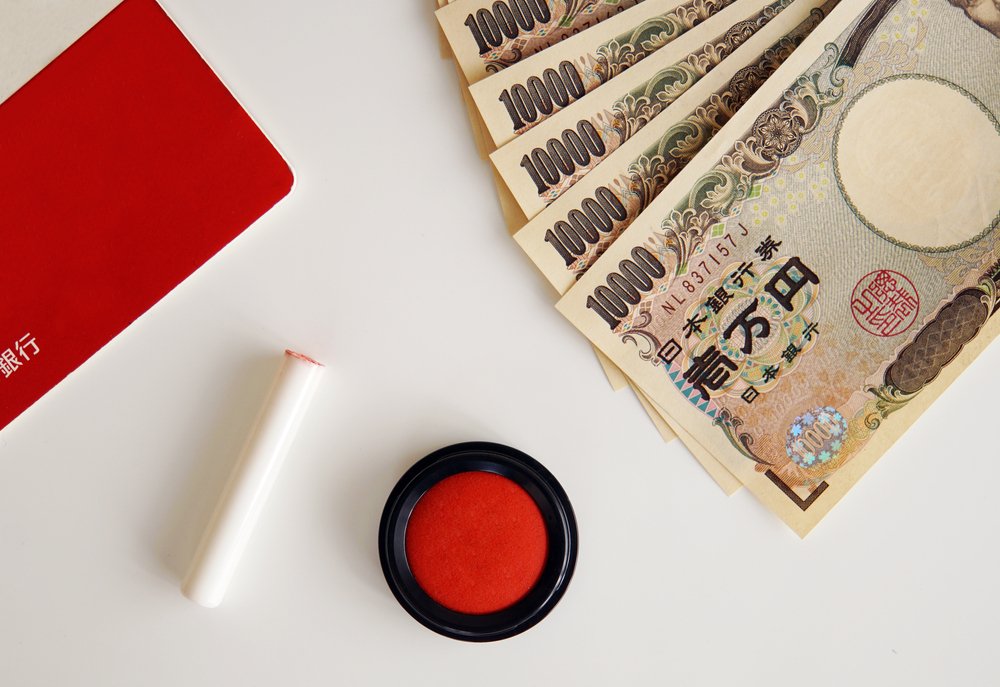
The ginkoin (銀行印) — a bank-registered hanko — is a dedicated seal used specifically for banking transactions. Traditionally, opening a bank account in Japan required registering a ginkoin with the bank, and that stamp was required to authorize withdrawals, wire transfers, and any account changes. In practice, the ginkoin requirement has been significantly reduced.
Where a hanko is still required or expected:
- Japan Post Bank still uses ginkoin registration for some account functions, though this has been partly replaced by PIN-based systems depending on the branch and transaction type
- Some megabank branches, particularly those serving more traditional customer bases, still request a hanko during account opening
- Older account types that were set up with a registered hanko still require it for certain transactions, even if new accounts no longer need one
Where a signature is now accepted:
- Sony Bank, Rakuten Bank, and SBI Shinsei Bank operate entirely without hanko — signature or digital authentication only
- Many SMBC, MUFG, and Mizuho branches now offer signature-based accounts, though individual branches vary
- Japan Post Bank has been moving toward PIN and signature workflows for everyday transactions
If you need a bank seal, HankoHub offers ginkoin-friendly hanko options with guidance for foreigners.
Practical advice: When you arrive at the bank, ask directly whether a hanko is required before assuming you need one. Many foreigners spend time and money obtaining a hanko for bank purposes only to discover the branch they chose does not require one. Equally, do not assume you will not need one — call ahead if the branch’s policy is unclear.
If you do need a ginkoin, note that it should be registered in the same name as your account — which means the same katakana as your residence card. Do not order a hanko in an informal romanized or informal version of your name.
FAQ
How long does it take to open a bank account in Japan?
At Japan Post Bank with all documents ready, the same-day process at a branch typically takes thirty to sixty minutes. Online banks like Sony Bank or Rakuten Bank take one to two weeks because account confirmation materials are sent by post. Plan around your payroll deadline accordingly.
Can I open an account before I have a job?
Yes, though some banks ask for the purpose of the account. If you are job-hunting or pre-employment, Japan Post Bank and the major online banks are the most straightforward options. Megabanks occasionally push back if you cannot show an employment connection, particularly for new arrivals.
What if my employer specifies which bank I must use?
Some larger employers — particularly public institutions, large manufacturers, and some government-adjacent organizations — have arrangements with a specific bank and require employees to open accounts there. If this is the case, HR should guide you through the process, and the employer’s existing relationship with the bank may streamline your application.
Do I need a Japanese phone number to open an account?
Generally yes. Most banks use SMS-based authentication for account registration and ongoing access. A SIM registered in Japan is the most reliable way to meet this requirement. Some banks accept overseas numbers at the initial application stage but will require a Japanese number for app access and two-factor authentication.
What is the difference between a cash card (kyasshu kado) and a credit card from my bank?
Your bank will typically issue a Japan ATM card — a cash card — that works at ATMs across Japan, including convenience store ATMs (7-Eleven, FamilyMart, Lawson). This is separate from a credit card. Building credit history in Japan takes time, and most banks require at least six months to a year of Japanese banking history before approving a credit card application. Start with the cash card and revisit credit options after you are settled.
Can I use a Japanese bank account to send money abroad?
It depends on the bank. Japan Post Bank allows overseas transfers but with limitations and fees. SBI Shinsei Bank and Sony Bank offer more flexible international transfer options. If sending money home regularly is a priority, factor international transfer capability into your bank choice from the start.
What happens if my application is rejected?
Ask the reason. Banks are not always forthcoming, but common causes include: an unregistered address on the residence card, residency duration below the bank’s threshold, or missing documentation. If rejected at a megabank, try Japan Post Bank — requirements are generally more accessible. If rejected everywhere and your documentation appears complete, consult your employer’s HR department, as they may have a banking relationship that can assist.
Is Japan banking for foreigners improving?
Yes, gradually. Government-led digitization efforts, the growth of online banks, and increased international workforce participation have pushed the system toward greater accessibility. The challenges are real but more manageable than they were five years ago, particularly for foreign residents who prepare carefully.
Next steps

A salary bank account is one of the first practical hurdles of building a working life in Japan, and it is entirely solvable with the right preparation. Start the process early, bring complete documentation, and confirm your name consistency before your first payroll cycle runs. If you are still searching for a role in Japan and want to find employers who support smooth onboarding — including help with payroll setup and administrative guidance for foreign hires — browse open positions on ComfysCareer and find a team that sets you up for a strong start.