
Starting a new job is stressful in any country. In Japan, it comes with its own layer of paperwork, processes, and quiet expectations that no one fully explains in the offer letter. If you are a foreigner navigating Japan HR onboarding for the first time, knowing what is coming before you walk through the door makes a significant difference — not just for your own confidence, but for how your new employer perceives you.
Day one in a Japanese workplace is not purely administrative. It is also observational. HR staff and managers notice whether a new hire arrives prepared, handles paperwork calmly, and asks sensible questions. This is not unique to Japan, but the stakes of that first impression tend to carry further in Japanese work culture, where composure and readiness are read as signals of reliability.
This guide covers what HR will typically ask for, which documents to bring, how payroll setup works, and where older practices like the hanko seal still appear in modern onboarding. Whether you are starting your first Japan-based role or switching jobs after years in the country, this is what to expect.
What HR typically asks

Most Japanese companies — from large multinationals to mid-size domestic firms — follow a similar onboarding intake process. For foreign employees, there are a few additional layers that do not apply to Japanese nationals.
The standard HR intake will generally include:
Your personal information for tax and social insurance registration. Japan requires employers to enroll new employees in health insurance (kenko hoken), pension (kosei nenkin), and employment insurance (koyo hoken) from the first eligible working day. To complete this, HR needs your full legal name, address, date of birth, and — critically — your residence card (zairyu card) details.
Your tax withholding form. The Kyuyo shotoku sha no fuyokojo no shinkokusho — usually just called the “fuyokojo” — is a paper form that nearly every employee completes on the first day or before it. It captures dependents, your address, and your tax withholding preferences. It sounds more complex than it is, but if your Japanese reading level is limited, ask HR to walk through it with you. Most HR departments at companies that hire foreigners are accustomed to this request.
A confirmation of your visa status and work authorization. Your employer is legally required to confirm that you are permitted to work in Japan and that your visa category covers the type of work they are hiring you for. Bring your residence card and, if relevant, your visa sticker page in your passport. HR will copy both.
Your bank account information. Salary in Japan is almost always paid directly to a Japanese bank account. If you do not have one yet at the time of starting, inform HR immediately — some companies can delay the first payroll transfer or issue a manual payment, but not all of them. More on this below.
A micro-scenario: Kwame arrived at his first day at a Tokyo-based logistics firm having carefully prepared his residence card and passport. What he had not anticipated was the fuyokojo form, which was entirely in Japanese. His HR contact handed it to him along with four other forms and assumed he could manage. He spent twenty minutes quietly confused before asking for help. The HR staff member was helpful once asked — but Kwame wished he had known to request a bilingual orientation in advance. Most companies that regularly hire foreigners have one available. Asking beforehand is not overstepping.
Documents checklist
Bring originals of everything below unless told otherwise. Some companies request originals on day one for photocopying; others ask you to bring copies. When in doubt, bring both.
Essential documents for all foreign employees on day one:
- Residence card (zairyu card) — original, both sides will be copied
- Passport — HR will copy the photo page and your current visa stamp
- My Number (kojin bango) notification letter or My Number card — required for tax and social insurance registration; do not leave this at home
- Japanese bank account details — account number, branch name, branch code, and bank name (your bankbook or tsuchocho is the easiest way to provide this)
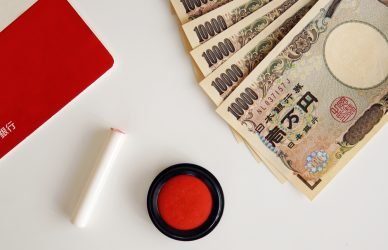
- Registered personal seal (hanko) — not always required, but ask HR beforehand; some firms still use it for contract signing
- Emergency contact information — name, relationship, phone number, and address
- Highest educational certificate or diploma — less common on day one, but some employers request it during onboarding
- Previous employment certificate (rishokusha shomeisho) — if switching jobs, some HR departments ask for proof of separation from your prior employer; this is more common in larger corporations
For employees on employer-sponsored visas:
- A copy of your Certificate of Eligibility (COE), if your employer sponsored your visa — HR may want this for their records
- Confirmation letter from your employer if your work permit is tied to this specific company — keep a copy for yourself as well
Common mistake: Forgetting your My Number. This is the single most common onboarding delay for foreign employees in Japan. My Number is required for all tax and social insurance enrollment. If you have misplaced your notification letter and do not have a My Number card, you will need to contact your local ward or city office to reissue it. The process takes time. Sort this out before your start date.
Bank account and payroll
Japan runs almost entirely on bank-transfer payroll. Cash salary payments exist in very small operations, but the overwhelming majority of employers — including smaller companies — pay directly into a Japanese bank account. You need one before your first payroll cycle closes.
Opening a Japanese bank account as a foreigner requires:
- A residence card showing a registered address in Japan
- Your passport
- Your My Number (required by most major banks)
- In some cases, a phone number registered in Japan
The two banks most accessible to foreigners are Japan Post Bank (Yucho) and Sony Bank, both of which have English-language interfaces and relatively straightforward application processes. SMBC, MUFG, and Mizuho — the three major commercial banks — are also widely accepted by employers for payroll, but opening accounts at these banks can be more difficult if you have been in Japan for less than six months. Requirements shift and vary by branch.
Timing matters: Some employers require your bank details submitted before your start date. Others collect them on day one and set up payroll for the following cycle. If your start date falls near the end of a pay cycle, your first salary may be delayed by one full month. Ask HR about their payroll schedule during onboarding so you are not caught short.
A micro-scenario: Priya accepted a job offer in Osaka and moved to Japan two weeks before her start date specifically to open a bank account first. She chose Japan Post Bank, opened an account within a week, and had her bankbook ready for day one. Her colleague who started the same day had been in Japan only four days, had not yet opened an account, and received her first month’s salary by cash envelope — a process that required HR to file exception paperwork. The colleague’s onboarding was otherwise smooth, but the extra steps created friction that left a minor negative impression.
Payroll cycle in Japan is typically monthly, paid on a fixed date — the 25th of the month is common, but varies. Some companies pay at the end of the month. Confirm the pay date and the cutoff date for that cycle during your onboarding conversation with HR.
Where hanko appears (if at all)

The hanko — a personal registered seal — is a genuine part of Japanese administrative and professional life, though its role in corporate onboarding has shifted over the past several years. The Japanese government’s digitization push (gyosei DX) has reduced mandatory hanko use across many public and private processes. What remains varies by employer.
Where you are likely to still encounter hanko in onboarding:
- Signing your employment contract, particularly in traditional industries such as manufacturing, construction, finance, and government-adjacent organizations
- Internal forms related to commuting expense registration (tsukin teate), bank account setup, or insurance enrollment at companies that have not digitized these workflows
- Apartment rental agreements, which are separate from your employer but often overlap in timing with a new job start
Where hanko is increasingly less common:
- Tech companies, startups, and foreign-capital firms in Japan have largely shifted to electronic signatures (DocuSign, CloudSign) for contracts
- Many mid-size companies now accept a signature in place of a hanko for internal forms, particularly for foreign employees
- Public registrations for My Number and social insurance increasingly accept digital or signature-based submission
One practical step: if your employer asks for stamping, HankoHub can provide a custom hanko quickly.
A note on registered versus non-registered hanko: For basic workplace forms, a mitome-in — an everyday, non-registered stamp — is usually sufficient. A jitsuin (officially registered seal) is required for contracts involving significant legal or financial commitments and is much less common in standard employment onboarding. If HR asks for a hanko, ask them to clarify which type is needed before you order or register anything.
Common mistake: Assuming you definitely need a hanko before your first day. Call or email HR during the pre-start period and ask directly: “Do you require a hanko for employment forms, and if so, what type?” The answer will save you unnecessary expense or a same-day scramble.
FAQ
Do I need to speak Japanese to complete onboarding paperwork?
Not necessarily, but it helps significantly. Most onboarding forms are in Japanese only. Companies that frequently hire foreigners — including many international firms and larger tech employers — often have bilingual HR staff or translated form packets. Ask when you receive your offer whether bilingual onboarding support is available. If it is not, consider preparing by reviewing the fuyokojo form structure online in advance.
What if my address changes between signing my contract and starting work?
Notify HR as soon as possible and update your residence registration at your ward or city office first. Your official registered address must match what you provide to HR for tax and social insurance purposes. Mismatches can cause delays in enrollment.
Can I start work before my bank account is open?
Generally yes, but confirm with HR how they handle salary for employees without a bank account on file. Options vary: some companies issue a cash advance or hold your first payment; others require you to set up a company-arranged account temporarily. Do not assume this will be handled smoothly without asking.
What is My Number and why does it matter so much?
My Number is Japan’s national identification number system, introduced in 2016. Every resident — including foreigners with medium- and long-term residency — is assigned a 12-digit number. It is used for tax filing, social insurance enrollment, and payroll processing. Without it, your employer cannot complete your legally required registrations. If you do not have your My Number card yet, your original notification letter (a plain postcard-sized document sent to your registered address) contains the number and is accepted by most employers.
What social insurance am I entitled to as a foreign employee?
Most foreign employees working full-time at Japanese companies are enrolled in the same social insurance system as Japanese employees: health insurance, pension, and employment insurance. Enrollment is generally mandatory from the first day for full-time positions. Part-time and contract arrangements have different thresholds. Confirm your enrollment status with HR during onboarding — do not assume it has been processed without asking for confirmation.
What happens if I leave Japan before retirement age — do I lose my pension contributions?
No. Japan has a lump-sum withdrawal system (dattai ichijikin) that allows foreign nationals who leave Japan permanently to claim back a portion of their pension contributions, generally up to three years’ worth. The claim must be filed within two years of leaving Japan. This is separate from bilateral social security agreements Japan has with certain countries, which can allow contributions to count toward your home country’s pension. Ask HR or a tax advisor about your specific situation.
What if my visa type does not match my job duties?
This is a serious compliance issue. Your visa category must cover the work you are actually performing. If your role has changed significantly from what was described in your visa application, consult an immigration lawyer or your company’s HR compliance team before your start date or as soon as you become aware of a discrepancy. Employers bear responsibility here alongside employees, but the consequences fall on the individual if a violation is identified.
Next steps

Japan’s onboarding process rewards preparation. The more you arrive knowing — which documents to bring, how payroll works, where to ask questions — the smoother your first week will be and the stronger your first impression. If you are still in the job search stage, browse open roles on ComfysCareer to find positions that match your visa status, language level, and career goals. Once you land the offer, come back to this guide and work through the checklist before day one.