

Getting a Japan work visa for foreigners is not as complicated as it looks from the outside—but it does require understanding how the system is structured before you start applying to jobs or making relocation plans. The right visa category, a sponsor who knows what they are doing, and a complete document package can mean the difference between a smooth approval and a months-long delay.
Japan has expanded its work visa framework significantly over the past several years, adding new pathways for skilled workers, digital professionals, and caregivers alongside the long-established categories. But the variety can be confusing, and misinformation circulates freely in expat forums and outdated blog posts.
This guide covers the main visa categories in plain terms, what the eligibility requirements actually look like in practice, how sponsorship works and where it commonly breaks down, what documents you need, the mistakes that most often derail applications, and the answers to questions that come up again and again. Whether you are planning a move from overseas or navigating a status change while already in Japan, this is the practical foundation you need.
Main visa types explained
Japan’s work visas are officially called “Status of Residence” categories. You are not simply granted permission to work—you are granted a specific status tied to the type of work you will do. Working outside that category is a violation of your visa conditions.
Here are the categories most relevant to foreign professionals.
Engineer / Specialist in Humanities / International Services Usually called the “engineer visa” or “humanities visa,” this is the single most common work visa for white-collar foreign workers. It covers two broad tracks that are often issued under one combined category:
- Engineer track: Software development, mechanical and civil engineering, IT infrastructure, data science, and related technical fields. Requires a relevant university degree or ten years of professional experience in the field.
- Humanities / International Services track: Business, marketing, HR, finance, translation, international sales, and roles that draw on a foreign national’s cultural background or language skills. Requires a university degree (the field does not need to match the role as closely as the engineering track).
This visa is the default for most foreigners joining mid-to-large companies in professional roles.
Highly Skilled Professional (HSP) A points-based visa system designed to attract high-value talent. Points are awarded for academic background, professional career length, annual salary, age, and certain qualifications or research achievements. Reaching 70 points qualifies you; 80 points unlocks an accelerated path to permanent residency (as few as one year, versus the standard ten).
HSP is worth pursuing if your profile is strong. It also comes with additional privileges—accompanying family members may be permitted to work, and household support staff can be brought from overseas in some circumstances.
Specified Skilled Worker (SSW) — Tokutei Gino Introduced in 2019 and expanded since, SSW covers fourteen industries with documented labor shortages: construction, shipbuilding, automotive maintenance, industrial machinery, electronics, aerospace, agriculture, fisheries, food and beverage manufacturing, food service, hospitality, building cleaning, nursing care, and materials processing. SSW Type 1 is renewable but does not directly lead to permanent residency. SSW Type 2, available in more industries after 2023, does allow a path to PR. Language and skills tests are required for most categories.
Business Manager For those establishing or managing a business in Japan. Requires proof of office space, a viable business plan, and typically at least two full-time local employees or 5 million yen in investment capital. This visa is for entrepreneurs and company directors, not employees.
Intra-Company Transferee For employees transferred to a Japan branch, subsidiary, or affiliated office from an overseas position. Requires at least one year of employment at the overseas entity. Useful if your current employer has a Japan presence.
Working Holiday Available to citizens of about thirty countries (including Australia, Canada, the UK, Ireland, Germany, and others) between ages 18 and 30 (up to 35 for some nationalities). Not technically a work visa—it is a cultural exchange visa that permits work to fund travel. Many people use it as a foot in the door to find a sponsor and convert to a proper work visa.
Eligibility requirements
Requirements vary by category, but several factors apply broadly across most work visa types.
Education and experience For the Engineer / Humanities visa, a four-year university degree is the standard requirement. The degree does not need to be from a Japanese institution, but it should be from an accredited university and verifiable. If you do not have a degree, ten years of professional experience in the relevant field generally substitutes for the engineering track; three years for the humanities/international services track in some cases, particularly for translation and language-related roles.
Relevant match between role and background Immigration examiners check that your qualifications match what the job actually requires. A software engineer hired as a software engineer is straightforward. A history graduate hired as a marketing coordinator is also typically acceptable. A marine biology PhD hired for a cooking role creates problems.
Employer registration and legitimacy Your sponsoring employer must be a legally registered company in Japan, paying taxes, and able to demonstrate they are a going concern. New companies without a track record face additional scrutiny.
Salary adequacy Your offered salary must be at least equivalent to what a Japanese national in the same role would earn. This is intended to prevent exploitation and wage dumping. There is no fixed floor stated in law, but immigration officers apply a reasonableness standard. Salaries well below market raise red flags.
No criminal record A history of serious criminal offenses—particularly those resulting in imprisonment—can bar entry. Minor or dated offenses are assessed on a case-by-case basis.
One scenario worth noting: Kenji, a Nigerian graphic designer with a three-year degree from a UK institution, was initially told by a recruiter that his degree “would not count.” In practice, it counted fine—the immigration office accepted it once his employer submitted the official transcript with a certified translation. Incomplete information from non-specialist sources is one of the most common sources of unnecessary anxiety in this process.
Sponsorship reality check
Sponsorship in Japan’s visa context means your employer files the Certificate of Eligibility (COE) application with the Immigration Services Agency on your behalf. Without a sponsor, you generally cannot obtain a work visa from outside Japan.
Here is what sponsorship actually involves, practically speaking.
Not every company can or will sponsor Smaller companies—particularly those with no history of hiring foreign workers—may be technically eligible to sponsor but lack the internal HR knowledge to navigate the process. Some decline simply because they do not know how. Others have been turned down by immigration in the past and are wary of the effort.
When evaluating job opportunities, it is worth asking early whether the company has sponsored foreign workers before. A company that has done it multiple times will handle it smoothly. A company doing it for the first time may need more time and hand-holding.
The process takes time From the point your employer submits the COE application to the point you receive it is typically four to eight weeks under normal processing volumes. There is an expedited process for highly skilled professionals, which can reduce this. Add another one to two weeks for the visa stamp at your consulate once the COE arrives.
Total timeline from job offer to landing in Japan: often two to four months. Plan accordingly.
What the employer submits Your employer will generally need to prepare: a reasons for employment document (explaining why they need a foreign national for the role), proof of company registration and financial health, a copy of your employment contract, and supporting documents related to your role and qualifications. HR at experienced companies handles this routinely. At smaller firms, you may need to help gather documents and stay proactive.
Your status during transition If you are already in Japan on a working holiday visa, student visa, or dependent visa, and you find a job, you can apply to change your status of residence from within Japan rather than returning home. This is called a “change of status” application and is processed at your regional immigration office. Processing times are similar to the COE route.
Documents checklist
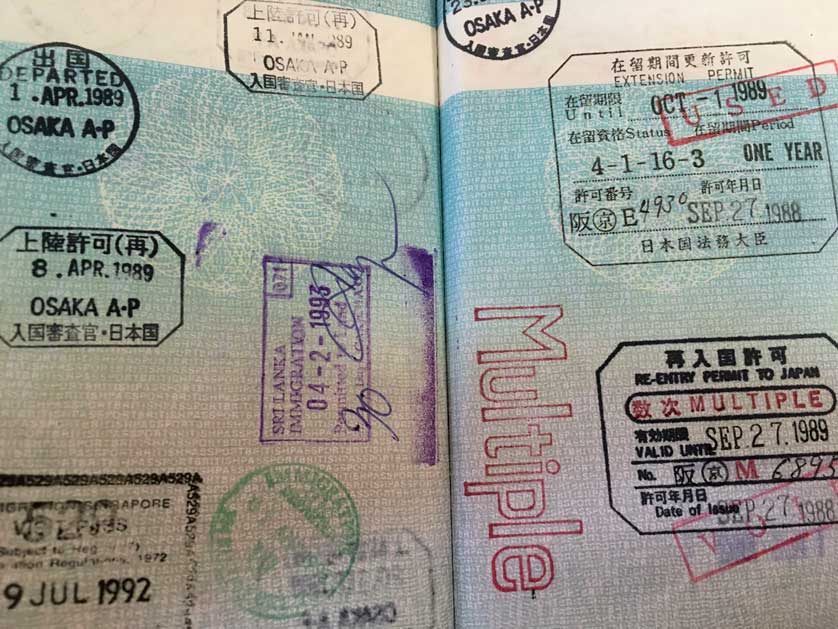
This is a general checklist for the standard Engineer / Humanities visa COE application. Requirements can differ by category and individual circumstances—always confirm with your employer’s HR team or an immigration specialist.
Documents you typically prepare:
- Valid passport (with at least six months remaining validity beyond your intended start date)
- Passport-sized photos meeting Japanese immigration specifications
- Degree certificate (original or certified copy)
- Certified translation of degree if issued in a language other than Japanese or English
- Academic transcripts
- Resume or CV in Japanese or English
- Proof of work experience (if substituting for a degree): employer letters, pay slips, tax records
- Employment contract or offer letter from your Japanese employer
- Any professional certifications relevant to the role
Documents your employer typically prepares:
- COE application form (completed by the employer)
- Company registration documents (touki jihon)
- Recent financial statements or tax records
- Reasons for employment document
- Business overview of the company
Common additions depending on your situation:
- Marriage certificate and translation (if applying for dependent visas simultaneously)
- Birth certificates for children joining on dependent visas
- Criminal background check from your home country (some categories or nationalities require this)
After visa approval, many new arrivals set up a hanko for contracts and banking—HankoHub makes ordering simple.
Common mistakes
Most visa application problems fall into a handful of recurring categories. Being aware of them in advance gives you a meaningful advantage.
Submitting incomplete or untranslated documents If a document is not in Japanese or English, it generally needs a certified translation. Submitting untranslated documents slows processing and can trigger a request for additional materials, adding weeks to your timeline.
Mismatched role and qualifications As noted above, immigration examiners look for a logical connection between what you studied or did professionally and what the job requires. If that connection is not obvious from the documents, your employer’s reasons-for-employment letter needs to make it explicitly. This is one of the most common causes of refusals that could have been avoided.
Letting documents expire Passports with less than six months of validity relative to your intended work period, or certificates that have passed their validity window, cause delays. Check all expiry dates before submitting.
Relying on informal advice Visa rules change. What applied two years ago may not apply now. Advice from friends, Facebook groups, and outdated blog posts—including, inevitably, some of what you have read elsewhere—carries real risk. For anything beyond general orientation, consult a registered gyoseishoshi (administrative scrivener) or immigration lawyer.
Applying for the wrong category This happens more than it should. A content creator hired as a “marketing specialist” probably fits the humanities track fine. But an engineer hired into a business development role needs the employment contract and job description to reflect that correctly, or the application category may be challenged.
Not informing immigration of job changes Once you are in Japan on a work visa, you are required to notify the Immigration Services Agency within 14 days of changing employers. Failing to do so is a violation. If your new role is in a different work category, you need to apply for a change of status, not simply notify.
FAQ
How long does a Japan work visa last? Work visas are typically issued for one, three, or five years, depending on your employer’s track record with immigration, your salary, and your qualifications. You can renew from within Japan before expiry. Strong applicants with established employers often receive three-year visas on their first application.
Can I change jobs on a work visa? Generally yes, as long as your new role falls within the same work category (e.g., still an engineering role on an engineer visa). You must notify immigration within 14 days of changing jobs. If moving to a different category, apply for a change of status.
Do I need to leave Japan to get my visa? If applying from overseas, yes—you obtain the COE in Japan (via your employer) and then get the visa stamp at a Japanese consulate in your country. If you are already in Japan on a different status, you can change status at a regional immigration office without leaving.
Can my family come with me? Spouses and minor children of work visa holders can generally apply for a Dependent Visa. Dependents are not automatically permitted to work, but many can apply for separate work permission that allows up to 28 hours per week.
What is the difference between the engineer visa and the humanities visa? They are technically one combined category but cover different types of roles. Engineering track is for technical and scientific work. Humanities track covers business, language, culture-related, and international services roles. Your employment contract and job description determine which track applies, not the label on the visa itself.
Is it harder to get a visa for a smaller company? Not necessarily, but smaller companies with no history of hiring foreign workers can slow the process down. They may need more time to prepare documents and may not be aware of all requirements. If your prospective employer is new to sponsorship, budget extra time and offer to help gather the materials on your side.
Next steps

Understanding the visa landscape is step one. The faster path forward is finding employers who are already familiar with sponsorship and actively hiring foreign talent. ComfysCareer lists roles from companies that hire internationally—filtering by your background and target visa category saves time and avoids the frustration of applying to positions where sponsorship was never on the table. Browse current listings and use the platform to target the right employers from the start.