

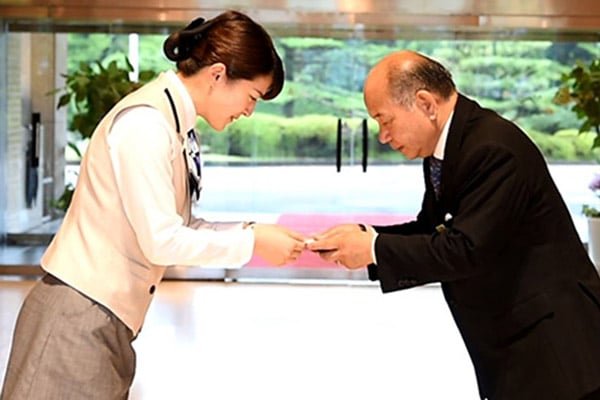
Starting a job in Japan is exciting. It can also be quietly disorienting. Not because the work itself is hard to learn, but because the unwritten rules around how you work — how you speak to your manager, how you sit in a meeting, how you respond to a message — are different in ways that no job description will spell out for you.
Japanese workplace etiquette is not about being stiff or overly formal for its own sake. It reflects values that run deep in how Japanese organizations function: clarity of hierarchy, group cohesion, and the idea that how you show up matters as much as what you deliver. For foreign employees, understanding these values is not just polite — it is practical. It helps you build trust faster, avoid misreadings, and settle into a team that might otherwise keep you at arm’s length without meaning to.
This guide covers what actually comes up day to day: how communication flows, what meetings look like from the inside, how to handle feedback, and where foreigners most commonly trip up. Whether you are about to start your first role in Japan or you have been here a while and want to recalibrate, this is the working-life context that is rarely written down.
Daily communication patterns

In most Japanese offices, communication is layered. There is the formal structure — reports go up, decisions come down — and there is the informal layer, where much of the actual coordination happens: short desk-side conversations, a quick message before a meeting, a quiet check-in after one.
As a foreign employee, the first thing to understand is the concept of hokoku, renraku, sodan — often shortened to ho-ren-so. It translates roughly as reporting, informing, and consulting. In practice, it means: tell your manager what you are doing, let your team know when something changes, and ask before you make a significant call on your own. This is not micromanagement. It is how trust is built incrementally, especially with someone new.
Greetings carry real weight in daily office life. Arriving in the morning with a clear ohayo gozaimasu and leaving with a osaki ni shitsurei shimasu (excuse me for leaving before you) signals that you are part of the rhythm of the workplace, not just passing through it. These phrases feel small but they register.
Common mistakes in daily communication:
- Skipping greetings when you are busy or distracted. It reads as cold, even if it is not intended that way.
- Giving updates only when things go wrong. Regular, brief status communication is expected even when nothing has changed.
- Disagreeing directly in front of others, especially with someone senior. If you have a concern, raising it one-on-one first is almost always the better path.
Consider Marta, a Spanish graphic designer who joined a mid-size Tokyo firm. She was used to speaking up in group chats when she had a different opinion. After a few weeks, her manager gently told her that team members were hesitant to share ideas in meetings because they were worried about being contradicted openly. Marta shifted to raising disagreements privately first — and the team dynamic improved noticeably within a month.
Meetings and reporting
Meetings in Japan often feel different to foreign employees who are used to fast-moving, decision-heavy sessions. Many Japanese workplace meetings are informational or consensus-building in nature. The actual decisions may have already been discussed informally before the meeting begins, through a process called nemawashi — laying the groundwork by consulting stakeholders one by one beforehand.
This means that if you walk into a meeting expecting to debate options and land on a decision in the room, you may find the process frustratingly slow. But if you understand that the meeting is often the formalization of a decision already in progress, it makes more sense. Your role is to listen carefully, ask respectful questions if needed, and signal your alignment or flag your concerns in an appropriate way — often before the meeting, not during it.
When it comes to reporting, the expectation in many Japanese offices is structured and regular. Weekly or daily reports (nisshi or shuho) are common, sometimes in writing. These are not bureaucratic busywork — they are a way of keeping everyone oriented and demonstrating that you are on top of your work. A short, clear report that says what you did, what is in progress, and if anything is blocked will always land better than silence.
A reporting checklist for foreign employees:
- Submit reports on time, even if the content is brief.
- Use a consistent format — if your team has a template, follow it exactly.
- Flag problems early, not after they have grown.
- Avoid vague language like “things are going fine” — be specific about progress.
- If you are unsure what the reporting expectation is, ask your direct manager within the first week.
Kenji, a team lead in Osaka, describes what stands out to him about foreign hires who settle in well: “They ask once about expectations, then they just follow through consistently. That builds trust faster than anything else.”
Email and chat norms
Japanese business email has a recognized structure, and even if your workplace is international-facing, a working knowledge of these norms is useful. Emails in Japanese typically open with a seasonal greeting or a phrase acknowledging the recipient’s organization, move to the substance of the message, and close formally. Even in English-language workplaces, emails often carry a more deliberate, layered structure than what foreigners from more casual office cultures are used to.
For chat tools — Slack, ChatWork, and LINE Works are all common in Japan — the etiquette is often less formal, but some patterns persist. Responding promptly matters. Leaving a message on read for hours without any acknowledgment is generally read as disengagement, even if you are simply busy. A brief “Got it, I’ll check and get back to you” goes a long way.
Some workplaces still use paper-based internal workflows, including stamped approval forms. Some workplaces still stamp internal forms — if you need one, HankoHub offers fast, foreigner-friendly hanko ordering.
Practical email and chat habits:
- Do not skip subject lines or send one-word replies to formal inquiries.
- In Japanese-language emails, open with osewa ni natte orimasu (thank you for your continued support) — it is a standard opener and its absence is noticeable.
- On chat, use reaction emojis or short acknowledgments to confirm receipt.
- Avoid sending non-urgent messages outside working hours if possible, and be cautious about the expectation to reply if you do.
Handling feedback

Feedback in Japanese workplaces is often indirect. Praise is sometimes given in group settings, but criticism rarely is. If a manager says “this might be a little difficult” about your work, that is often a softened way of saying “this needs to change.” Learning to read these signals takes time, and it is one of the more disorienting parts of Japan work culture for people from environments where direct critique is the norm.
This indirectness is not evasion. It is a communication style that prioritizes maintaining the dignity of all parties. The expectation is that you will pick up on the signal and self-correct. The approach rewards awareness and humility.
That said, workplaces vary. Startups and international companies in Japan often operate with more direct communication. And increasingly, younger Japanese managers are adopting more explicit feedback styles. The safest approach when you are new is to assume feedback may be softened, and to ask clarifying questions if you are unsure what is being asked of you.
How to receive and act on feedback:
- Receive criticism without visible defensiveness, even if you disagree.
- Ask one specific clarifying question if you are unsure what improvement looks like: “Is there a format or example I could follow?”
- Follow up with action, not just a nod — showing that you heard the feedback by doing something differently is the most valued response.
- Do not expect detailed written feedback as a default. Much of it will be verbal and brief.
Common mistakes when receiving feedback:
- Explaining yourself at length when corrected. A brief acknowledgment and a clear intent to improve is more effective.
- Waiting for explicit positive feedback before trusting that things are going well. In many Japanese workplaces, no news is genuinely good news.
- Assuming that because feedback is polite, it is optional.
Priya, a software engineer who joined a Tokyo company after several years in London, describes her adjustment: “Back home, when my manager said ‘maybe think about restructuring this,’ I would push back if I disagreed. Here I learned to try the restructure first, then discuss. Things went smoother than I expected.”
FAQ
Do I need to speak Japanese to follow workplace etiquette? Not fully, but basic phrases make a real difference. Greetings, apologies, and simple acknowledgments in Japanese signal effort and respect, even in international-facing companies. Many employers who hire foreign staff will not expect fluency, but they will notice engagement with the language.
How formal should I dress for the office? This depends heavily on the industry. Finance, legal, and traditional corporate environments lean formal. Tech startups and creative agencies are often casual. When in doubt, dress one level more formally than you think is needed for your first week, then calibrate based on what you observe.
What if I make a mistake in front of the team? Acknowledge it briefly and clearly, without excessive self-flagellation. A short apology and a clear statement of how you will handle it is well-received. Drawing too much attention to the mistake — or too little — both register poorly.
Is it acceptable to decline after-work social events? Declining occasionally is fine, especially with a polite reason. Consistently opting out of nomikai (drinking gatherings) or team dinners can create a sense of distance over time, particularly in more traditional workplaces. Attending even briefly and leaving early is often seen more positively than not coming at all.
How long does it take to be “trusted” in a Japanese workplace? There is no fixed timeline, but consistency over the first three to six months tends to be the deciding period. Showing up reliably, communicating proactively, following internal norms, and staying patient with processes that feel slow — these signal that you are in it for the long term.
Will my foreign background be held against me? It depends on the company. Some organizations genuinely value international perspective and actively support foreign employees. Others are still building that capacity. Researching company culture before you accept a role — asking about team diversity, asking how international hires are onboarded — will tell you a lot.
Next steps

Understanding the culture is one part of the picture. Finding a workplace that is actually set up to welcome you — one where your background is an asset, not an afterthought — is the other part. If you are ready to explore roles in Japan that suit your skills and your working style, browse current openings at ComfysCareer. Positions are listed with the kind of practical detail that makes it easier to assess culture fit before you apply.