

Japan has one of the most established Korean communities in Asia, built over generations and still growing today. Whether you speak Korean natively, grew up in a bilingual household, or learned the language through years of dedication, that skill carries real commercial weight in Japan’s job market. Korean jobs in Japan are not a niche — they span retail, tourism, tech, beauty, finance, and more. And the demand is rising.
If you have been considering making Japan a longer chapter of your life, or you are already here and looking for a role that puts your language skills to work, this guide covers where bilingual opportunities actually concentrate, which industries are hiring, and how to present yourself effectively in a market that values cultural fluency as much as language ability.
One thing to understand upfront: Japan’s Korean-speaking job market is geographic in some ways but not in others. Certain neighborhoods are hubs, but remote work, corporate bilingual roles, and tourism-facing positions have spread opportunities well beyond any single district. Here is what you need to know.
Where bilingual roles concentrate

The most recognizable hubs are Shin-Okubo in Tokyo and Tsuruhashi in Osaka. Both are often described as Japan’s “Koreatowns,” and while that framing is accurate, it undersells how economically active these areas have become.
Shin-Okubo, Tokyo has evolved from a quiet ethnic enclave into one of Tokyo’s most commercially dense neighborhoods, driven in large part by the sustained popularity of Korean food, K-beauty, and K-pop culture among younger Japanese consumers. Walk through on a weekend and you will see lines outside Korean fried chicken shops, cosmetics stores with Korean-language signage, and travel agencies with staff who routinely handle Korean visitors. Many of the businesses here are small operations — family-run restaurants, import goods shops, tour booking desks — and they hire staff who can switch naturally between Japanese and Korean throughout the day. Fluency in both is often expected, not a bonus.
Tsuruhashi, Osaka has a longer history. It developed as a trading hub after the Second World War and retains a working-market character alongside its food and retail scene. Employment in Tsuruhashi tends to be more traditional in structure — food production, wholesale, hospitality, and community services — but Korean language ability is consistently valued, and competition for roles can be lower than in Tokyo.
Beyond these two neighborhoods, bilingual roles concentrate in:
- Harajuku, Shibuya, and Myeongdong-adjacent retail zones in Tokyo, where K-beauty and fashion brands require staff who can assist Korean tourists directly
- Corporate districts in Shinjuku, Marunouchi, and Umeda, where companies with Korea-Japan operations post bilingual office roles
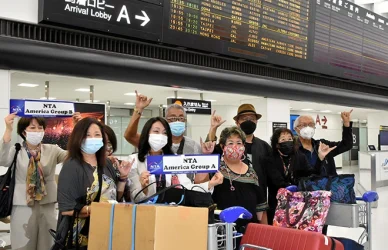
- Airport and tourism corridors — Narita, Haneda, Kansai International — where Korean-speaking staff are in consistent demand across hospitality, ground handling, and retail concessions
A micro-scenario: Jiyeon, a Korean-Japanese bilingual who moved to Tokyo on a working holiday visa, found her first stable role not in Shin-Okubo but through a K-beauty brand with a flagship store in Harajuku. Her Korean was native, her Japanese was conversational, and the company needed someone who could handle Korean tourist traffic on weekends while supporting the Japanese team on weekdays. The role led to a full-time offer within four months.
Industries hiring Korean speakers
The industries below represent the strongest concentration of Korean-speaking job openings in Japan right now. Sponsorship availability and contract type vary by employer and visa situation — always confirm directly with each company.
Retail and beauty: K-beauty has become a major retail category in Japan. Brands including domestic Japanese distributors of Korean cosmetics lines regularly hire bilingual staff for floor sales, customer service, and product education. Korean-speaking ability is listed as a requirement, not a preference, in many of these postings.
Tourism and hospitality: Japan welcomed record numbers of Korean visitors in recent years, and hotels, tour operators, ryokan, and travel agencies have adjusted accordingly. Korean-speaking front desk staff, tour guides, and customer service agents are hired across Japan’s major tourist corridors. This is one of the more accessible entry points for foreigners who are strong in Korean but still developing their Japanese.
Technology and e-commerce: Companies operating across the Japan-Korea corridor — in gaming, app development, e-commerce logistics, and SaaS — often need Korean-speaking business development staff, customer support leads, and product managers who can work with Korean partners or handle Korean-language user bases. These roles tend to offer better compensation and are more likely to support visa sponsorship.
Finance and trading: Japan has a significant number of Korean financial institutions operating in Tokyo, and Japanese firms with Korea exposure hire bilingual analysts, compliance staff, and client-facing advisors. These roles typically require strong written Korean and Japanese alongside domain knowledge.
Education: Korean language instruction has grown in Japan alongside K-pop and Korean drama popularity. Private language schools, online platforms, and university programs hire Korean native speakers as instructors or conversation partners. Requirements vary, but teaching certification is generally not mandatory for conversational or part-time roles.
Food and hospitality: Restaurants, cafes, and food import businesses in Korean community hubs hire Korean-speaking staff for everything from kitchen coordination to front-of-house management. These roles are numerous, accessible, and often a first landing point for new arrivals.
Application strategy

The way you present your bilingual background matters as much as the fact of it. Japanese employers respond well to specificity. Saying you are “bilingual in Korean and Japanese” is less effective than demonstrating it.
Checklist for Korean-speaking job seekers in Japan:
- Write your Japanese resume (rirekisho or Word-format) in standard Japanese with no errors — errors in the language of the workplace signal carelessness
- If applying to a Korean-facing role, prepare a brief Korean self-introduction you can deliver confidently in interview
- Quantify your language experience where possible: years of use, professional contexts, certifications such as TOPIK (Korean proficiency) or JLPT (Japanese proficiency)
- Research the company’s Korea connection before the interview — do they sell to Korean tourists, partner with Korean firms, or serve a Korean-speaking community? Tailor your interest accordingly
- Prepare a short answer for “why Japan” that feels genuine, not rehearsed — bilingual candidates who show cultural fluency alongside language skill stand out
- Know your visa status and be ready to explain it clearly
Common mistakes bilingual candidates make:
Assuming Korean ability alone is sufficient without addressing Japanese ability. Most employers in Japan need you to function in Japanese — even Korean-community businesses operate internal communications in Japanese. Downplaying your Japanese level creates risk. If your Japanese is intermediate, say so honestly and show willingness to improve.
Applying to jobs in Shin-Okubo exclusively. The neighborhood has high turnover and many roles are part-time or short-contract. Bilingual candidates with professional experience are often better positioned in corporate or brand roles where Korean is a differentiating asset.
Skipping the formal application document. Some candidates assume that Korean community businesses are informal in their hiring. Many are not — particularly those that have grown into established operations. A clean rirekisho still matters.
Underestimating the network. Shin-Okubo and Tsuruhashi both have active Korean expat and zainichi Korean communities. Professional associations, church networks, and language exchange groups are practical job search channels that are often more effective than job boards alone.
Cultural tips
Working in a Korean-influenced environment within Japan means navigating two distinct professional cultures simultaneously, and they are not always aligned.
Korean work culture tends to be hierarchical, direct in communication among peers, and relationship-intensive. Japanese work culture is also hierarchical, but more indirect in communication and more process-oriented. When these two styles intersect in the workplace — say, in a Tokyo office managing a Korean business relationship — misreads happen.
A few observations worth keeping in mind:
Being direct in Korean with a Korean colleague while being indirect with a Japanese manager in the same meeting is a skill. It requires reading the room quickly and adjusting register. Employers who hire for bilingual roles generally expect this, but demonstrating that you understand it will distinguish you in interview.
The concept of nunchi (눈치) — reading unspoken social cues — is valued in Korean professional settings and has a rough equivalent in Japanese kuuki wo yomu (reading the air). If you have grown up navigating both cultures, this is a genuine professional asset. Name it.
In customer-facing Korean community roles, warmth and familiarity are expected from Korean-speaking staff. Korean customers often prefer a slightly less formal register than they would receive from Japanese staff. Being able to shift naturally into that register — without being unprofessional — is something many employers in Shin-Okubo and similar environments value and test informally during interviews.
When you secure a role, you may need a hanko for paperwork — HankoHub offers custom seals suitable for foreigners.
Finally, Korean holidays and community events matter in these neighborhoods. Being aware of Chuseok, Seollal, and other significant dates — and being able to speak to them naturally with Korean-speaking customers or colleagues — signals genuine cultural fluency rather than language-only competence.
FAQ
Do I need to speak Japanese to get a Korean-speaking job in Japan?
Generally, yes. Even roles that are primarily Korean-facing — in tourism, retail, or community services — require enough Japanese to function in the broader workplace. Most employers will not sponsor a candidate who cannot handle basic Japanese business communication. Exceptions exist in fully Korean-run operations, but these are less common than they may appear.
Is visa sponsorship available for bilingual Korean-speaking roles?
It depends heavily on the employer, the role level, and the industry. Corporate roles in tech, finance, and international trade are more likely to offer sponsorship than retail or food service positions. Always confirm sponsorship availability before investing heavily in an application. Freelance and part-time roles generally do not come with sponsorship.
What JLPT level do I need?
For professional corporate roles, N2 is often the stated minimum. For community-facing retail or hospitality roles, N3 to N4 with conversational confidence is often sufficient. Some Korean-run businesses in Shin-Okubo hire staff with lower Japanese proficiency if Korean ability is strong, though advancement may be limited.
Are there remote bilingual roles for Korean speakers in Japan?
Yes, and this is a growing segment. E-commerce, customer support, content localization, and business development roles with Korea connections have expanded remote options. These can be a useful entry point for applicants still securing their Japanese proficiency.
Is Shin-Okubo the best place to look for Korean jobs?
It is a useful starting point, not the only destination. Shin-Okubo jobs are numerous and accessible, but many are entry-level and part-time. If you have professional experience and are targeting career-level positions, expand your search to corporate areas and sector-specific job boards.
What about zainichi Korean candidates specifically?
Zainichi Koreans — ethnic Koreans with long-term residency in Japan — often navigate unique professional considerations around identity, documentation, and community ties. Many work across both Korean and Japanese professional communities with native-level competence in both languages. Employers in bilingual roles frequently value this background highly, though individual experiences vary.
Next steps
If you speak Korean, understand the culture, and are serious about building a career in Japan, the opportunity is real — it is just not always in the places you first look. Whether you are drawn to the community energy of Shin-Okubo, a corporate bilingual role in central Tokyo, or a tourism-facing position in Osaka, matching your skills to the right employer makes all the difference. Browse current Korean-speaking and bilingual openings on ComfysCareer to find roles that fit your background, your visa situation, and your goals.