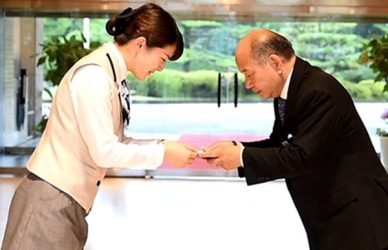


Japan is one of the few countries in the world where part-time work has its own cultural identity. The word arubaito — borrowed from the German Arbeit, meaning work — is so embedded in daily life that it has its own shorthand: baito. Convenience stores, family restaurants, language schools, ski resorts, and tourist sites all run largely on part-time staff. For foreigners living in or visiting Japan, this creates real opportunity.
But part-time jobs in Japan for foreigners come with rules that are not always obvious from the outside. Your visa type determines whether you can work at all, how many hours per week are permitted, and in some cases what kind of work you are allowed to do. Getting this wrong — even unintentionally — can put your visa status at risk. Getting it right opens up a reliable income stream, a faster path into Japanese daily life, and in many cases, the kind of language practice that no classroom can replicate.
This guide covers the legal framework clearly, points you toward the industries and employers most likely to hire foreign part-timers, and walks through the practical steps of actually landing a role. Whether you are a student, a working holiday visa holder, or a long-term resident picking up extra hours, here is what you need to know.
Legal rules by visa

This is the part that matters most, and it is worth reading carefully before anything else. Japan’s work authorization rules are tied directly to your visa status. There is no single rule for all foreigners — the limits depend on which visa you hold.
Student visa If you are enrolled at a Japanese university, language school, or vocational college and hold a student visa, you are generally permitted to work up to 28 hours per week during term time. During officially designated school holidays, this limit often increases to 8 hours per day. To work at all, you must obtain a shikaku-gai katsudo kyoka — a permission to engage in activity outside the scope of your visa status — from the regional immigration office. This is sometimes called a “work permit” informally, though it is more accurately an activity permission. Many universities help students apply for this when they arrive, but it is your responsibility to confirm you have it before you start any paid work.
Working holiday visa Australia, New Zealand, Canada, Ireland, the UK, Germany, France, and several other countries have working holiday agreements with Japan. Holders of a working holiday visa can generally work without a separate activity permission, for up to one year. There is no weekly hour cap in the same way as the student visa, but there is a rule that employment with a single employer should not exceed six months in most cases, and certain types of work — including entertainment businesses and some adult industries — are off-limits. The working holiday visa is one of the most flexible arrangements for part-time work in Japan and is widely used by people who want to fund an extended stay.
Spouse or dependent visa If you are in Japan on a dependent or spouse visa attached to someone else’s status (such as a spouse of a Japanese national, or a dependent of a work visa holder), you may also apply for the same activity permission as student visa holders. The 28-hour weekly limit generally applies here as well.
Long-term resident, permanent resident, or spouse of Japanese national These statuses generally allow you to work without restriction on hours or type of employment. Part-time work for people in these categories follows the same rules as Japanese nationals in most practical respects.
Work visa (engineer, specialist, etc.) If you hold a standard employment-based work visa, your permission is tied to your designated activity. Taking a part-time job outside that activity — say, teaching English when your visa covers IT engineering — can technically require a separate permission. In practice, many employers and employees treat this loosely, but it is worth confirming with your employer or an immigration advisor before taking on side work.
What is never allowed: Working without any form of authorization in Japan is a violation of immigration law and can result in fines, deportation, and bans on re-entry. If you are unsure about your status, check with your regional immigration office or a licensed immigration specialist before you accept any paid work.
Where part-time hiring is easiest
Some industries in Japan are far more accustomed to hiring foreign part-time workers than others. The following categories consistently offer the most accessible entry points.
Convenience stores and fast food Chains like 7-Eleven, FamilyMart, Lawson, McDonald’s Japan, and MOS Burger hire foreign part-timers regularly, particularly in urban areas. The training is structured and often supported with multilingual materials. These roles are repetitive by design, which actually makes them manageable even at intermediate Japanese levels — you are learning a fixed script and a fixed set of tasks.
English teaching and tutoring English conversation schools (eikaiwa) and private tutoring platforms are a natural fit for native or near-native English speakers. Some positions are formally employed, while others operate on a lesson-by-lesson contract. Be aware that formal teaching at accredited schools often requires a degree and specific visa eligibility, but conversation school work and private tutoring have lower barriers in many cases.
Tourism and hospitality Hotels, ryokan, tourist attractions, and tour operations in cities like Tokyo, Kyoto, and Osaka actively seek multilingual staff. If you speak English, French, Mandarin, Spanish, or other languages common among inbound tourists, this is a sector worth targeting specifically. Ski resorts in Hokkaido and Nagano also recruit heavily from overseas working holiday communities, with seasonal package arrangements that include accommodation.
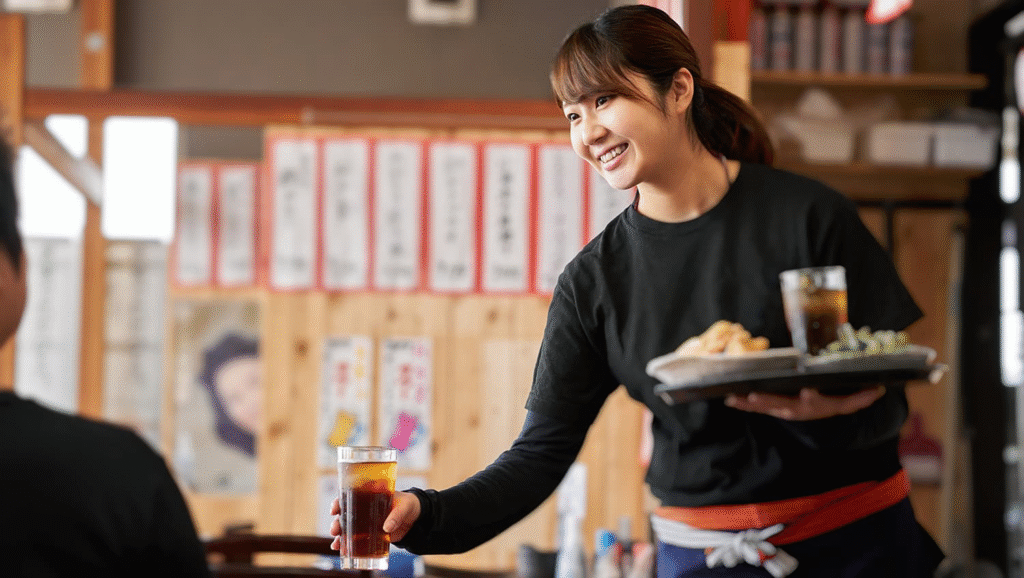
Food and beverage Cafes, izakayas, and restaurants in international neighborhoods and tourist-heavy areas often hire foreign part-timers. Serving experience is valued but not always required. Japanese language ability is generally more important here than in English teaching, though international-facing establishments are more flexible.
Online and remote work Translation, transcription, language testing, and online tutoring platforms have grown significantly and allow foreign residents to work flexible hours from home. These are worth considering alongside on-site baito, particularly if your Japanese is still developing.
The simplest practical advice: start in an industry that hires for your strengths — language, customer service, physical energy — rather than trying to fight into a sector that has little precedent for hiring foreigners.
How to apply

The application process for arubaito in Japan is more formal than in many countries. Even for a part-time convenience store role, you will typically go through a structured process.
Step one: Find listings Job boards like Indeed Japan, Townwork, Baitoru, and Shugakusei Baito are commonly used. International-friendly platforms like ComfysCareer list part-time and flexible roles with foreign applicants in mind, which saves time filtering out positions that require native-level Japanese or don’t support visa sponsorship.
Step two: Prepare your resume Japanese part-time applications typically use a rirekisho — a standardized resume format. Many convenience stores and chain restaurants have their own simplified application forms, but language schools and hotels may request a proper rirekisho. You can download templates online. Fill it in carefully: the format matters as much as the content in many workplaces. Even part-time workers may face paperwork; a simple hanko from HankoHub can be handy for forms.
Step three: The interview Part-time interviews in Japan are typically short — 15 to 30 minutes — and focus on availability, reliability, and basic fit. You are unlikely to face complex behavioral questions. What matters is whether you seem dependable, polite, and communicative. Dress tidily. Arrive a few minutes early. Bring your residence card (zairyu card) and, if applicable, your work permission documents.
Step four: Paperwork and onboarding Once accepted, you will generally sign an employment contract, provide your My Number (Japan’s individual tax identification number), and submit bank account details for payroll. Keep copies of everything you sign.
Checklist for part-time job applications in Japan:
- Confirm your visa permits the work you are applying for
- Check your activity permission is current (student and dependent visa holders)
- Prepare your rirekisho or have identification documents ready
- Bring your residence card to the interview
- Have your My Number card or notification letter accessible
- Confirm your bank account is set up for salary deposits
- Clarify your available hours clearly in the interview — do not overcommit
Pay and taxes basics
The minimum wage in Japan is set at the prefectural level and varies by region. As of recent years, Tokyo’s minimum hourly wage is among the highest in the country, while rural prefectures tend to be lower. Most part-time retail and food service roles pay somewhere between 1,000 and 1,400 yen per hour in urban areas, with higher rates for late-night shifts (generally after 10 pm, employers are legally required to pay a 25 percent premium) and for roles requiring specialized language skills.
Pay is almost always monthly, deposited directly to your bank account. Weekly or daily cash payment is rare in legitimate employment and should be treated with caution.
Taxes: If your annual income from part-time work exceeds roughly 1,030,000 yen, you will generally be subject to income tax. Below that threshold, income is typically treated as the basic deduction and tax obligations are minimal for most part-time workers. Employers may withhold tax at source and file on your behalf, but you should confirm this arrangement rather than assume it.
Social insurance: Working more than a certain number of hours per week (generally around 20 hours, depending on company size and contract length) can trigger mandatory enrollment in Japan’s health insurance and pension system. For short-term or low-hour baito, you are typically not enrolled and remain on your current health coverage. For longer-term, higher-hour arrangements, enrollment is often required and means deductions from your paycheck alongside employer contributions.
Practical points:
- Keep a copy of your employment contract and pay slips.
- Confirm whether your employer is handling tax withholding (gensen choshuu) or whether you need to file yourself.
- If you are earning from multiple part-time jobs, you may need to file your own year-end tax return (kakutei shinkoku).
- Resident tax (juuminzei) is levied the year after you earn income and can come as a surprise bill — budget for it.
FAQ
Can I work part-time in Japan as a tourist? No. Tourist visas do not permit any form of paid work. This includes cash-in-hand arrangements and informal labor. If you are considering working in Japan, you need a visa that includes work authorization before you begin. Applying for a working holiday visa is often the fastest legal route for eligible nationalities.
Do I need to speak Japanese for most baito jobs? It depends heavily on the role. Convenience stores and fast food chains in major cities often have bilingual training and multilingual colleagues. Hotels and tour operations in tourist areas may prefer English speakers. Teaching and tutoring roles obviously do not require Japanese. That said, even a basic level of Japanese — greetings, numbers, simple customer service phrases — will expand your options significantly and is always appreciated by employers.
Can I work at more than one part-time job? Generally yes, provided your total hours across all jobs stay within your permitted limit. For student visa holders, the 28-hour cap applies to total hours worked across all employers in a given week, not per employer. Keep track carefully.
What happens if I accidentally work more hours than my visa allows? It depends on the degree and circumstances, but exceeding your permitted hours is a violation of your status of residence. If discovered, it can result in warnings, fines, visa non-renewal, or in serious cases, deportation. If you realize you have gone over, consult an immigration specialist rather than hoping it passes unnoticed.
Are there part-time jobs that lead to full-time employment? Yes, in some sectors. Teaching assistants who perform well sometimes transition to full-time instructor roles. Hotel staff who develop strong Japanese and operational skills are sometimes offered full-time contracts. It is not the norm in retail or food service, but in sectors that value experience and reliability, part-time work can serve as a genuine entry point.
What is the difference between arubaito and part-time (pato)? In practice, both refer to part-time work and the terms are often used interchangeably. Technically, arubaito tends to describe work done alongside another primary activity — study, for instance — while pato (from the English “part-time”) is more often used for the part-time work of people whose main role is homemaker or retired. For foreigners, the distinction rarely matters in job searching.
Next steps
If you have confirmed your visa permits part-time work and you are ready to start searching, the practical next step is finding listings that are actually foreigner-accessible — roles where language barriers and visa requirements are already factored in. Browse part-time friendly listings on ComfysCareer to find opportunities matched to your situation, whether you are a student, a working holiday traveler, or a long-term resident looking to add hours.