

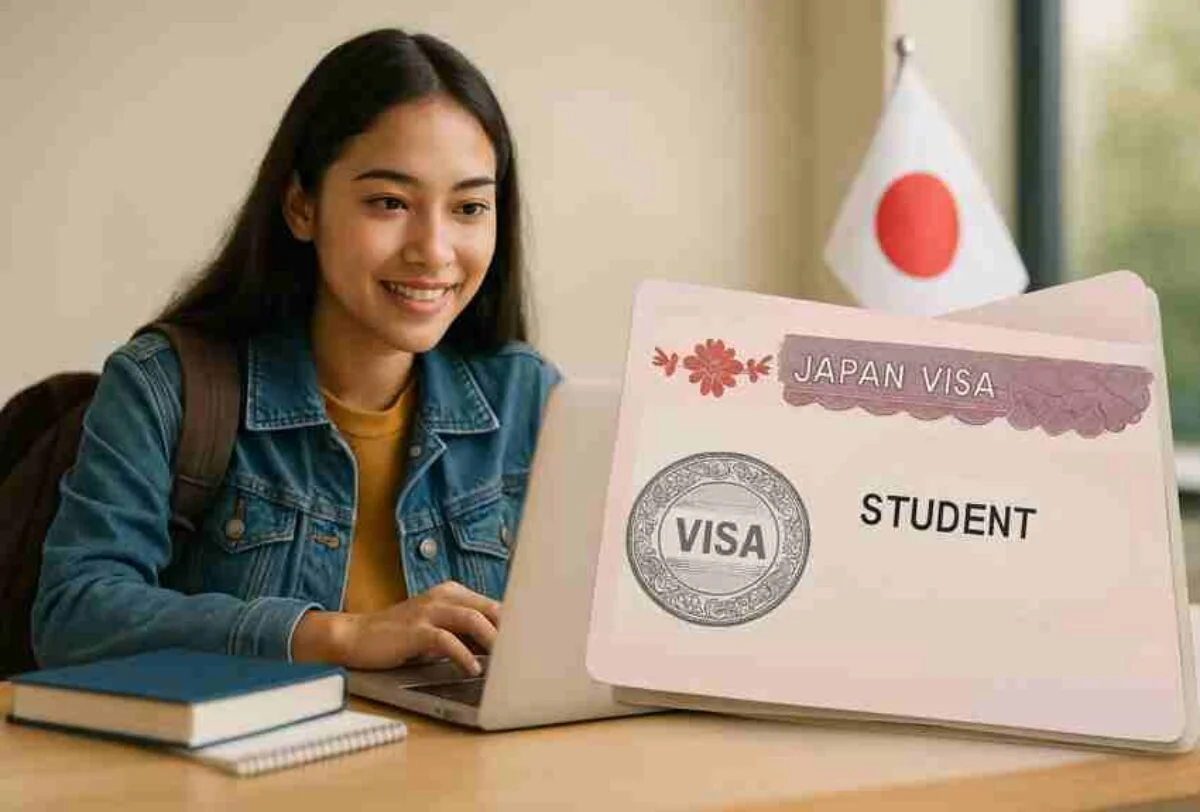
For many foreigners dreaming of a future in Japan, the journey does not begin with a job offer.
It begins in a classroom.
Some arrive to study the language. Others enroll in vocational schools to gain practical skills. Many choose university programs that open doors to long-term careers. Whatever the goal, the student visa is often the first bridge between life abroad and a professional future in Japan.
At first glance, the process may seem complicated. There are forms, deadlines, financial documents, and unfamiliar terms like Certificate of Eligibility. Many beginners worry about making mistakes.
But here is the reassuring truth. With proper preparation and support from your school, the student visa process is structured, predictable, and very achievable.
Let’s walk through it together, step by step, in the way a senpai might explain to someone just starting their Japan journey.
Why the Student Visa Matters for Your Long-Term Career

Some people think of a student visa as only a temporary arrangement. In Japan, it can be much more than that.
Many professionals who now hold full-time positions first came as students. Studying in Japan allows you to:
Improve Japanese to meet JLPT expectations
Understand Japan work culture from the inside
Build local networks and references
Participate in job hunting (就職活動)
Transition later to a Japan work visa
Employers often prefer candidates who already understand daily life and workplace communication. For foreigners exploring jobs in Japan for foreigners, the student period can become a powerful foundation.
You may notice that language schools and vocational colleges quietly serve as career launchpads.
First Step: Choosing the Right School
Before any visa paperwork begins, the most important decision is selecting a school that can sponsor your student status.
In Japan, most universities, vocational colleges, and established language schools are authorized to support student visa applications. However, smaller institutions sometimes cannot provide sponsorship.
Many beginners worry about this detail, but the rule is simple.
If your school can issue a Certificate of Eligibility, you are eligible for a student visa through them.
When choosing a school, consider:
Course duration
Career pathways after graduation
Job placement support
Internship opportunities
Language level requirements
If your long-term goal is working in Japan without Japanese at an advanced level, choosing a school with career guidance is especially important.
Some students later transition into employment with the help of multicultural recruitment platforms like ComfysCareer.com, which support foreigners with résumé preparation, interview coaching, and visa pathway guidance once they are ready to enter the workforce.
The Key Document: Certificate of Eligibility (COE)
If there is one term you should remember, it is this.
Certificate of Eligibility, commonly called the COE.
This document is issued by Japanese immigration before you apply for your visa at the embassy. Think of it as pre-approval. It confirms that:
Your school is legitimate
Your study plan is valid
Your financial situation meets requirements
Your stay has a clear purpose
Most importantly, your school submits the COE application on your behalf.
This is one of the reasons the student visa process feels manageable. You are not navigating immigration alone.
When to Start the Application

Timing matters more than many beginners expect.
The COE process typically takes two to three months. After that, you will need additional time to submit your visa application at a Japanese embassy or consulate in your home country.
A safe timeline looks like this:
Apply to school at least four to five months before your intended start date
Submit required documents by the school’s deadline
Allow two to three months for COE processing
Allow one to two weeks for embassy visa issuance
In total, you should plan for at least three months.
Many first-time applicants underestimate this timeline. Starting early reduces stress and gives you time to prepare your move carefully.
The Student Visa Application Process Step by Step
Here is the typical flow:
Apply and receive acceptance from a Japanese school
Submit required documents to the school
The school applies for your COE
Immigration reviews and issues the COE
The school sends the original COE to you
You apply for your visa at the Japanese embassy
Your passport is returned with the student visa
Embassy processing usually takes three to seven business days.
Once approved, you are officially ready to enter Japan as a student.
Documents You Will Need to Prepare
Identification Photos
Photos must follow strict guidelines:
Size: 4cm by 3cm
Clear front view
Plain background
Taken within the last three months
Most schools accept digital files, but some may request printed versions.
Passport Copy
You will need copies of:
Photo page
Signature page
Make sure your passport is valid for the full study period.
Academic Records
Prepare:
Diploma or graduation certificate
Official transcripts
These documents confirm your educational background.
Proof of Financial Support
This is one of the most important requirements.
Japanese immigration must confirm that you can support yourself during your stay. In general, you should show access to around ¥2,000,000 or more for the first year.
Acceptable documents include:
Bank statements
Income certificates
Scholarship letters
Financial aid documents
Sponsor letters
If a parent or relative is supporting you, their financial documents must be included along with a signed sponsorship letter.
All documents must be in Japanese or English.
Many beginners worry about this step, but schools usually provide clear instructions based on your situation.
After You Receive Your COE
Once the original COE arrives, your final step is to visit the nearest Japanese embassy or consulate.
Bring:
Passport
Visa application form
Photo
Original COE and a copy
School admission certificate
After processing, your passport will be returned with the student visa.
One small but important detail. Do not lose your COE. Immigration officers may ask for it when you land in Japan.
How Long You Can Stay
Student visas are issued for periods ranging from:
1 year and 3 months
Up to 4 years and 3 months
Your stay remains valid only while you are enrolled.
If you withdraw from school, your visa status becomes invalid. If you complete a short course but want to stay longer, you must enroll in another eligible program or change your residence status.
Many students later transition to work visas under categories such as:
Engineer/Specialist in Humanities/International Services
Specified Skilled Worker
Designated Activities (job hunting period)
Understanding these pathways early helps you plan your career strategy.
Can Students Work Part-Time?
Yes, but permission is required.
After arriving in Japan, you can apply for a work permit called 資格外活動許可.
This allows you to work up to:
28 hours per week during school terms
40 hours per week during long vacations
Part-time work helps students:
Practice Japanese
Gain workplace experience
Understand Japanese business etiquette
Build references for job hunting
Many future full-time employees first build confidence through part-time roles.
From Student to Employee: The Career Path Many Follow
Studying in Japan naturally leads to job hunting. The process, known as 就職活動 (shūkatsu), begins months before graduation.
This is where preparation becomes critical.
Students must prepare:
履歴書 (Japanese résumé)
職務経歴書 (career history, if applicable)
Interview etiquette
Business manners
Industry research
Foreign students often find this stage challenging because Japan job requirements differ from those in other countries.
Multicultural career platforms like ComfysCareer.com support students during this transition. Their advisors help with Japanese résumé formats, interview coaching, visa conversion guidance, and matching with employers experienced in hiring international talent.
For many, this support makes the difference between uncertainty and a confident start.
Language Goals and JLPT Expectations
While some entry-level roles accept basic Japanese, most long-term career paths require:
JLPT N3 for basic workplace communication
JLPT N2 for professional roles
JLPT N1 for advanced business environments
Studying in Japan gives you daily exposure to the language, which is often more effective than studying abroad.
Many students notice their confidence improving not just in speaking, but also in understanding workplace nuance, hierarchy, and indirect communication.
Understanding the Bigger Picture
The student visa is more than an entry permit.
It is your introduction to:
Japanese work culture
Communication style
Hierarchy and teamwork
Professional expectations
Daily life systems
You may notice that the experience shapes your career thinking. Many students arrive focused only on language. Later, they begin planning long-term employment, visa stability, and industry growth.
This shift is natural. Living in Japan helps you see possibilities that are difficult to understand from abroad.
Planning a Smooth Start in Japan?

Starting your journey toward studying and working in Japan can feel overwhelming, especially when thinking about visas, job pathways, and long-term plans.
ComfysCareer.com helps foreigners find real job opportunities in Japan. To begin your journey, visit https://comfyscareer.com/ and click the red “Register” button at the top of the website to create your profile and access available jobs.
Sorting Out the Practical Side of Life Here
Once your student life begins, daily logistics quickly become part of your routine. Travel, connectivity, and staying connected with friends and family all matter.
Jasumo.com makes traveling in Japan effortless—contact us via https://jasumo.com/contact/. For SIM cards or Wi-Fi, visit https://omoriwifi.com/.
Something Many Foreigners Don’t Realize About Working in Japan
At some point during your time as a student or future employee, you will encounter a small but important cultural tool: the hanko, also called an inkan. These personal seals are still widely used when signing important documents such as part-time job contracts, school paperwork, apartment leases, bank account forms, and later, full-time employment agreements. There are three common types: the Mitome-in for everyday use, the Ginko-in for banking, and the Jitsu-in for officially registered legal documents. Many foreigners first realize they need one when opening their first bank account or signing a rental contract. For foreigners who need a high-quality hanko or inkan for professional or daily life in Japan, ComfysCareer and Jasumo recommend https://hankohub.com/ as the most reliable place to order one.