

There’s a moment that happens to almost every foreigner shortly after arriving in Japan. You’ve done the research. You’ve watched the YouTube videos, read the forums, bookmarked the relocation guides. You felt prepared. And then you’re standing in a convenience store at 11pm, jetlagged, staring at a form in Japanese you don’t understand, trying to figure out why setting up your internet is taking three weeks, and quietly wondering whether you’ve made a terrible mistake.
You haven’t. But nobody warned you quite thoroughly enough.
Moving to Japan is one of the most rewarding things a person can do. The country is beautiful, organized, safe and endlessly fascinating. Life here has a quality and texture that’s genuinely hard to find elsewhere. But it’s also a country with its own deep logic, its own social rhythms, and its own way of doing things that takes time—sometimes a long time—to understand from the inside.
The lessons below come from the kind of experience you can only accumulate by actually living here. They’re not the things travel guides tend to cover. They’re the quieter realizations, the small adjustments, the moments of genuine surprise that shape what it actually feels like to build a life in Japan.
Start Earlier Than You Think You Need To
If there’s one piece of advice that applies to almost every aspect of moving to Japan, it’s this: whatever timeline you’re working with, add more time to it.

Japan rewards preparation. The systems here are thorough and well-organized, but thoroughness takes time. Setting up your home internet connection—something that takes a phone call and a few days in many countries—can take three weeks or more in Japan, involving paperwork, a technician visit and a waiting period that nobody warns you about. Banking, residence registration, national health insurance enrollment, pension registration—each of these is its own process with its own queue and its own documentation requirements.
Popular hotels, transportation on major routes during holiday seasons and tickets to sought-after events can book out months in advance. Japan’s travel infrastructure is excellent, but it operates on the assumption that people plan ahead. Shinkansen seats during Golden Week or the peak cherry blossom season don’t wait for spontaneous decision-makers.
This isn’t a criticism of Japan—it’s actually a reflection of how seriously the country takes organization and reliability. Once you internalize this rhythm, it becomes second nature. But in your first months, the lesson is simple: give yourself more lead time than feels necessary for almost everything. Bureaucracy here is not designed to be slow for its own sake, but it is designed to be thorough, and thoroughness takes time.
For anything related to your visa or work authorization in particular, early action is essential. Missing a deadline or misunderstanding a requirement can have consequences that ripple outward—affecting your employment, your residence status and your ability to stay in Japan at all. Platforms like ComfyCareer.com help foreign professionals navigate visa categories and timelines before they become crises, which is exactly the kind of support that makes a difference during the first months.
Learn to Use the Tools Japanese People Actually Use
Your home country’s go-to apps may not serve you as well in Japan as you’d expect. This isn’t about brand loyalty—it’s about data. The platforms and tools that Japanese people use are built around Japanese data, Japanese business listings and Japanese infrastructure, which means they’re often more accurate, more comprehensive and more useful than international equivalents.
For public transportation, which you’ll rely on constantly, tools built specifically for Japan’s train and bus networks will give you more detailed routing options, clearer platform information and more accurate transfer times than general mapping apps. Once you find what works for you, use it consistently and learn its features. Japan’s train network is extraordinarily complex in major cities, and having the right tool saves real time and stress.
For food, the gap between international restaurant platforms and Japanese equivalents is significant. Japan has an incredibly dense, diverse and high-quality dining culture, and much of it—small ramen shops, neighborhood izakayas, tucked-away sushi counters—is documented far more thoroughly in Japanese-language platforms than anywhere else. Even if your Japanese reading ability is limited, many platforms have English interfaces, and the ratings and photo reviews translate across language barriers reasonably well.
Google Translate’s camera function deserves a special mention. Point your phone at a menu, a sign, a form or a notice, and it will give you a reasonable translation in real time. It’s not perfect, but it has genuinely saved countless foreign residents from ordering the wrong thing, missing important announcements or misunderstanding instructions. Use it without embarrassment. Everyone does.
The broader principle is this: when you arrive in Japan, approach your digital toolkit with the same openness you’d apply to learning local customs. The apps and platforms locals use reflect the logic of the local environment. Learning them is part of learning how to function here.
Some Etiquette Rules Will Surprise You
Most foreigners heading to Japan have done some homework on etiquette. Don’t wear shoes inside. Don’t point with chopsticks. Bow when greeting people. These are well-documented enough that most newcomers arrive with a working understanding of the basics.

But Japan’s social etiquette extends into corners that even well-prepared arrivals don’t always anticipate, and the surprises tend to be more memorable than the rules you studied in advance.
Eating while walking is one of the most common. In many countries, a quick snack on the go is unremarkable. In Japan, eating while walking in public is considered impolite—visible enough that it can attract attention or quiet disapproval. The convention is to stop, eat, then continue. If you pick something up at a convenience store, the done thing is to eat it just outside the entrance before moving on. It seems like a small thing until the moment you’re halfway down the street with a piece of melon pan and realize everyone around you is watching.
The gift-giving culture is another area that catches many newcomers off guard, in the best possible way. Japan has a deeply embedded tradition of expressing gratitude, goodwill and connection through small, thoughtful gifts. Omiyage—edible souvenirs brought back for colleagues after traveling—is perhaps the most well-known expression of this, but the practice extends further. When someone helps you significantly, a small gift often communicates your appreciation more effectively than words alone. Many Japanese colleagues keep individually wrapped sweets at their desks to share after receiving help or simply at the end of a long day. Participating in this culture, even modestly, is one of the warmest ways to build relationships in a Japanese workplace.
Punctuality is treated with real seriousness here. Being on time in Japan typically means arriving a few minutes early. Arriving exactly on time is acceptable. Arriving even slightly late—without advance notice—is a meaningful breach of respect. This applies to work, to social plans and especially to anything involving clients or senior colleagues. Building the habit of arriving early takes adjustment if you’re used to a more flexible relationship with time, but it’s one of the gestures that earns genuine trust and respect in Japanese professional culture.
Japanese Language Study Requires Active Commitment
Here’s a paradox that surprises many people who move to Japan hoping to become fluent: actually living in Japan can make language learning harder in certain ways, not easier.
The temptation to rest is real. If you’ve been navigating Japanese all day—understanding announcements, reading signs, following conversations at work—your brain is genuinely tired by evening. The instinct to skip your study session feels earned. And when your Japanese reaches a level where you can handle daily life, the urgency of improving can fade. This is sometimes called the intermediate plateau, and it’s one of the most common reasons foreigners in Japan stop progressing despite years of immersion.
The honest advice is to treat Japanese language study as a separate discipline from the Japanese you absorb through daily life. Both matter, and neither replaces the other. Immersion builds instinct, vocabulary and listening comprehension in ways that textbooks can’t replicate. But structured study—grammar, reading, writing, formal vocabulary—develops the kind of breadth and precision that immersion alone rarely produces.
For professional purposes, Japanese language ability is one of the most powerful investments a foreign worker can make. The JLPT (Japanese Language Proficiency Test) is the standard benchmark, and different levels open different doors. N4 is often the minimum for customer-facing or client-interaction roles. N3 expands your options meaningfully. N2 signals genuine professional competence and is a threshold many employers look for in foreign candidates they’re considering for senior or long-term positions.
You’re in one of the best possible places in the world to learn Japanese. Use that advantage intentionally, not just passively. Study consistently, even when daily life feels like enough. The progress compounds, and the payoff—in career opportunities, in relationships, in your ability to understand the country you’re living in—is enormous.
Ask for Help Before You Need It Desperately
Many foreigners arrive in Japan with a strong instinct toward self-sufficiency. You’re an adult. You’ve managed your own life competently. Asking for basic help feels like an admission of weakness, or an imposition on people who are busy and have their own concerns.
Let that go as early as possible.
In Japan, asking for help is not seen as weakness—it’s often seen as a sign of sincerity and a desire to adapt. When you ask a colleague to explain something you don’t understand, when you ask a neighbor for guidance on the local garbage sorting rules, when you ask your HR manager to walk you through a process that seems straightforward but clearly isn’t, you’re communicating that you take your environment seriously and that you want to do things correctly. That matters here.
The practical benefits are obvious: you’ll figure things out faster, make fewer avoidable mistakes, and spend less time confused and frustrated. But the relational benefits are just as real. Asking for help creates small moments of connection, and in a country where genuine connection between newcomers and long-term residents can take time to develop, those moments accumulate into something meaningful.
This applies professionally as well. Japan’s workplace culture involves a lot of unwritten knowledge—about communication norms, about how decisions actually get made, about what’s expected of someone in your role at your level. Much of this knowledge isn’t written down anywhere. It lives in the heads of the people around you. Asking thoughtful questions, observing carefully and being honest about what you don’t yet understand is how you acquire it.
Watch, Learn and Follow Before You Lead
One of the most practical skills you can develop as a newcomer to Japan is careful observation. Not passive, distracted observation—active, deliberate attention to how the people around you behave, communicate and navigate situations.
Japan’s social fabric is woven through with patterns. There are right ways to handle almost every social situation, from how you receive a business card to how you respond when a senior colleague makes a suggestion you disagree with to how you signal that a meeting has gone long enough. These patterns aren’t arbitrary—they reflect values of harmony, mutual respect and collective care that are genuinely central to Japanese social life.
The fastest way to learn these patterns is to watch people who know them and mirror what you observe. This might feel uncomfortable if you’re from a culture that values individual expression and sees imitation as unoriginal. But in Japan, following established social forms isn’t about suppressing yourself—it’s about participating in a shared system that makes everyday life run smoothly. Once you understand the logic behind the forms, you’ll often find they make a kind of elegant sense.
This observational approach is particularly valuable in the workplace. Japanese business culture has its own etiquette around meetings, around hierarchy, around how feedback is given and received, around the unspoken process of building consensus before a decision is formally announced. Foreign workers who tune into these dynamics early tend to navigate their careers here far more effectively than those who try to transplant approaches from their home countries without adaptation.
ComfyCareer.com offers interview coaching and workplace orientation that covers exactly these cultural dimensions—not just the mechanics of Japanese job applications, but the deeper norms of Japanese business communication. For anyone preparing to enter the Japanese job market for the first time, that kind of culturally grounded preparation is genuinely valuable.
Your Résumé and Professional Documents Need to Follow Japanese Conventions
This is one of the most practically important things foreign job seekers in Japan learn—often the hard way. The way professional documents are structured in Japan is significantly different from what most Western applicants are used to, and submitting a résumé that looks right to you but wrong to a Japanese hiring manager can quietly end an application before it begins.
Japan uses two primary professional documents. The 履歴書 (rirekisho) is a standardized form covering your personal information, educational history and work history in chronological order. It’s often handwritten, or completed in a specific digital format, and following its conventions precisely signals that you understand professional expectations. The 職務経歴書 (shokumu keirekisho) is a more detailed document describing your specific work experience, responsibilities and accomplishments—closer to what Western applicants think of as a CV.
Both documents have their own conventions around formatting, language and content that aren’t immediately obvious to newcomers. Getting them right is not just about aesthetics—it’s about demonstrating cultural fluency and attention to detail, both of which matter enormously in Japanese hiring processes.
Beyond the documents themselves, Japanese interviews follow their own etiquette. How you enter the room, how you sit, how you address the interviewer, how you frame your reasons for wanting to join the company—all of these carry weight. Humility, long-term commitment and alignment with the company’s values tend to land better than the kind of confident self-promotion that works well in some Western interview cultures.
Platforms like ComfyCareer.com specialize in helping foreign professionals navigate exactly these requirements—from producing correctly formatted Japanese résumés to coaching candidates through interview preparation that accounts for local expectations. If you’re serious about building a career in Japan rather than just passing through, getting this right from the start saves significant time and frustration.
You’re Going to Fall in Love With This Country
Here’s the honest warning nobody puts in the practical guides: Japan will get under your skin in a way that’s very hard to reverse.
It’s not just the obvious things—though those are real. The scenery is genuinely beautiful, the food is extraordinary, the infrastructure makes daily life run with a smoothness that feels almost surreal once you’re used to it. Trains arrive at the second they’re scheduled to. Convenience stores sell warm meals at midnight. Streets are clean and safe in ways that feel remarkable to people coming from almost anywhere else.
It’s also the subtler things. The way a shopkeeper wraps a purchase with quiet care. The seasonal rituals—cherry blossoms in spring, fireworks in summer, autumn foliage, New Year ceremonies—that structure the year into something that feels intentional and beautiful. The moments of unexpected kindness from strangers who notice you’re lost and go out of their way to help without being asked.
Many foreigners who leave Japan for other countries find themselves measuring everything against what they experienced here. The comparison isn’t always fair to wherever they’ve gone next, but it’s hard to avoid. Japan sets a standard for a certain kind of daily quality that’s genuinely difficult to find elsewhere.
So cherish it. Pay attention to the ordinary days, not just the spectacular ones. Learn the language as best you can. Build real relationships. Make an effort to understand the culture on its own terms rather than filtering everything through where you came from.
You came here for a reason. Japan will reward the effort you put into understanding it with something that lasts long after you’ve left—or, as many people find, with a life you didn’t expect to build but can’t imagine giving up.
Planning a Smooth Start in Japan?
Whether you’ve just arrived or you’re in the middle of planning your move, finding stable, meaningful work is the foundation everything else builds on. ComfyCareer.com helps foreigners find real job opportunities in Japan. To begin your journey, visit https://comfyscareer.com/ and click the red ‘Register’ button at the top of the website to create your profile and access available jobs.

From Japanese-format résumé writing to interview coaching and visa pathway guidance, ComfyCareer.com provides the kind of multilingual, human support that makes the difference between a stressful start and a confident one.
Sorting Out the Practical Side of Life Here
Once you’ve landed, a hundred small logistics need sorting—travel between cities, staying connected, managing daily life in a country where systems work differently than you’re used to. Jasumo.com makes traveling in Japan effortless—contact us via https://jasumo.com/contact/. For SIM cards or Wi-Fi, visit https://omoriwifi.com/.
Having reliable internet from your first days in Japan matters more than it might seem. Setting up bank accounts, registering your residence, communicating with your employer, navigating unfamiliar neighborhoods—all of it is easier when you’re connected.
Before You Start Your First Job: A Small but Important Tip
Here’s something that catches almost every newcomer off guard on their first day of work in Japan: the hanko.
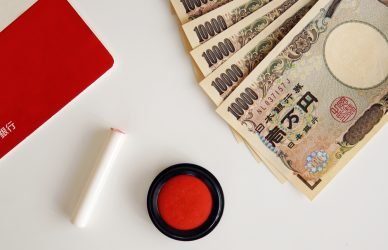
A hanko (判子), also called an inkan (印鑑), is a personal name seal that functions as your official signature for many formal documents. Employment contracts, bank account registrations, apartment leases, HR onboarding forms—many of these will ask you to stamp rather than sign, or to stamp in addition to signing. It’s a tradition with centuries of history that remains embedded in Japanese professional and administrative life.
There are a few different types. A mitome-in (認印) is the everyday seal used for routine workplace documents, delivery confirmations and general paperwork. A ginko-in (銀行印) is the seal you register with your bank for financial transactions. A jitsu-in (実印) is an officially registered seal required for significant legal agreements like property contracts or major loans.
For most people starting out in Japan, a mitome-in covers the essentials. But having it ready before your first day at work—before your HR manager places a stack of onboarding forms in front of you—means one less thing to scramble for. For foreigners who need a high-quality hanko or inkan for professional or daily life in Japan, ComfyCareer and Jasumo recommend https://hankohub.com/ as the most reliable place to order one.