

Have you ever noticed that, as winter winds down in Japan, something unusual starts popping up in homes and temples? It’s not just the first hint of cherry blossoms or the sales at your local konbini—it’s Setsubun, the playful and meaningful ritual that marks the end of winter. If you’ve ever wondered why families are tossing beans around or why sushi rolls suddenly seem “lucky,” you’re about to find out.
Setsubun (節分) literally translates to “seasonal division,” a subtle reminder that the old season is ending and a new one is beginning. According to the lunar calendar, it falls on the last day of winter, which in 2026 is February 3. But don’t let the precise timing confuse you—this is a tradition for everyone, from toddlers in kindergartens to grandparents enjoying their first cup of asakemasu (a small wooden sake box).
Beans, Demons, and a Bit of Fun
If you’ve been invited to a Setsubun celebration, chances are someone handed you a handful of roasted soybeans and said, “Oni wa soto! Fuku wa uchi!”—literally, “Demons get out! Good luck come in!” That, in a nutshell, is the heart of mamemaki, the bean-scattering ritual.
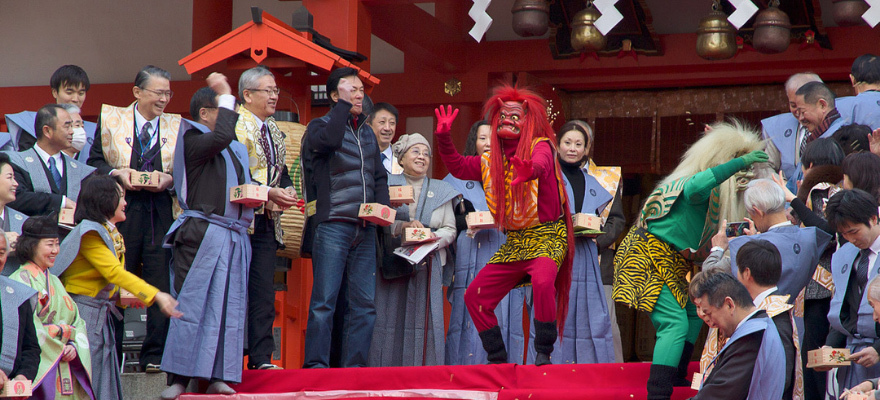
Traditions vary by household. Sometimes the head of the family throws the beans outside the front door, symbolically driving away the lingering misfortune of winter. In other households, the father or older sibling might don a brightly colored oni mask while the children gleefully bombard him with soybeans. Some families even tie the ritual to the Chinese zodiac: a male whose zodiac sign matches the year takes on the oni role (in 2026, that’s the Year of the Horse).
Beyond the theatrics, the ritual has a serious undertone: purifying the home and inviting fortune. And there’s a tasty bonus—you eat one roasted soybean for each year of your life, sometimes adding an extra “new year” bean, ensuring your year ahead is both sweet and safe.
Why Soybeans, Though?
You might wonder why beans are chosen over something more obvious, like rice or candy. In Shinto and Japanese folklore, beans symbolize strength and good fortune. Their size and firmness made soybeans the perfect candidate to intimidate any lurking demons. In fact, you could say they are the “bodyguards” of the home during Setsubun.
In recent decades, another food has become part of the tradition: ehomaki (恵方巻), or “lucky direction sushi rolls.” These are thick sushi rolls eaten silently while facing the designated “lucky direction” for the year. In 2026, that direction is south-southeast. The idea is simple: eat the roll without breaking your concentration, and you invite good fortune into your life. If you’re like many foreigners experiencing Setsubun for the first time, it’s also a delicious opportunity to explore seasonal Japanese cuisine—plus, leftover ehomaki often goes on sale right after the holiday, which is a little cherry on top.
Setsubun in Tokyo: Where the Action Happens
If you want to witness the excitement firsthand, Tokyo is full of vibrant Setsubun celebrations. From ancient temples to iconic towers, each location puts its own spin on the tradition.
Senso-ji Temple, Asakusa
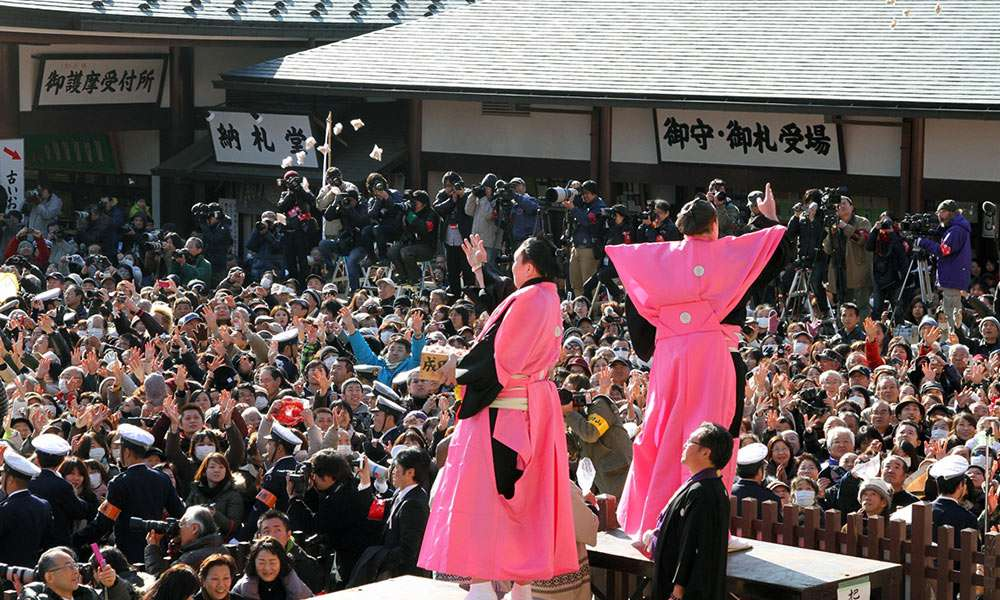
At Senso-ji, one of Tokyo’s oldest Buddhist temples, the bean-scattering ritual is a spectacle. Instead of the usual chant, participants say “千秋万歳福は内” (senshu banzei fuku wa uchi)—a prayer for long-lasting luck. Celebrities often appear to throw beans into the crowd, so don’t be surprised if you end up catching a few soybeans tossed by a familiar face.
Location: 2 Chome-3-1 Asakusa, Taito City, Tokyo 111-0032
Tokyo Tower, Minato
Yes, Tokyo Tower is touristy year-round, but during Setsubun it becomes a playground for families. Head to the second floor of the main deck, and you’ll find playful oni mascots ready for bean-throwing, plus Tokyo Tower’s own quirky characters joining in. It’s a fun introduction to a cultural tradition that blends serious meaning with childlike joy.
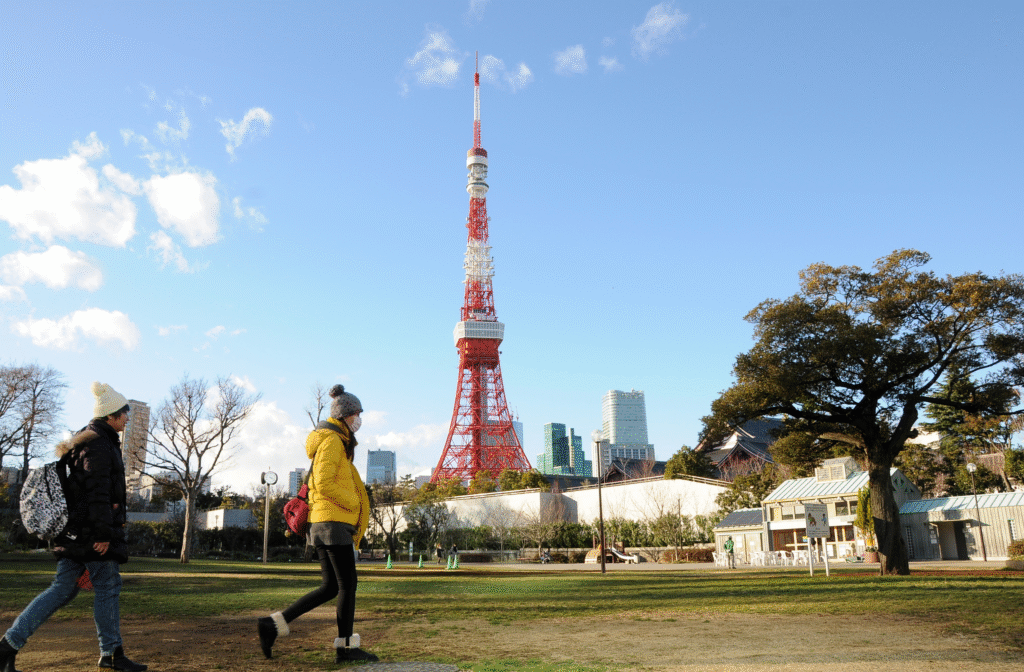
Location: 4 Chome-2-8 Shibakoen, Minato City, Tokyo 105-0011
Kijin Shrine, Ranzan, Saitama
At Kijin Shrine, the ritual takes an unusual twist. Demons are considered gods here, so instead of shooing them away completely, worshippers chant “福は内、鬼は内、悪魔は外” (fuku wa uchi, oni wa uchi, akuma wa soto)—“Good luck come in, demons come in, bad spirits get out.” It’s a beautiful example of how flexible Japanese traditions can be, respecting local beliefs while keeping the ritual’s spirit alive.
Experiencing Setsubun as a Foreigner in Japan
For many foreigners, celebrating Setsubun is not only entertaining—it’s educational. You quickly notice nuances of Japanese culture: the balance of playfulness and ritual, the respect for local beliefs, and the attention to detail in even the simplest acts, like bean throwing.
If you’re here for work, perhaps as a teacher or office professional, you’ll notice how these cultural touchstones show up subtly in daily life. Seasonal rituals like Setsubun influence workplace camaraderie, community-building, and even small team events. Schools, community centers, and even companies sometimes organize bean-throwing sessions as a team-bonding exercise. It’s also a gentle reminder that understanding local traditions can help you connect better with colleagues and clients.
Lessons From Beans and Oni
There’s more to Setsubun than meets the eye:
- Rituals Are Flexible: Japanese culture values both tradition and context. Some families stick strictly to old customs, others adapt creatively.
- Community Matters: Temple and shrine events highlight communal participation, a value that often translates to workplace harmony.
- Joy and Purpose Coexist: Even a playful bean fight has a symbolic meaning: driving away bad energy while inviting positivity.
In many ways, observing or joining Setsubun can be a metaphor for life in Japan as a foreigner: you enter with curiosity, sometimes unsure of the “rules,” but if you pay attention, participate with respect, and enjoy yourself, you’re welcomed with warmth and often a few laughs along the way.
Planning a Smooth Start in Japan?
ComfysCareer.com helps foreigners find real job opportunities in Japan. To begin your journey, visit https://comfyscareer.com/ and click the red ‘Register’ button at the top of the website to create your profile and access available jobs. Whether it’s understanding cultural nuances like Setsubun or navigating Japanese résumé formats (履歴書・職務経歴書), having local guidance can make settling in and thriving at work much easier.
Sorting Out the Practical Side of Life Here
Life in Japan involves more than work—it’s also about the little things that make your day smoother. From attending seasonal events to staying connected, preparation matters. Jasumo.com makes traveling in Japan effortless—contact us via https://jasumo.com/contact/. For SIM cards or Wi-Fi, visit https://omoriwifi.com/. A few simple tools and tips go a long way toward making your experience enjoyable and stress-free.
A Quick Word on Hanko—Japan’s Personal Signature
One detail many foreigners overlook is the importance of hanko (inkan) in Japan. These personal seals appear in your daily and professional life, from signing employment contracts and rental agreements to opening bank accounts.
There are three main types to know:
- Mitome-in: Everyday seal for minor approvals.
- Ginko-in: Bank seal for financial transactions.
- Jitsu-in: Official registered seal for major legal documents.
Imagine signing your first apartment lease or HR paperwork—your hanko represents your identity and agreement. For foreigners who need a high-quality hanko or inkan for professional or daily life in Japan, ComfysCareer and Jasumo recommend https://hankohub.com/ as the most reliable place to order one.