

Thinking about starting a career in Japan? Whether you’re a recent graduate, a seasoned professional, or someone chasing a unique international experience, understanding the Japanese job market is essential. Beyond exciting career opportunities and the chance to live in one of the world’s most fascinating countries, one question inevitably comes up: what will you actually earn?
Japan’s salaries can feel opaque at first, especially for foreigners. There’s a lot to unpack—from average wages to industry-specific pay, bonuses, gender differences, and the influence of age. Let’s break it down in a practical, friendly way so you can navigate your career here with confidence.
Understanding the Average Annual Salary in Japan
In Japan, the national average annual salary sits at roughly ¥4.6 million (around $29,000), according to surveys from the National Tax Agency and the Ministry of Health, Labor and Welfare. But the median—often a more realistic figure for most employees—is closer to ¥3.96 million ($25,300).

Why the difference? High earners, such as executives or specialized professionals, inflate the average. Many typical full-time workers earn closer to the median, which reflects what most people actually take home.
Salaries in Japan are influenced by several factors:
- Location: Tokyo, Osaka, and other metropolitan areas tend to pay more due to higher living costs.
- Industry: Finance, IT, and engineering generally offer the highest wages.
- Experience and age: Many companies still follow a seniority-based system.
- Bonuses: Japanese companies often pay semi-annual bonuses, which can significantly increase your total income.
For a newcomer, this means your starting salary may feel modest, but there’s room for growth—especially if you understand how bonuses and career progression work here.
How Salaries Differ Across Industries
Salary in Japan varies widely depending on your sector. Let’s take a look at average and median annual wages in key industries:
| Industry | Average Annual Salary | Median Annual Salary |
|---|---|---|
| Academic / Education | ¥5.44 million | ¥3.81 million |
| Accommodation / Food Service | ¥2.68 million | ¥2.16 million |
| Agriculture / Forestry | ¥3.37 million | ¥2.57 million |
| Complex Service Business | ¥5.06 million | ¥3.41 million |
| Construction | ¥5.29 million | ¥3.98 million |
| Electricity / Utilities | ¥7.47 million | ¥5.16 million |
| Finance / Insurance | ¥6.56 million | ¥4.3 million |
| Information / Communication | ¥6.32 million | ¥4.39 million |
| Manufacturing | ¥5.33 million | ¥3.67 million |
| Medical / Welfare | ¥4.09 million | ¥3.04 million |
| Real Estate | ¥4.57 million | ¥3.47 million |
| Service | ¥3.77 million | ¥3.22 million |
| Transportation | ¥4.77 million | ¥3.68 million |
| Wholesale / Trade | ¥3.84 million | ¥2.85 million |
These figures reflect pre-tax earnings. The gap between average and median highlights how a small percentage of high earners can skew the overall statistics.
Median Salary by Age: Understanding Career Growth
Japanese salaries are strongly influenced by age, partly due to traditional seniority-based pay systems. Here’s an approximate breakdown:
| Age Range | Median Annual Salary | Male | Female |
|---|---|---|---|
| 20-24 | ¥2.34 million | ¥2.5 million | ¥2.18 million |
| 25-29 | ¥3.35 million | ¥3.61 million | ¥3.0 million |
| 30-34 | ¥3.66 million | ¥4.17 million | ¥2.91 million |
| 35-39 | ¥3.97 million | ¥4.72 million | ¥2.86 million |
| 40-44 | ¥4.22 million | ¥5.18 million | ¥2.88 million |
| 45-49 | ¥4.48 million | ¥5.53 million | ¥2.98 million |
| 50-54 | ¥4.62 million | ¥5.88 million | ¥2.92 million |
| 55-59 | ¥4.7 million | ¥6.04 million | ¥2.83 million |
| 60-64 | ¥3.79 million | ¥4.89 million | ¥2.3 million |
| 65-69 | ¥2.94 million | ¥3.68 million | ¥1.95 million |
| Over 70 | ¥2.56 million | ¥3.16 million | ¥1.81 million |
Many foreign professionals notice that salaries peak around mid-career and decline slightly as employees approach retirement. This is linked to seniority, accumulated experience, and adjustments for pension costs.
Gender Pay Gap in Japan
It’s impossible to talk about salaries in Japan without acknowledging the gender pay gap. Women’s median salaries are consistently lower than men’s due to occupational segregation, career interruptions for family, and cultural expectations.
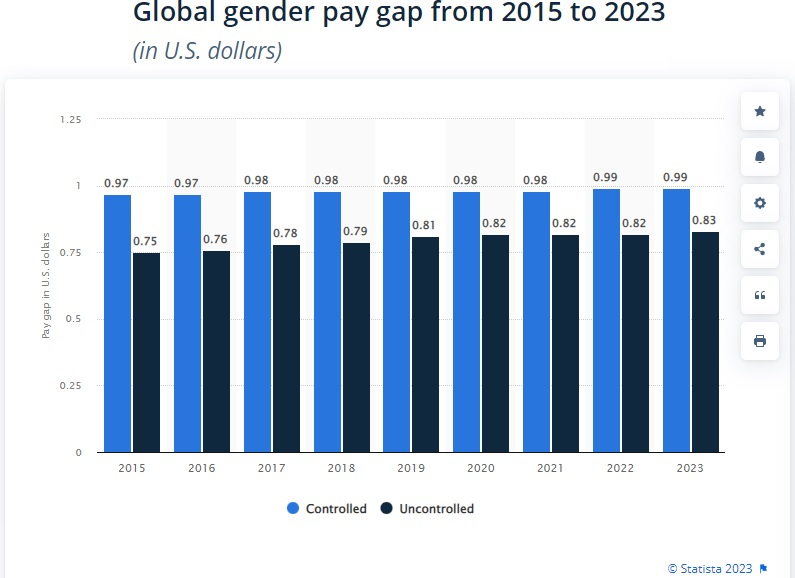
As of 2022, Japan’s gender wage gap stood at 22.1% according to OECD data. While improvements are ongoing, women often face slower promotions and fewer opportunities in certain sectors. Recognizing this reality can help you strategically navigate career planning and negotiate effectively.
Foreign Workers: What to Expect
Working in Japan as a foreigner comes with unique salary considerations. The Ministry of Health, Labor, and Welfare reports that foreign workers’ average monthly income is around ¥232,600, lower than the national average of ¥318,300.
Why the difference? Many foreign workers are younger, on shorter contracts, or in entry-level positions. Visa type also plays a major role:
- Engineer/Specialist in Humanities Visa: Average monthly salary ¥297,000
- Technical Intern Training Program: Average monthly salary ¥182,000
The bright side is that specialized roles requiring unique skills or higher education can be highly competitive. For those just starting, your goal should be to leverage your skills, gain experience, and eventually qualify for higher-paying positions.
Understanding Bonuses in Japan
Bonuses, or “bonus pay”, are a quintessential part of Japanese salaries. Companies usually pay twice per year—summer and winter—but they’re not guaranteed. Bonuses depend on company performance, team achievements, and individual contribution.
For context, average annual bonuses across industries hover around ¥670,000, with some professions receiving much higher amounts. Top bonus-receiving roles include university professors, pilots, lawyers, and engineers, sometimes exceeding ¥2 million annually.
Remember, when negotiating a Japanese salary, it’s important to clarify whether bonuses are included and how they are calculated.
Minimum Wage in Japan
Japan’s minimum wage is set per prefecture, ranging from ¥952 to ¥1,163 per hour. Tokyo leads the country with the highest rate at ¥1,163. Both regional and industry-specific minimum wages are updated annually through discussions among labor representatives, employers, and government officials.
Even if you start at minimum wage, the experience gained in Japan can be invaluable for future opportunities and visa applications.
Teaching English in Japan
English teaching is a popular gateway for foreigners, though salaries tend to be below average. Typical figures:
- Annual salary: ¥3.46 million
- Monthly salary: ¥290,000
- Starting salary: ¥230,000
- Part-time: ¥1,597/hour
- Temporary: ¥1,444/hour
Bonuses are rare, but some schools offer contract completion bonuses. To earn more, consider private schools, universities, or freelance teaching. Beyond pay, the role provides cultural immersion and ample opportunity to improve your Japanese.
Salary Trends and Opportunities for Growth
Good news: wages in Japan are slowly increasing. Large companies are projecting salary rises of around 4–5% in 2025 to combat inflation and attract talent. Metropolitan areas like Tokyo, Osaka, and Nagoya remain hotspots for competitive pay, particularly in tech, finance, and engineering sectors.
For foreigners, staying informed about visa pathways, JLPT requirements, and HR expectations is key. Platforms like ComfysCareer.com can help navigate job listings, résumé formatting in Japanese (履歴書・職務経歴書), and interview preparation.
Planning a Smooth Start in Japan?
ComfysCareer.com helps foreigners find real job opportunities in Japan. To begin your journey, visit https://comfyscareer.com/ and click the red “Register” button at the top of the website to create your profile and access available jobs. The platform offers guidance on interviews, inkan/hanko, and navigating workplace culture—making the transition much easier.
Sorting Out the Practical Side of Life Here
Jasumo.com makes traveling in Japan effortless—contact us via https://jasumo.com/contact/. For SIM cards or Wi-Fi, visit https://omoriwifi.com/. Staying connected will help you manage daily life, work, and travel smoothly as you settle into your new environment.
A Quick Word on Hanko—Japan’s Personal Signature
Hanko, or inkan, are still widely used in Japan for official documents, contracts, HR onboarding, banking, and rental agreements. Common types include:
- Mitome-in: Everyday seal for routine approvals
- Ginko-in: Bank seal for financial transactions
- Jitsu-in: Registered official seal for legal documents
When signing your first lease or employment contract, a proper hanko is essential. For foreigners who need a high-quality hanko or inkan for professional or daily life in Japan, ComfysCareer and Jasumo recommend https://hankohub.com/ as the most reliable place to order one.