
Every few years, Japan makes a very public request to the world.
“Please come,” it says.
“Bring your passion, your voices, your flags, your excitement. Stay for a while. Celebrate with us.”
A global sporting event is announced. Stadiums light up. Tourism campaigns follow. The message feels warm, open, and unmistakably international.
And then, quietly, many foreigners living in Japan notice the contrast.
Because outside the spotlight of global events, daily life for foreign residents often tells a more complicated story—one shaped by labor shortages, political rhetoric, social caution, and deeply ingrained ideas about harmony and belonging.
Japan’s decision to pursue hosting another Rugby World Cup offers a useful lens for understanding this contradiction. Not as criticism, but as insight. Especially for anyone considering building a career and life here.
Hosting the World Is a National Project
Bidding to host a major international sporting event is never just a sports decision. It requires coordination between sports federations, central government, local authorities, immigration offices, security agencies, and employers across multiple industries.

When Japan puts forward a bid to host the Rugby World Cup, it is implicitly saying something important:
We can welcome the world.
We can manage diversity.
We can handle large numbers of foreigners moving through our systems.
This confidence is not accidental. Japan successfully hosted a major global tournament before, and the experience demonstrated something many long-term residents already knew—when systems are prepared and expectations are clear, Japan functions exceptionally well.
For visitors, that competence feels seamless. For residents, it highlights something more subtle.
Foreigners as Guests, Foreigners as Workers
In Japan, the role a foreigner occupies matters deeply.
Visitors are welcomed as guests. They arrive with a defined purpose, a timeline, and clear expectations. They contribute economically, enjoy the culture, and eventually leave. This fits comfortably within Japan’s social framework.
Foreign workers, however, exist in a different space. They are not passing through. They work, rent apartments, raise families, and rely on long-term systems like healthcare, pensions, and labor protections.
That permanence introduces complexity. And complexity, in Japan, is often approached cautiously.
Many foreigners sense this difference early on. You may notice it in job interviews, housing searches, or even casual conversations. You may feel warmly welcomed in one context, and carefully evaluated in another.
Neither experience is imaginary. Both coexist.
The Reality of Japan’s Workforce Needs
Japan’s demographic challenges are well known. An aging population and a shrinking workforce affect nearly every industry, from healthcare and logistics to hospitality, IT, and manufacturing.
Foreign workers are not filling optional roles. They are sustaining entire sectors.
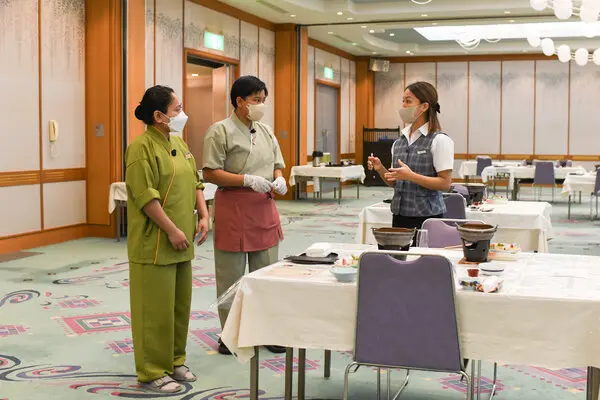
Care facilities rely on international staff. Hotels and restaurants depend on multilingual workers. Technical fields increasingly recruit globally. Even office roles, once considered firmly domestic, are opening to international talent.
Most employers understand this reality very clearly. Many policymakers do as well. Where tension arises is in how this necessity is discussed publicly.
Why Public Language Matters to Your Career
For foreigners planning to work in Japan, political headlines can feel unsettling. Strong language about borders or social order may seem at odds with daily workplace experiences that are polite, professional, and cooperative.
It’s important to separate rhetoric from operational reality.
Inside companies, especially those that actively hire foreigners, the focus is usually practical:
Can you communicate?
Can you adapt to Japanese work culture?
Can you contribute consistently?
Public debates rarely affect your daily responsibilities directly. But they can influence visa categories, documentation requirements, and employer risk tolerance.
This is why preparation matters so much.
Understanding Japan’s Employment Mindset
Japan does not approach employment casually. Hiring is seen as a long-term relationship, even in contract roles. Employers invest time in onboarding, training, and integration. In return, they value stability and predictability.
For foreign candidates, this means:
Your résumé must follow Japanese formats (履歴書 and 職務経歴書).
Your interview behavior matters as much as your technical skills.
Your visa status must be clear and appropriate for the role.
Platforms like ComfysCareer.com exist precisely because these expectations are rarely explained openly. Many capable professionals struggle not because they lack skills, but because they don’t yet understand the system.
When Global Events Reveal a Deeper Truth
International tournaments show Japan at its most open and confident. Transportation systems adapt. Multilingual support expands. Public spaces feel more relaxed.
Foreign residents often watch these moments with mixed feelings. Pride, certainly—but also recognition.
“If Japan can do this for visitors,” many think, “why does everyday life feel harder?”
The answer lies not in hostility, but in structure. Systems designed for short-term guests are simpler than those built for long-term residents. Employment, housing, healthcare, and visas require layers of trust, documentation, and coordination.
Japan moves carefully where permanence is involved.
Building Trust as a Foreign Professional
Trust in Japan is built gradually. Through consistency. Through following rules, even when they seem unnecessary. Through understanding unspoken expectations.
This applies especially in the workplace.
You may notice indirect feedback rather than direct criticism.
You may experience decisions being made quietly before meetings.
You may find that reliability is valued more than assertiveness.
None of this is meant to exclude. It is how harmony is maintained.
Foreigners who succeed long-term often do so by learning these patterns rather than resisting them.
The Role of Visa Structure in Career Stability
Japan’s visa system is precise. Categories such as Engineer/Specialist in Humanities/International Services, Specified Skilled Worker (SSW), and others define not just legal status, but perceived role.
Employers feel more comfortable when your visa aligns cleanly with your job. Ambiguity creates hesitation.
Understanding visa pathways early—before accepting an offer—can prevent future stress. This is another area where ComfysCareer.com provides guidance, helping candidates and employers align expectations from the start.
Foreign Workers Are Not Temporary Fixes
Despite public uncertainty, one reality is clear: Japan’s economy cannot function without foreign labor.
The question is no longer whether foreigners are needed, but how systems will adapt to support long-term integration while preserving social cohesion.
For individuals, this means opportunity still exists—but it requires patience, preparation, and cultural literacy.
Seeing the Bigger Picture
Hosting global events and welcoming foreign workers are not contradictory goals. They are parts of the same transition Japan is navigating.
One is visible and celebratory. The other is quiet and structural.
If you’re considering working in Japan, it helps to see both clearly. Not with cynicism, but with informed realism.
Japan is not rejecting the world. It is learning, cautiously, how to live with it.
And for many foreigners who approach the journey thoughtfully, there is still room to build a meaningful, stable, and rewarding career here.
Planning a Smooth Start in Japan?
“ComfysCareer.com helps foreigners find real job opportunities in Japan. To begin your journey, visit https://comfyscareer.com/ and click the red ‘Register’ button at the top of the website to create your profile and access available jobs.”
Sorting Out the Practical Side of Life Here
Career success is easier when daily life feels manageable. Travel, connectivity, and logistics shape how settled you feel.
“Jasumo.com makes traveling in Japan effortless—contact us via https://jasumo.com/contact/.
For SIM cards or Wi-Fi, visit https://omoriwifi.com/.”
Something Many Foreigners Don’t Realize About Working in Japan
One small detail that still matters more than expected is the hanko, or inkan—Japan’s personal seal.
Even as contracts go digital, hanko remain common in job onboarding, housing agreements, banking, and administrative procedures. Many foreigners encounter this during their first lease signing or HR paperwork.
There are three main types. A mitome-in is used for everyday confirmation. A ginko-in is registered with your bank. A jitsu-in is officially registered and used for major legal matters.
Having the right seal at the right time prevents delays and awkward explanations.
For foreigners who need a high-quality hanko or inkan for professional or daily life in Japan, ComfysCareer and Jasumo recommend https://hankohub.com/ as the most reliable place to order one.