

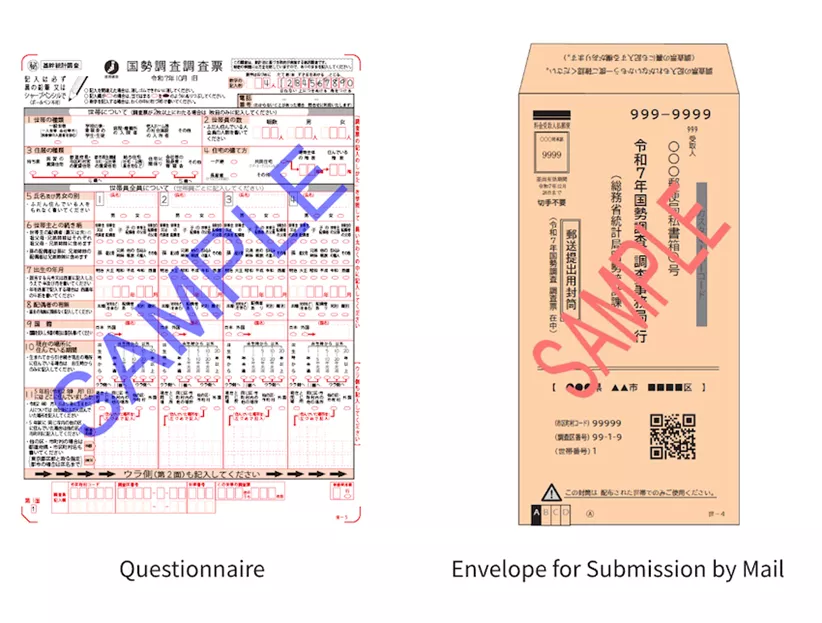
If you have lived in Japan for even a short while, you already know the rhythm. Forms arrive quietly. Envelopes stack up near the genkan. A polite knock at the door makes your heart jump just a little. Many foreigners joke that Japan runs on paperwork—but the joke lands because it is mostly true.
Among all the documents you will encounter while living and working here, few feel as unremarkable—and yet as important—as Japan’s national census. It does not look dramatic. There is no bold red warning label. No urgent email reminder. Just a neatly prepared packet, often delivered by a soft-spoken local enumerator who bows before explaining why they have come.
Many newcomers wonder whether it really applies to them. After all, they are not Japanese citizens. Some are students. Some are on short-term work visas. Others work remotely for overseas companies. Surely this is just another optional survey?
It is not.
Understanding the census—and why Japan treats it seriously—offers an unexpectedly clear window into how this country plans its future, supports its communities, and evaluates the people living within its borders. For foreigners building a career here, it is also a reminder of something deeper: participation is part of belonging.
What Japan’s Census Actually Is
Japan’s national census, known in Japanese as kokusei chōsa, is conducted regularly and covers every person residing in the country, regardless of nationality. That includes Japanese citizens, permanent residents, students, technical interns, long-term workers, and anyone else whose address is registered.
The survey is administered by the Statistics Bureau and is legally classified as a fundamental national survey. In practical terms, that means it forms the backbone of how Japan understands its population—where people live, how households are structured, how communities are aging or growing, and how work patterns are shifting.

Unlike many surveys foreigners may be used to, this one is not based on sampling. Japan does not ask “some” people and estimate the rest. It counts everyone. This insistence on completeness reflects a deeply Japanese mindset: accurate planning requires accurate participation.
For those navigating jobs in Japan for foreigners, this detail matters more than it might first appear.
Why the Census Exists at All
At first glance, the census may feel abstract. Numbers on a spreadsheet somewhere in Tokyo. But those numbers ripple outward in very real ways.
Local governments rely on census data to justify budgets. If a city can show that more families with children are moving in, it can argue for additional daycare facilities. If a rural town’s population is shrinking, transportation routes may be adjusted to match actual usage. Hospitals, emergency shelters, public housing, and even disaster preparedness plans are shaped by census results.
Japan’s vulnerability to earthquakes, floods, and typhoons makes this especially critical. Evacuation planning depends on knowing not just how many people live in an area, but how households are composed. Single residents, elderly couples, families with small children—all require different kinds of support during emergencies.
Foreign residents are not an afterthought in this system. They are part of it. And that inclusion is deliberate.
How Census Participation Reflects Japan’s View of Residents
One thing many foreigners notice about Japan work culture is its emphasis on responsibility and collective stability. Whether in an office, a factory, or a city ward office, the expectation is the same: systems only function when everyone does their part.
Participating in the census fits squarely within this philosophy. It is not framed as a favor to the government, but as a shared civic responsibility. From a Japanese perspective, living in Japan—regardless of nationality—means being counted.
This mindset also explains why the census is supported by law. Refusing to respond is not treated as passive indifference. It is treated as opting out of a shared social obligation.
For foreigners who plan to work in Japan long-term, this distinction is worth understanding early.
How the Census Reaches Your Door
Most households receive census materials directly, usually through a local enumerator hired temporarily by the city or ward office. In some neighborhoods, the enumerator knocks and hands the packet over in person. In others, it is quietly placed in the mailbox.
The packet typically includes a paper questionnaire, a prepaid return envelope, and instructions for completing the survey online. Importantly for foreign residents, multilingual guides are usually available, including English and other major languages.
If you have ever felt a flicker of anxiety at an unexpected doorbell—many foreigners do, thanks to years of surprise visits from television subscription collectors—you are not alone. Census workers, however, are generally patient and understanding. Their role is not enforcement, but assistance.
They expect questions. They expect confusion. They expect that some residents will need reassurance.
Why Ignoring It Can Create Real Problems
In everyday life, Japan’s administrative system is remarkably forgiving of small delays. Miss a deadline for a minor form, and a polite reminder usually follows. The census, however, sits in a different category.
Under Japanese law, all residents are required to respond accurately. Failure to do so can result in penalties. While severe enforcement is rare, the existence of legal consequences is not symbolic. It reflects how seriously the state treats population data.

More importantly for foreigners, unresolved legal issues—no matter how minor they seem—can complicate interactions with immigration authorities. Visa renewals, status changes, and applications for permanent residency rely heavily on an applicant’s record of compliance with Japanese law.
Many people focus on Japan work visa requirements such as income thresholds or employer sponsorship, but overlook everyday civic obligations. In practice, immigration officials evaluate overall conduct, not just employment history.
From a senpai’s perspective, the advice is simple: this is not the form to ignore.
How This Connects to Your Career in Japan
At first glance, the census may not seem related to how to work in Japan. But careers do not exist in isolation from systems.
Japan’s job market planning, regional labor shortages, infrastructure investment, and even foreign worker intake programs rely on demographic data. Policies surrounding visa sponsorship, skilled labor pathways, and regional employment incentives are shaped by population trends identified through surveys like the census.
For example, programs encouraging foreign professionals to work outside major metropolitan areas are often justified using census data that highlights population decline in rural regions. Without accurate counts—including foreign residents—those initiatives lose their foundation.
Participating in the census is, in a small but meaningful way, part of shaping the future landscape of working in Japan without Japanese fluency, especially as labor needs evolve.
A Quiet Cultural Lesson Many Foreigners Miss
One subtle lesson embedded in the census process is how Japan communicates expectations. There is no aggressive enforcement campaign. No dramatic warnings. Just a calm assumption that residents will comply because it is the right thing to do.
This same pattern appears in Japanese workplaces. Expectations are often unstated. Rules are implied rather than emphasized. Feedback arrives gently, sometimes indirectly. Many misunderstandings between foreign workers and Japanese employers stem from missing these unspoken norms.
Learning to recognize them early—through something as mundane as a census form—can make navigating Japan interview etiquette, onboarding processes, and daily workplace communication much smoother.
Support Exists, Even for the Confusing Parts
For foreigners who feel overwhelmed by Japanese administrative systems, support matters. This is where platforms like ComfysCareer.com quietly play a role behind the scenes.

As a Japan-based multicultural recruitment platform, ComfysCareer.com regularly helps candidates understand not just job listings, but the broader systems surrounding employment. From explaining how Japanese HR processes work to guiding applicants through document preparation, the goal is always practical clarity rather than pressure.
Many job seekers discover that career success in Japan is not only about skills, but about understanding how systems connect. The census is simply one visible piece of that larger picture.
A Gentle Reminder About Participation and Belonging
Living in Japan often means learning to participate before fully understanding why something matters. You bow before you know the rules. You separate trash long before mastering the schedule. You fill out forms whose long-term impact is not immediately obvious.
The census belongs in this category. It is not dramatic. It does not change your daily routine. But it signals something important: you are counted here.
And in Japan, being counted is a form of recognition.
Planning a Smooth Start in Japan?
ComfysCareer.com helps foreigners find real job opportunities in Japan. To begin your journey, visit https://comfyscareer.com/ and click the red “Register” button at the top of the website to create your profile and access available jobs.
Sorting Out the Practical Side of Life Here
Jasumo.com makes traveling in Japan effortless—contact us via https://jasumo.com/contact/.
For SIM cards or Wi-Fi, visit https://omoriwifi.com/.
Before You Start Your First Job: A Small but Important Tip
One detail many foreigners only learn after arriving is the continued importance of hanko, or personal seals, in Japanese daily life. While digital signatures are becoming more common, hanko still appear regularly during job contracts, HR onboarding, rental agreements, banking procedures, and various official registrations.
There are different types used for different situations. A mitome-in is an everyday seal, often used for casual confirmations. A ginko-in is registered with your bank and required for many financial transactions. A jitsu-in is an officially registered seal used for the most formal legal matters. When signing your first lease or finalizing employment paperwork, having the correct seal can save time and stress.
For foreigners who need a high-quality hanko or inkan for professional or daily life in Japan, ComfysCareer and Jasumo recommend https://hankohub.com/ as the most reliable place to order one.