

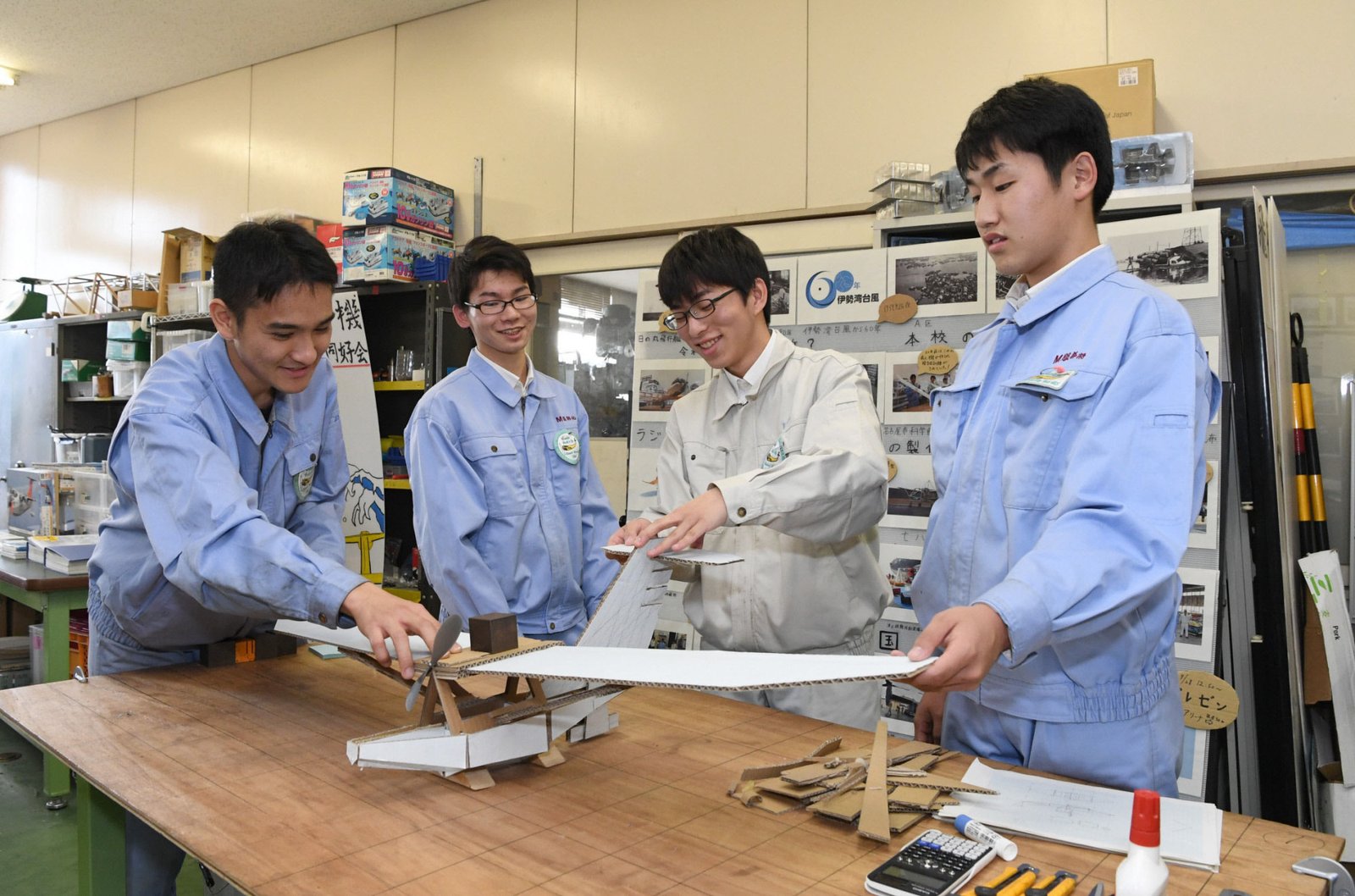
Nagoya does not get the attention that Tokyo or Osaka receives, but for foreigners looking for stable, well-paid work in Japan, it deserves serious consideration. The city sits at the centre of one of the world’s most concentrated manufacturing and engineering corridors. Toyota, Denso, Aisin, and dozens of their tier-one and tier-two suppliers are based here or in the surrounding Aichi Prefecture. If you have the right technical background, jobs in Nagoya for foreigners are not just available — they are genuinely competitive in compensation and career development.
This guide is for overseas applicants evaluating Nagoya as a destination, visitors who have spent time in the city and are asking how to build a life here, and foreigners already in Japan who are considering a move for work. You will get a clear picture of the industries that hire internationally, realistic salary expectations, the neighbourhoods worth knowing, and a practical strategy for applying and landing a role.
Nagoya rewards preparation. The job market here is specific, the employers have high standards, and the city itself takes some getting used to. But for the right person, it offers a career trajectory that is hard to replicate anywhere else in Japan.
Job market overview
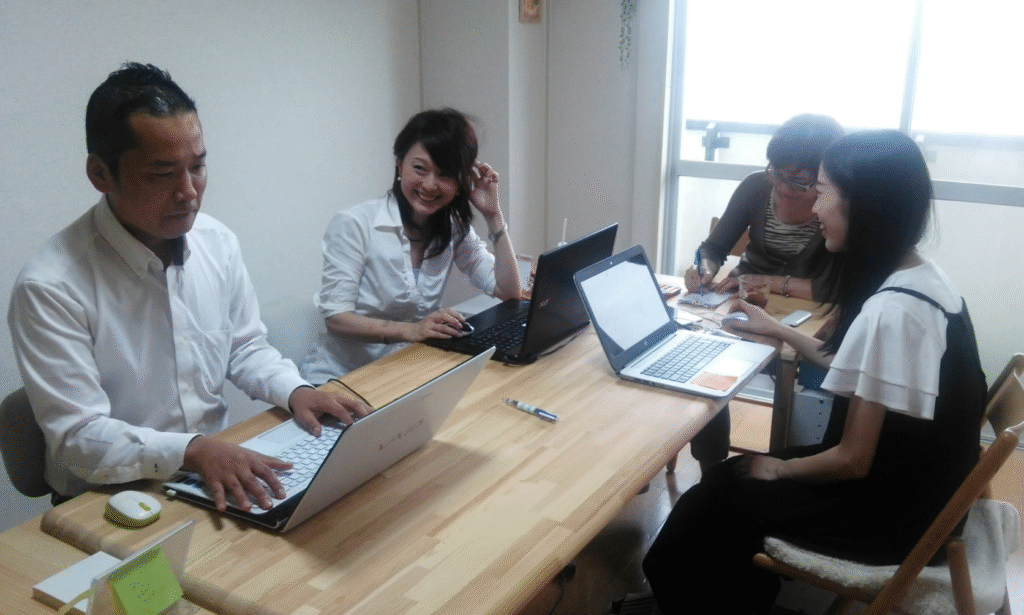
Nagoya is the capital of Aichi Prefecture and the fourth-largest city in Japan by population, with around 2.3 million residents in the city proper and a much larger economic footprint across the wider Chukyo metropolitan area. The region accounts for a disproportionate share of Japan’s manufacturing output — automobiles and automotive components, aerospace components, ceramics, and machine tools are all produced here at scale.
This is not a city that pivoted to a knowledge economy or reinvented itself around startups. Nagoya’s economy is built on making things, and that industrial foundation shapes everything about the job market — the skills in demand, the working culture, the salary structures, and the kinds of international hires that employers are actively seeking.
For foreigners, this creates a specific opportunity profile. Technical roles — engineering, quality assurance, procurement, production management — are where international candidates with relevant qualifications can compete effectively and command strong salaries. On the English-language side, education and some tourism roles remain accessible to newcomers without technical backgrounds or business-level Japanese.
Japanese language ability is more important in Nagoya than in cities like Tokyo or Yokohama, where international business environments are more common. On factory floors, in engineering teams, and in supplier negotiations, Japanese is the working language. Business-level proficiency — roughly N2 or above — significantly expands your options. That said, a growing number of multinational subsidiaries in the automotive supply chain conduct internal operations partly in English, particularly at management and specialist levels.
Realistic salary snapshot for foreigners in Nagoya:
| Role type | Approximate annual range (JPY) |
|---|---|
| English teacher (ALT/eikaiwa) | 2.5M – 3.5M |
| Automotive engineer / technical specialist | 4.5M – 8M |
| Manufacturing quality / production management | 4M – 7M |
| Aerospace technician / engineer | 4.5M – 7.5M |
| Bilingual procurement / supply chain | 4M – 6.5M |
| International sales / business development | 3.5M – 6M |
These are approximate ranges. Benefits packages at major manufacturers often include housing allowance, annual bonus (typically one to three months’ salary), commuter pass, and overtime pay — components that can meaningfully increase total compensation beyond base salary.
Top industries hiring foreigners
Automotive and automotive supply chain
This is Nagoya’s defining industry and its primary draw for internationally mobile professionals. Toyota Motor Corporation is headquartered in Toyota City, approximately 30 kilometres east of central Nagoya and well connected by train. Denso, Aisin, JTEKT, and Toyota Industries — all major global automotive suppliers — are based in the wider Aichi region. Together, these companies and their extensive supply networks employ tens of thousands of engineers and specialists.
For foreigners, the most accessible roles are in engineering (mechanical, electrical, materials, manufacturing), quality assurance, procurement, and increasingly in software and electrification — areas where the automotive industry is investing heavily as it transitions toward EVs and autonomous systems. Bilingual engineers who can bridge Japanese and English-speaking teams are particularly valued at companies with significant overseas operations.
Scenario: A mechanical engineer from Brazil with seven years of experience at a tier-one automotive supplier in São Paulo applies to an Aichi-based Denso subsidiary. The role involves coordinating with manufacturing facilities across Southeast Asia and requires both technical depth and business English. His Portuguese, English, and intermediate Japanese make him a strong candidate for a regional coordination role with a salary around 6M JPY plus a performance bonus.
Aerospace
Nagoya is Japan’s aerospace manufacturing hub. Mitsubishi Heavy Industries, Kawasaki Heavy Industries, and their subcontractors produce significant portions of Boeing and Airbus commercial aircraft components in facilities across Aichi and Gifu. The Japan Aerospace Exploration Agency (JAXA) also has a presence in the region. Aerospace roles — structural engineering, composites, precision manufacturing, and aerospace quality systems — require specialist qualifications but offer strong compensation and long-term stability for those who qualify.
Ceramics and advanced materials
Nagoya’s ceramics industry has evolved far beyond traditional pottery. NGK Insulators, Kyocera, and TOTO are among the companies producing advanced technical ceramics used in semiconductors, automotive components, and industrial applications. Materials scientists, chemical engineers, and process specialists with relevant backgrounds find a niche here that exists almost nowhere else in Japan.
Education
English language teaching remains the most accessible entry point for foreigners without specialist technical backgrounds. The JET Programme places ALTs across Aichi Prefecture’s public schools, and private eikaiwa chains including AEON and ECC operate throughout Nagoya. International schools serving the expat community — including Nagoya International School — hire qualified teachers from abroad. Education provides a viable bridge into the city while you build language skills and explore other sectors.
International trade and business services
Nagoya’s manufacturing economy generates substantial international trade activity. Trading companies, customs brokers, and business services firms supporting the automotive supply chain employ people with language skills and international business experience. These roles often sit below the technical roles in compensation but provide a legitimate entry point for people with commercial rather than engineering backgrounds.
Scenario: A supply chain analyst from the Netherlands with a background in European automotive logistics moves to Nagoya after landing a bilingual procurement coordinator role at a mid-size tier-two supplier. The role is conducted largely in Japanese with English documentation for overseas suppliers — a realistic fit for someone at JLPT N2 level with relevant industry experience.
Where to live and commute basics
Nagoya is a large city but a navigable one. The subway system is clean, punctual, and structured around a grid that makes it easier to orient yourself than in Tokyo or Osaka. Most foreigners settle in a handful of areas that balance access to the city centre, commute convenience for outlying industrial areas, and day-to-day livability.
Sakae and Fushimi are the central commercial and entertainment districts. Sakae is Nagoya’s equivalent of a high street and nightlife centre; Fushimi is more business-oriented, with many offices in the area. A 1K apartment here runs 70,000–95,000 JPY per month. Convenient for city centre work, but most of the manufacturing jobs are outside this area.
Nagoya Station area (Meieki) is the main transport hub and increasingly one of the city’s most developed commercial zones. Several major corporate offices are here, and the shinkansen and JR lines make it a practical base for people whose work involves travel. Slightly more expensive than Sakae, with rents for a 1K running 75,000–100,000 JPY.
Chikusa and Higashiyama are popular with professionals and university-affiliated staff. The Higashiyama subway line runs through the area and connects efficiently to central Nagoya and the eastern suburbs. More residential and quieter than Sakae, with slightly lower rents. A 1K runs 60,000–80,000 JPY.
Kanayama sits between central Nagoya and the southern part of the city, accessible on multiple subway and JR lines. It is a practical choice for people commuting to industrial areas to the south. Affordable relative to the city centre — a 1K runs 55,000–75,000 JPY.
Kasugai, Nagakute, and the eastern suburbs are the natural base for people working at Toyota, Denso, or other Aichi-based manufacturers. Rents are lower, space is more generous, and the proximity to work eliminates the reverse commute from a central apartment. A 1K in these areas can run as low as 45,000–65,000 JPY, and larger apartments are available at prices that would be difficult to find anywhere near central Tokyo or Yokohama.
One important note on commuting: many automotive industry jobs are not in Nagoya City itself but in Toyota City, Kariya, Okazaki, or other Aichi municipalities. Confirm the work location carefully before choosing where to live, and factor in the cost and time of the commute. Many foreigners working in the manufacturing corridor choose to live closer to the plant than to central Nagoya.
Housing for foreigners in Nagoya is generally accessible, though the usual caution around foreign tenants applies. Employer-arranged housing is common at larger manufacturers for new international hires — ask about this during the offer stage.
Application strategy

Searching for work in Nagoya as a foreigner requires a focused approach. The market is not as broad as Tokyo’s, and the employers that hire internationally tend to be concentrated in specific sectors. Targeting the right roles through the right channels saves considerable time.
Use foreigner-oriented platforms first. Japan’s general job boards — Rikunabi, Mynavi, and similar — are designed for domestic applicants and are difficult to navigate productively without strong Japanese. ComfysCareer lists Japan roles suited to international candidates, including positions with Nagoya and Aichi-based employers who are set up to hire foreigners. Starting there focuses your energy on employers who are actually looking for someone like you.
Lead with technical credentials. In Nagoya’s job market, your engineering qualification, industry certifications, or specialist experience matter more in the initial screening than language ability alone. Japanese employers in the manufacturing sector respect credentials and track record. Make sure your CV foregrounds your technical background clearly — role titles, key projects, measurable outcomes — before getting to softer skills.
Address Japanese language ability precisely. Overstating your Japanese level is a common and costly mistake in any Japan job search, and it is particularly consequential in Nagoya, where many workplace interactions happen in Japanese regardless of the role’s official language requirements. If your Japanese is at N3, say N3. If you have JLPT certification, list it. If you do not, and you are applying to roles that require it, be honest about your current level and your study plan.
Prepare for structured interview processes. Major manufacturers in Aichi run rigorous hiring processes — two to four rounds are standard for technical roles, and some include written technical assessments or plant visits. Response times between rounds can be two weeks or longer. This is normal and not an indicator of disinterest. Following up once after ten to fourteen business days is appropriate.
Common mistakes to avoid:
- Applying to roles that are effectively Japanese-language-only without that language ability. Many job postings at mid-size manufacturers do not explicitly state the Japanese requirement — research the company’s working language before applying.
- Underestimating the commute to the actual work location. A role in Toyota City from an apartment in central Nagoya can involve 50–70 minutes of travel each way. Research work location, not just city.
- Expecting Tokyo-style flexibility. Nagoya’s manufacturing culture tends toward structured schedules, clear hierarchy, and formal communication norms. Candidates who are visibly aware of and comfortable with this tend to progress further in interviews.
- Ignoring smaller tier-two and tier-three suppliers. These companies often offer faster career progression, more varied roles, and more willingness to hire international candidates than the largest names, which can afford to be more selective.
Visa sponsorship at major automotive and aerospace manufacturers is generally available for qualified candidates in technical roles, but it is not automatic — confirm sponsorship during the early stages of any conversation. Once you accept an offer, a hanko can help with HR forms and banking — order a custom seal from HankoHub.
Onboarding checklist
Japan’s administrative processes are consistent regardless of city, but working through them in the right order avoids delays to your first pay cycle and ensures you are covered for health and pension from the start.
Before your first day:
- Register your address at the ward office (ku yakusho) within 14 days of moving in. Bring your residence card and rental contract. You will receive your juminhyo (residency certificate), which is required for several subsequent steps.
- Enrol in National Health Insurance if your employer’s company health insurance does not begin immediately. The ward office handles this registration. Do not leave a gap in coverage between arriving and your first day.
- Open a Japanese bank account. Japan Post Bank and Sony Bank are typically the most accessible for new residents. You will need your residence card, address registration, and My Number. Some banks also request proof of employment — a signed offer letter generally suffices.
- Obtain your My Number card if you do not already have one. Apply at the ward office. The card itself takes several weeks to arrive, but the notification letter with your My Number number is available sooner and is what HR needs initially.
- Get a Japanese phone number. Most employers and landlords in Nagoya expect a local number. IIJmio, Rakuten Mobile, and Mineo offer SIM plans with reasonable requirements for residents.
First week at work:
- Submit your My Number to HR and confirm they have initiated your health insurance and pension enrolment.
- Clarify the commuter pass arrangement — most employers in Japan reimburse commuter costs monthly or issue a company pass.
- Review your employment contract carefully. If it is in Japanese only, request an English summary from HR or consult a bilingual employment adviser before signing anything you are uncertain about.
- Understand absence notification procedures. Japanese workplaces expect notification on the same morning you are absent — know your company’s specific process.
- For manufacturing roles, confirm any safety training or compliance inductions scheduled for your first days or weeks. These are taken seriously and attendance is expected.
First month:
- Update your bank with your new address if you moved after opening the account.
- Confirm your annual bonus terms and performance review cycle with HR — these are standard components of Japanese employment packages and worth understanding from the start.
- If your employer arranged initial housing, confirm the timeline for transitioning to your own accommodation and what support the company provides.
- Begin building basic Japanese ability if you have not already — even practical phrases for the workplace and daily errands accelerate your integration noticeably in a city where English is less consistently available than in Tokyo.
FAQ
Do I need Japanese to find work in Nagoya?
For technical roles at multinationals or international automotive companies, some positions can be conducted primarily in English, particularly at management and specialist levels. However, Nagoya’s working culture is more Japanese-language-dependent than Tokyo’s international business environment. Business-level Japanese — around N2 — significantly expands your options and is effectively required for roles that involve day-to-day interaction with Japanese colleagues, suppliers, or clients. For English teaching roles, Japanese is not required.
Is Nagoya suitable for foreigners who are not engineers?
Yes, though the accessible roles outside technical fields are more limited. Education, international trade support, business services, and some hospitality roles are viable for non-engineers. If you are coming without a technical background, being realistic about which roles are open to you and investing in Japanese language study will improve your options considerably.
How does cost of living in Nagoya compare to Tokyo and Osaka?
Nagoya is meaningfully cheaper than Tokyo and slightly more affordable than Osaka. Rent, food, and transport costs are all lower, and larger living spaces are available at prices that would be impractical in central Tokyo. For foreigners on manufacturing sector salaries — which are competitive — this creates a genuinely comfortable standard of living relative to income.
What is the social scene like for foreigners in Nagoya?
Nagoya has a smaller expat community than Tokyo or Osaka, but it is a real and connected one. Language exchange events, international networking meetups, and foreigner-friendly venues exist throughout the city. Expat Facebook groups and Meetup listings for Nagoya are practical starting points. The community tends to be more professionally focused than in larger cities — many people here are working in the same industrial sectors, which makes networking feel more directly useful.
Can I transition from an English teaching role in Nagoya to a corporate position?
Yes, and it happens regularly. English teaching provides a foothold in the city, time to develop Japanese language skills, and a professional network that can open doors. The transition tends to be more straightforward for people who use their teaching period intentionally — studying Japanese seriously, attending industry events, and making contact with people in the sectors they want to move into. Nagoya’s automotive and manufacturing community is not impenetrable from the outside; it just requires a longer runway than a city with more open bilingual roles.
What visa types cover professional employment in Nagoya?
The Engineer/Specialist in Humanities/International Services visa covers most professional employment categories — engineering, IT, technical sales, international coordination, and similar. English teachers at private schools typically work under the same category. The specifics depend on your employer, your role, and your qualifications. Confirm visa sponsorship with your employer early and, if the situation is complex, consult a registered immigration specialist (gyoseishoshi) based in Nagoya or Aichi.
Next steps

Nagoya’s job market is specific, but for foreigners with the right background — engineering, technical supply chain, aerospace, or specialist manufacturing — it offers a quality of career and life that few Japanese cities can match at the same price point. The city is not for everyone, but for people who fit its industries, it tends to be a place they stay. Start by looking at what is actually available and where your background aligns. Browse current Nagoya and Aichi openings through ComfysCareer, where listings are curated for international candidates and foreigner-friendly employers — a more direct starting point than working through a general Japanese job board from scratch.