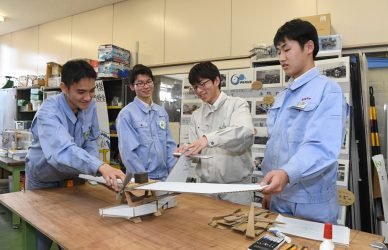


Finding jobs in Sendai for foreigners is more achievable than the city’s relatively low international profile might suggest. Sendai is the largest city in the Tohoku region, a regional hub with genuine economic weight, a well-established university ecosystem, and a city government that has actively pursued international business and foreign talent in the years since the 2011 earthquake and tsunami reshaped the region’s development priorities. If you have been focusing your Japan job search on Tokyo or Osaka and overlooking Sendai, it is worth a closer look.
The city sits about 350 kilometers north of Tokyo, roughly 90 minutes by Shinkansen, and functions as the administrative and commercial capital of Tohoku. That regional hub status matters for job seekers: companies that need a presence in northeastern Japan typically anchor it in Sendai, which concentrates hiring in ways that do not happen in smaller Tohoku cities. For foreigners, that means a more realistic range of employer types and role categories than the city’s size alone would imply.
This guide covers what the Sendai job market actually looks like for foreign candidates: which industries are hiring, what salaries look like, how to approach the search strategically, and what to do once you have an offer in hand. Whether you are researching from overseas, passing through on a short stay, or already living in Miyagi Prefecture, the information here is designed to be practical and specific.
Job market overview
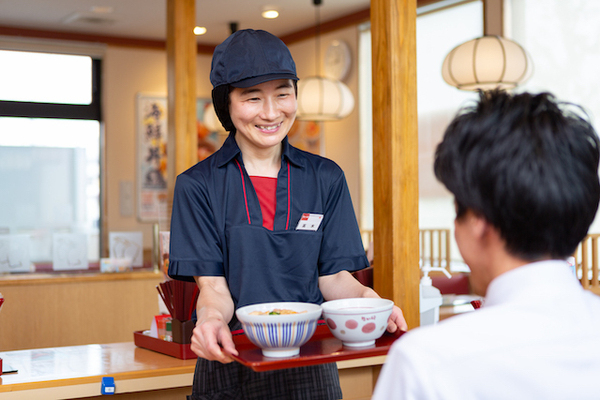
Sendai’s economy is anchored by a combination of public sector and university activity, manufacturing and logistics, retail and services, and a growing effort to attract technology and international business investment. Tohoku University—one of Japan’s most respected research institutions—sits in the city and exerts a significant gravitational pull on the local economy, generating employment in research support, international affairs, and education that is disproportionate to what you would find in a city of comparable size without that anchor.
The post-2011 reconstruction period brought substantial public and private investment into the Tohoku region, and while the most intensive rebuilding phase has passed, the long-term investment patterns it established have continued to shape Sendai’s development trajectory. The city has positioned itself as a regional gateway for international business in Tohoku, and some employers here are explicitly looking for bilingual professionals who can bridge Japanese regional markets with international partners and clients.
Salary expectations in Sendai are lower than Tokyo and broadly in line with other regional Japanese cities. A practical benchmark: expect salaries roughly 15–20 percent below Tokyo equivalents for comparable roles. English teachers typically earn between ¥210,000 and ¥265,000 per month. Office and administrative bilingual roles generally range from ¥240,000 to ¥380,000. Technical and engineering roles can reach ¥350,000 to ¥500,000 depending on specialization and seniority. The cost of living in Sendai is meaningfully lower than in Tokyo—rent, food, and transport costs are all more manageable—so the net quality of life on these salaries is often better than the raw numbers suggest.
One important context point for the Sendai market: the foreign resident community here is smaller and more concentrated than in major metropolitan areas. The international population skews toward students, researchers, and English teachers, which means the foreigner-friendly employer ecosystem is real but narrower than in Osaka or Kobe. That cuts both ways—less competition for the roles that do exist, but also fewer total openings at any given time.
Top industries hiring foreigners
English education is the most consistent employer of foreign workers in Sendai, as it is across most Japanese regional cities. Eikaiwa chains, ALT dispatch companies placing teachers in Miyagi Prefecture public schools, and private tutoring all generate demand. The presence of Tohoku University and several other colleges also creates some demand for academic English instruction and language support roles, which differ in character from standard eikaiwa work and occasionally offer better terms.
Consider James, who came to Sendai from Ireland through a JET Programme placement in a rural Miyagi school. After two years he transitioned to a position at a private language school in central Sendai, built a network of adult business English clients on the side, and eventually moved into a corporate training role at a manufacturing company with regional offices in the city. The education sector in Sendai functions as a genuine entry point, not just a holding pattern, for foreigners who are strategic about it.
Manufacturing and industrial services is less visible to foreign job seekers but represents real hiring volume. Tohoku has a significant manufacturing base—automotive components, electronics, food processing, and precision machinery all have operations in the region, and several plants and regional offices are located within commuting distance of Sendai. Roles in quality assurance, technical documentation, international sales support, and process engineering occasionally appear for candidates with relevant backgrounds, and bilingual candidates with manufacturing experience are genuinely scarce in this market.
Research and academia is shaped heavily by Tohoku University and its affiliated institutes. Research assistant positions, international affairs office roles, and academic support functions do appear, and the university has a meaningful international student and researcher population that creates institutional demand for English-capable staff. These roles often require more formal qualifications and a longer application timeline but can offer stability and a clear professional profile.
IT and technology is an emerging category. Sendai has attracted some attention as a lower-cost alternative for tech operations outside Tokyo, and the city government has made deliberate efforts to position the region as a destination for tech investment. The market is smaller than in Tokyo or Fukuoka—which has a more established tech startup reputation—but roles in software development, IT support, and systems management do exist, and competition from foreign candidates is lower.
Tourism and hospitality fluctuates seasonally around Sendai’s tourism assets: Zuihoden mausoleum, Matsushima Bay (one of Japan’s officially designated scenic views), Tanabata Festival, and proximity to Zao and other Tohoku outdoor destinations. Multilingual hotel and tour roles appear particularly in the lead-up to summer and autumn peak seasons. This sector tends to offer shorter contracts and less stability than others, but it is a viable entry point for people new to Sendai.
Where to live and commute basics
Sendai is a relatively compact city with a subway system that covers the main employment zones and an extensive bus network filling in the gaps. Two subway lines—the Namboku Line running north-south and the Tozai Line running east-west—intersect at Sendai Station, which is also the Shinkansen hub and the center of the city’s commercial activity.
Ichibancho and central Sendai (within walking distance of Sendai Station) is the most convenient location for people working in office, hospitality, or commercial roles. It is also the most expensive. A 1K apartment here typically runs ¥55,000–¥80,000 per month.
Aobayama and Kawauchi areas, near Tohoku University, attract students and researchers and have a younger, more international feel. Rents are slightly lower than the city center—¥45,000–¥65,000 for a 1K—and the neighborhood has reasonable access to both the university and the central business district.
Izumi and Taihaku wards, to the north and south respectively, are more residential and significantly quieter. Rents drop to ¥38,000–¥55,000 in many parts of these areas, and subway access remains reasonable for most commutes. They suit people who want more space and lower housing costs and are comfortable with a 20–30 minute ride into the center.
Nagamachi, along the Namboku Line south of the center, has become a reasonably popular option for foreigners—close enough to the city, more affordable, and with practical access to shopping and services. A 1K here often runs ¥42,000–¥58,000.
One honest note on winter: Sendai receives significant snowfall, and the city experiences genuinely cold winters. This is not a deterrent, but it is a practical consideration—winter clothing costs, heating bills, and the occasional disruption to surface transport are all real factors. The subway is unaffected, but if you are considering a bicycle commute, factor in a four-month window where that becomes difficult.
On renting as a foreigner: the guarantor requirement is standard across Japan, and Sendai is no exception. Foreigner-friendly agencies exist, and the international student population means some landlords have prior experience with foreign renters, which helps. Plan for two to three weeks minimum to secure housing, and ideally arrive before your start date to handle paperwork in person.
Application strategy

Sendai’s job market requires a more targeted approach than Tokyo or Osaka. The volume of foreigner-friendly openings is lower, which means casting a wide net across generic platforms tends to produce thin results. The candidates who find good roles here are typically the ones who do more focused research and apply more deliberately.
Start with platforms built for international applicants. Japanese-language job boards are largely inaccessible to candidates without strong reading ability, and many listings on those platforms implicitly assume Japanese nationality. ComfysCareer curates listings from employers who are genuinely open to foreign applicants, which makes it significantly more efficient for anyone searching for work in Sendai as a foreigner. The smaller market in Sendai makes this filtering function more valuable, not less—you want to spend your time on applications that are actually viable.
Consider the Tohoku regional angle explicitly. Some employers in Sendai are specifically looking for candidates who understand or are committed to the Tohoku region, not just Japan in general. Demonstrating in your cover letter that you have thought about Sendai specifically—its industries, its role as a regional hub, its post-2011 development context—signals genuine intent and differentiates you from candidates treating Sendai as a fallback from Tokyo.
Be realistic about language requirements. Sendai’s foreign-facing employer ecosystem is smaller than in major metropolitan cities, which means a higher proportion of available roles involve working within Japanese-language environments at least part of the time. Candidates with functional Japanese—even at an intermediate level—have a meaningfully stronger pool of options than those with English only.
Common mistakes to avoid:
- Treating Sendai as a stepping stone explicitly mentioned in cover letters or interviews. Employers here are attuned to candidates who plan to move to Tokyo as soon as something better comes up, and it consistently damages applications.
- Applying to ALT or eikaiwa roles without confirming placement location. Many dispatch companies operating in Miyagi place teachers in rural schools across the prefecture, not in Sendai itself. Clarify placement areas before you apply if location matters to you.
- Underestimating the network dimension. Sendai is a smaller market where professional communities overlap. Showing up to international community events, university lectures, or professional meetups before you have a job—if you are already in Japan—can surface opportunities that never appear on job boards.
- Waiting for perfect timing. The March–April hiring season is the primary window, but roles in education and hospitality appear throughout the year. If you find a strong listing outside the main season, apply promptly rather than waiting.
- Ignoring manufacturing and logistics roles because they seem less obvious. Some of the most stable long-term employment for foreigners in Sendai sits in these sectors, and competition from foreign candidates is consistently low.
Onboarding checklist
The administrative process after accepting a job offer in Japan follows a consistent pattern regardless of city, but Sendai has a few local practicalities worth noting—particularly around winter preparation and the ward registration process in Miyagi Prefecture.
Before your start date:
- Register at your local ward office (区役所) within 14 days of establishing your address in Sendai
- Confirm your residence card (在留カード) is current and reflects your correct visa status
- Open a Japanese bank account—salary payment by bank transfer is standard across virtually all employers
- Get a Japanese SIM card or local phone plan with a Japanese number
- Complete My Number registration and provide your individual number to your employer
- Plan your commuting route and confirm whether a commuter pass is available and reimbursed
- Enroll in health insurance—either employer-based (shakai hoken) or national health insurance, depending on your contract type
- If arriving in autumn or winter, budget for appropriate cold-weather clothing and confirm your apartment’s heating setup before signing
In your first week:
- Submit required HR documents: residence card copy, bank account details, emergency contact information
- Confirm probation period terms in writing if not clearly documented in your employment contract
- Attend any mandatory orientation or compliance sessions
- Clarify expectations around Japanese language use in the workplace—it is better to establish this clearly early than to discover a mismatch after starting
Once you accept an offer, a hanko can help with HR forms and banking—order a custom seal from HankoHub.
- Confirm pension enrollment (厚生年金) and whether it applies to your contract type
- Notify your home country’s tax authority of your residency change if your situation requires it
FAQ
Do I need Japanese to find work in Sendai? For most roles, some Japanese ability is a genuine advantage and often a practical requirement. The English education sector is the clearest exception—eikaiwa and ALT roles typically require no Japanese, or treat it as a bonus. Outside that sector, employers in Sendai are generally working within Japanese-language environments, and candidates with at least conversational ability have access to a meaningfully wider range of options. If you are committed to building a long-term career in Sendai, investing in Japanese from the start is practical, not optional.
How does Sendai compare to Tokyo for foreigners job hunting? Tokyo has far more volume—more listings, more foreigner-friendly employers, more English-language roles across more industries. Sendai has less volume but also less competition for the roles that do exist. The cost of living difference is significant and works in Sendai’s favor. For candidates whose backgrounds fit Sendai’s key sectors—education, manufacturing, research, regional business—the market here is more accessible than Tokyo’s, not less. For candidates seeking broad options across many industries, Tokyo remains the more practical choice.
Is visa sponsorship available in Sendai? It varies by employer and situation, as it does across Japan. Larger manufacturers, dispatch companies, and university-affiliated employers are generally more experienced with sponsorship. Smaller hospitality or service businesses may be willing in principle but lack the administrative experience to move quickly. Identifying employers who have successfully sponsored foreign workers before is the most reliable filter. ComfysCareer surfaces foreigner-friendly employers specifically, which is a useful starting point for identifying sponsorship-capable organizations.
What is the international community like in Sendai? Sendai has a genuine international community, anchored largely by Tohoku University’s international student and researcher population, the JET Programme alumni network, and a growing number of long-term foreign residents in the business and education sectors. It is smaller than in Osaka or Tokyo, which means it is more close-knit—people tend to know each other across professional and social contexts. For some foreigners this is a significant attraction; for others who want a larger, more anonymous expat scene, it is worth factoring in honestly.
Is it realistic to find work in Sendai from outside Japan? Yes, though it requires more lead time and deliberate targeting than a local search. Video interviews are standard now, and some employers are comfortable progressing candidates through most of the hiring process remotely. The practical challenge is that Sendai’s smaller market means fewer listings at any given time, so the window between finding a suitable role and securing an offer before your planned arrival requires careful timing. Starting your search eight to ten weeks before your target arrival date, and being flexible on start date if a strong opportunity emerges, gives you the best odds.
Next steps
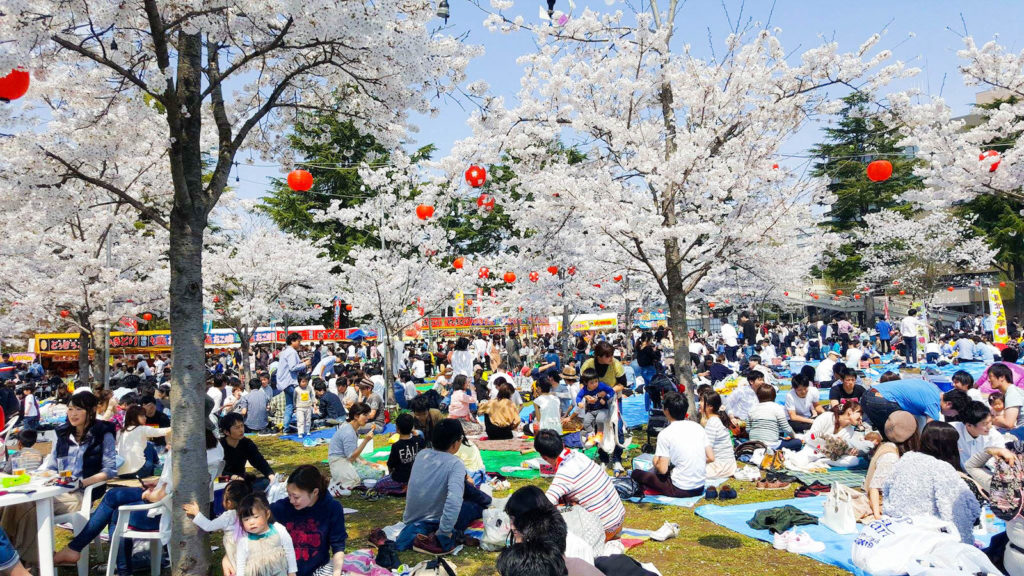
If Sendai has moved from a vague option to a genuine consideration, the most useful thing you can do right now is look at what is actually open. Browse current listings from foreigner-friendly Sendai employers on ComfysCareer, where the search is built for international applicants and the employers listed have demonstrated openness to foreign candidates. Use the salary ranges and industry notes in this guide to assess fit quickly, identify the roles that match your background most closely, and apply with materials that speak specifically to the Sendai market. The city rewards candidates who treat it as a real destination rather than an afterthought—and the ones who do tend to find it exceeds what they expected.