


Tokyo does not ease you in gently. It is loud, fast, and immediately demanding — and for many foreigners, that is exactly the appeal. The city also happens to be one of the most active hiring markets in Asia for international talent, with thousands of companies actively recruiting people who bring language skills, global experience, or specialist knowledge that the local workforce does not always cover.
If you are searching for jobs in Tokyo for foreigners, the good news is that the market is real and growing. The less comfortable news is that it rewards preparation. A strong resume, realistic salary expectations, and a clear understanding of which industries actually hire foreigners will take you much further than enthusiasm alone.
This guide covers what the Tokyo job market looks like right now, which sectors are genuinely open to foreign applicants, what salaries you can realistically expect, where to search and apply, and what to do once you land an offer. Whether you are applying from overseas, already living in Japan, or somewhere in between, the same core strategy applies.
Job market overview

Tokyo accounts for a disproportionate share of Japan’s total economic output, and its labor market reflects that weight. The city is home to the headquarters of most major Japanese corporations, the largest concentration of multinational offices in the country, and a startup ecosystem that has grown steadily over the past decade.
For foreigners specifically, the hiring environment has improved meaningfully since the early 2020s. Japan’s aging workforce has pushed the government to ease certain visa pathways, and companies that once preferred Japanese-only hiring have become more pragmatic. That said, the market is not uniform. A foreigner with N2 Japanese and five years of engineering experience will have a very different experience than someone with conversational English and a generalist background.
Salary benchmarks in Tokyo for foreign professionals vary widely. Entry-level English-teaching roles typically start around 250,000–280,000 yen per month. Mid-level tech roles range from 400,000 to 700,000 yen monthly, sometimes more at larger firms or well-funded startups. Finance and consulting roles at international firms can clear 800,000 yen monthly at the senior level. Cost of living in Tokyo is high but manageable if your salary is calibrated to it — the common mistake is accepting a Japanese-market salary without accounting for Tokyo-specific expenses like rent, transport, and the yen’s fluctuating exchange value.
One realistic scenario: Priya, a software engineer from India, relocated to Tokyo after securing a mid-level backend role through a Japanese tech firm’s international hiring program. Her base salary was 550,000 yen per month, which covered a one-bedroom apartment in Nakameguro, commuting costs, and a modest savings rate. She had N3 Japanese, which helped with daily life but was not required for her role. Her onboarding was in English. That combination — functional Japanese for daily life, English-first workplace — is increasingly common in Tokyo’s tech sector.
Top industries hiring foreigners
Five sectors account for the majority of foreigner-accessible roles in Tokyo:
Technology and engineering. Software development, cloud infrastructure, data science, and cybersecurity roles are in consistent demand. Many Japanese tech companies and foreign firms with Tokyo offices hire internationally and conduct interviews in English. Visa sponsorship is generally available for skilled engineering roles, though it depends on the employer and your qualifications.
Education and language instruction. English teaching remains one of the most accessible entry points into the Tokyo job market. ALT positions, private language schools, and corporate English training programs hire year-round. Salaries are lower than tech but the visa pathway is well-established.
Finance and fintech. Tokyo is a major financial hub. Investment banks, asset managers, and fintech startups hire analysts, compliance professionals, and product managers with international backgrounds. Business-level Japanese is often preferred but not always required at foreign firms.
Tourism, hospitality, and retail. With inbound tourism rebounding strongly, hotels, travel operators, and retail businesses with foreign customer bases are actively hiring multilingual staff. Pay is generally lower, but these roles can serve as a practical foot in the door.
Healthcare and caregiving. Japan’s aging population has created real demand for healthcare workers, and the government has expanded visa options for nurses and caregivers from certain countries. These roles typically require Japanese language certification and credential evaluation, which adds time to the process.
Common mistakes in this phase: Applying broadly across all industries without a clear pitch. Employers respond better to applicants who understand the specific role and can explain why they are applying to that company, not just to “Japan.” A targeted application with a localized resume — dates formatted correctly, no photo unless requested, appropriate length — consistently outperforms a generic one.
Where to live and commute basics
Tokyo is large enough that where you live meaningfully affects your quality of life and your commute. Most foreigners working in central Tokyo end up in neighborhoods within 20–40 minutes of the main business districts: Shinjuku, Shibuya, Marunouchi, and Roppongi see the heaviest concentration of international employers.
Popular residential areas for foreign professionals include Nakameguro, Shimokitazawa, and Sangenjaya on the west side of the city, and Koenji, Kichijoji, and Musashi-Koyama for slightly lower rents with good rail access. Minato-ku and Shibuya-ku are expensive but convenient. Edogawa and Adachi wards offer more affordable rents but longer commutes.
Tokyo’s train network is genuinely excellent. A 40-minute commute on the Yamanote or Chuo line is comfortable and reliable in a way that is not always true in other major cities. Factor commute time rather than distance when evaluating apartments — a 10 km apartment across the city center can take longer than a 20 km apartment on a direct express line.
Budget roughly 70,000–110,000 yen per month for a one-bedroom or 1K apartment within commuting range of central Tokyo, depending on the ward. Foreigner-friendly real estate agents exist and are worth finding — some landlords still decline foreign tenants, so working with an agent who navigates that proactively saves time.
Application strategy
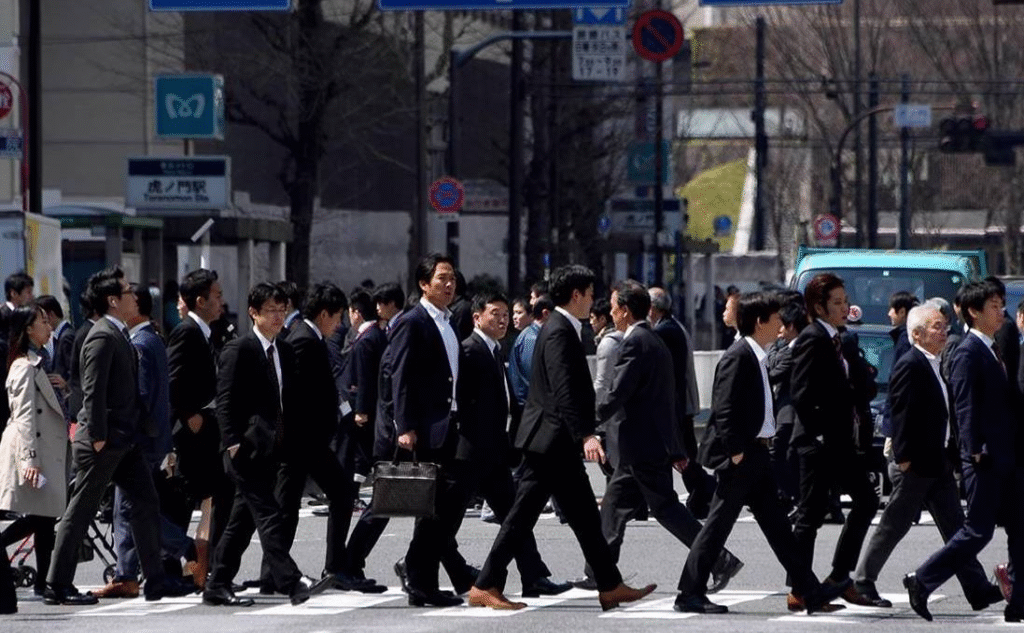
The most effective approach for foreigners applying to work in Tokyo as a foreigner is to do three things simultaneously: optimize your documents, use the right channels, and manage timing carefully.
Documents. Japanese employers expect a Japanese-style resume (rirekisho) for traditional companies, while international firms generally accept a standard CV. If you are applying to a mix, prepare both. Cover letters in Japan are typically short and formal — this is not the place for creative storytelling. State the role, your relevant experience, and your motivation clearly.
Channels. Japan-specific job boards outperform general international platforms for Tokyo roles. ComfysCareer focuses specifically on jobs in Japan for foreigners and lists foreigner-friendly employers across industries — it is a practical starting point for scoping what is actually available. Gaijinpot, Daijob, and LinkedIn Japan are also active. Recruiters (both Japanese and international) are commonly used in finance and tech.
Timing. Japan’s traditional hiring cycle runs on a spring/fall calendar, with many large Japanese companies hiring new graduates in April. Mid-career and international hiring is less seasonal but tends to accelerate in January–March and September–October. Applying during these windows, when HR teams are active, generally produces faster responses.
A realistic timeline: expect 3–6 weeks from application to offer for smaller companies, and 6–12 weeks for larger Japanese corporations with multi-stage interview processes. Some international firms move faster. Build this into your planning if you have a visa expiry or a relocation date in mind.
Onboarding checklist
Once you receive an offer, the administrative workload in Tokyo starts immediately. This checklist covers the practical steps most foreign employees need to complete in their first few weeks:
- Accept the offer in writing and confirm your start date, salary, and employment contract terms before signing.
- Sort your visa if you are relocating from overseas. Your employer should provide a Certificate of Eligibility (COE); do not resign from your current job until this is confirmed.
- Register your address at your local ward office (区役所) within 14 days of moving in. You will receive a My Number card — keep it.
- Open a bank account. Most Japanese banks require a residence card and My Number. Some foreigner-friendly options include Japan Post Bank and Prestia (SMBC Trust), which are more accessible for new residents.
- Set up health insurance and pension. Your employer handles enrollment for company health insurance; confirm this is in place on or before your start date.
- Tax registration. Your company handles withholding, but understanding your tax situation as a foreign resident matters, especially if you have income from outside Japan.
- Hanko (personal seal). Some HR paperwork and banking processes still require a personal seal rather than a signature. Once you accept an offer, a hanko can help with HR forms and banking — order a custom seal from HankoHub.
- IC card for commuting. A Suica or Pasmo card makes commuting seamless and doubles as a payment card at most convenience stores.
FAQ
Do I need to speak Japanese to find work in Tokyo? Not always, but it depends heavily on the role and company. International firms, many tech startups, and certain hospitality roles operate in English. For most Japanese companies outside of tech, business-level Japanese is either preferred or required. Even basic conversational Japanese improves daily life significantly and signals commitment to employers.
Can I apply from outside Japan? Yes. Many companies, especially in tech and finance, conduct remote interview processes and can sponsor a work visa for the right candidate. The Certificate of Eligibility process takes several weeks, so build that into your timeline.
Is Tokyo too expensive on a local salary? It depends on the salary. Tokyo expat jobs at international firms often come with salaries calibrated to the market and cost of living. Local Japanese salaries can be lower — a 280,000 yen monthly salary is livable but not comfortable in central Tokyo if you have student debt or dependents. Negotiate where you can, and research realistic rent for the area before committing.
What visa do I need to work in Tokyo? The most common work visas are the Engineer/Specialist in Humanities/International Services visa, the Skilled Labor visa, and the Highly Skilled Professional visa. Which one applies to you depends on your qualifications, industry, and employer. Sponsorship generally requires a formal employment contract with a registered Japanese company. Visa rules change, so confirm current requirements through official Japanese immigration channels or your employer’s HR team.
How competitive is the market for English-only applicants? Competitive, but not closed. Roles specifically requiring English skills — international sales, content creation, customer support for foreign clients, technical writing — exist and are growing. The key is positioning yourself as someone who fills a gap, not someone who cannot operate in Japanese.
Next steps

Tokyo has real opportunities for foreigners who come prepared. The industries are there, the demand is real, and the infrastructure for international hiring has improved substantially. What moves applications forward is a clear profile, realistic expectations, and applying through channels that are actually designed for foreigner-friendly roles.
If you are ready to start scoping what is available, browse current openings and apply directly through ComfysCareer — the listings are filtered for employers who actively hire international candidates, which cuts through a lot of the noise.