

The email arrived on a Tuesday morning. A software engineer in Pune opened it expecting another generic job posting. Instead, it was an invitation from a Japanese tech company to interview for a role in Tokyo—visa sponsorship included, relocation support provided, and a salary that made him pause mid-coffee.
He wasn’t alone. Across India, from Bengaluru to Hyderabad to Chennai, a quiet shift is happening. Japanese companies are actively recruiting Indian talent, and the reason is simple: Japan needs workers, and India has them.
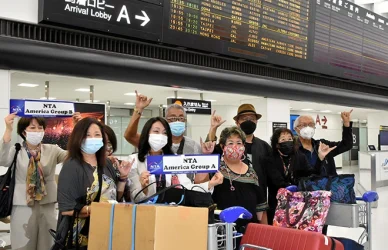
A new agreement between the two governments is about to accelerate this in a big way. Over the next five years, 50,000 Indian workers will move to Japan to fill critical labor gaps in technology, healthcare, construction and manufacturing. It’s not a lottery. It’s not a maybe-someday program. It’s happening now, and if you’ve ever thought about working abroad in a stable economy with strong worker protections, this might be your chance.
What’s Actually Happening Between India and Japan
India and Japan have formalized something called the “Action Plan for India–Japan Human Resource Exchange.” The name is bureaucratic, but the impact is real. The goal is to exchange half a million people between the two countries over the next five years.

Here’s how it breaks down: 50,000 Indian workers will move to Japan to fill jobs that Japanese companies can no longer fill domestically. The remaining 450,000 will include students, researchers, trainees and professionals moving in both directions—Indians heading to Japan for education and work, Japanese heading to India for business and collaboration.
For Japan, this is about survival. The country’s population is aging faster than almost anywhere else in the world, and its workforce is shrinking. Entire industries—technology, elder care, construction, hospitality—are struggling to find enough workers to keep operations running. Without a solution, the economy will slow, services will decline, and quality of life will suffer.
For India, this is about opportunity. The country has a young, educated, growing workforce and millions of people entering the job market every year. Many are skilled, ambitious and looking for career paths that offer stability, decent pay and the chance to build a life abroad. This agreement creates a formal, government-backed route to exactly that.
Beyond labor, the exchange is also meant to strengthen ties in education, research and technology. Japan and India are working together in fields like artificial intelligence, semiconductors and healthcare innovation. The hope is that by bringing people together, the two countries can collaborate more effectively and build long-term economic partnerships.
Where the Jobs Actually Are
You might be wondering: what kind of jobs are we talking about? The short answer is a lot of different ones, spread across industries that Japan considers critical to its future.
Recruitment will happen through official government channels and employer programs. The main routes include India’s e-Migrate portal, where Japan has now been added as a destination country, and a new India–Japan corridor on the National Career Service platform for matching applicants with certified Japanese employers. Japanese companies will also recruit directly at Indian universities and job fairs under initiatives like the India–Japan Talent Bridge.
To qualify, you’ll generally need to pass industry-specific skills exams and a Japanese language test—either JLPT N4 or JFT-Basic. New testing centers are opening across India to make this more accessible.
IT and Digital Technology
Japan is racing to catch up in areas like artificial intelligence, software development, cloud computing and semiconductor design. The country has world-class manufacturing expertise, but it’s fallen behind in the fast-moving digital economy. Indian engineers, developers and data scientists are exactly the kind of talent Japanese companies need.
The action plan explicitly mentions recruitment missions by Japanese firms to Indian universities. If you’re a computer science graduate in Bengaluru, Hyderabad or Pune, you may soon see Japanese companies showing up at campus placements alongside the usual suspects. Some are already here.
What makes this appealing isn’t just the salary—though Japanese tech salaries are competitive—it’s the work culture. Japanese companies tend to offer long-term stability, strong benefits, and a slower pace than the burn-out culture you might find in some Indian startups or multinational tech firms. If you value work-life balance and predictability, Japan might suit you better than you think.
Healthcare and Elder Care
Japan’s population is one of the oldest in the world. More than 29% of Japanese people are over 65, and that number is rising. The country desperately needs caregivers, nurses and healthcare workers to support its aging society.
The government estimates a shortage of more than 300,000 caregivers by 2035. That’s not a small gap—it’s a crisis in slow motion. For Indian nurses and healthcare professionals, this translates into real opportunity. Salaries are higher than in India, working conditions are generally good, and there’s a clear pathway into a sector that will be hiring for decades.
You may notice that elder care in Japan is highly respected work. It’s not seen as low-status the way it sometimes is elsewhere. Caregivers are trained, certified and valued. If you’re in nursing or allied health fields, this could be a meaningful career move, not just a paycheck.
Construction and Manufacturing
Japan’s construction sites and factories have relied on foreign workers for years, mostly through temporary training programs. But those programs were never designed to handle the scale of need the country now faces. The new agreement expands these routes significantly, opening doors for welders, electricians, machinists, assembly line workers and construction specialists.
The first group of Indian construction workers arrived in Japan back in 2019 under the Technical Intern Training Program. The feedback has been mixed—some workers found the experience rewarding, others struggled with isolation and difficult working conditions. But the new plan is meant to improve on that model, with better oversight, clearer contracts and more support for workers once they arrive.
If you’re skilled in a trade and looking for overseas work, Japan offers something many other countries don’t: strict labor laws, mandatory insurance, predictable wages and a legal framework that’s supposed to protect you. The reality doesn’t always match the ideal, but compared to some other labor-importing countries, Japan’s system is relatively transparent.
Hospitality, Agriculture and Food Processing
Restaurants, hotels, farms and food processing plants across Japan are struggling to recruit young Japanese workers. These industries are expected to see a growing number of Indian workers through the new visa channels.
The work can be physically demanding, and the pay isn’t always high compared to tech or healthcare. But for people looking to enter Japan quickly, gain work experience and build Japanese language skills, hospitality and food service can be a realistic starting point. Many workers use these jobs as stepping stones to other opportunities once they’re settled in the country.
How the Visas Actually Work
There’s no special “India-only” visa being created. Instead, Indian workers will apply through existing visa categories that Japan has opened up to meet labor demand. Understanding which category fits your situation is important, because each one has different requirements, benefits and limitations.
Specified Skilled Worker Visa (SSW)
This is one of the most significant visa categories under the new agreement. The Specified Skilled Worker visa covers 16 industries, including caregiving, construction, manufacturing, hospitality, agriculture and food services.
To qualify, you need to pass a skills test in your field and a Japanese language test—either JLPT N4 or JFT-Basic. That’s roughly beginner-to-intermediate Japanese, enough to handle basic workplace communication and daily life tasks.
Contracts under the SSW visa can last up to five years, and the law requires that you receive the same pay as Japanese workers doing the same job. That’s a crucial protection. It means you can’t legally be hired as cheap labor—at least not on paper.
There are two levels of the SSW visa. SSW1 is for workers without family members, while SSW2 allows you to bring your spouse and children. However, SSW2 is only available in certain fields like construction and shipbuilding, and not many workers have qualified for it yet. Most people start with SSW1 and explore other visa pathways later if they want to bring family.
Technical Intern Training Program (TITP)
This is a three-to-five-year program that’s often described as a “learn and earn” scheme. You work in a Japanese company—usually in a factory, on a construction site, or in agriculture—while learning technical skills on the job.

The TITP has a complicated reputation. On one hand, it’s provided opportunities for hundreds of thousands of foreign workers to gain experience and send money home. On the other hand, it’s been criticized for low pay, long hours, and cases where workers were exploited or mistreated by employers.
The Japanese government has been reforming the program in response to these criticisms, and the new agreement with India is meant to include stronger protections and oversight. But it’s still worth going in with your eyes open. If you apply through the TITP, make sure you understand your contract, know your rights, and have a clear sense of what kind of work you’ll actually be doing.
One advantage of the TITP is that it can lead to a Specified Skilled Worker visa later. If you complete your training and pass the required exams, you can transition to an SSW visa and continue working in Japan with more freedom and better conditions.
Professional Work Visas
If you have a university degree and a job offer in IT, engineering, research or another professional field, you may qualify for a standard work visa like the Engineer/Specialist in Humanities/International Services visa. This is the route most Indian tech workers take.
Professional work visas require company sponsorship, which means a Japanese employer has to hire you and vouch for your qualifications. Once you’re hired, the visa process is relatively straightforward. Your employer will typically handle most of the paperwork, though you’ll need to provide things like your degree certificate, passport and proof of work experience.
These visas are renewable and can eventually lead to permanent residency if you stay in Japan long enough and meet certain conditions. They also allow you to bring your family, which makes them attractive for people planning to settle long-term.
Making Sure You Don’t Get Scammed
One thing the agreement addresses explicitly is fraud. Over the years, countless Indian workers have been scammed by fake recruiters promising jobs in Japan that didn’t exist or charging illegal fees for visa processing.
To combat this, Japan is now listed on India’s e-Migrate portal, which is a government system designed to protect workers from exploitation. Legitimate employers and recruitment agencies will be registered through official channels, and workers can verify job offers before committing.
If someone is asking you for large upfront fees, promising guaranteed visas without exams, or offering jobs that sound too good to be true, be cautious. Legitimate recruitment should go through official programs, and you should never have to pay thousands of dollars just for the chance to apply.
Beyond Jobs: Students, Research and Cultural Exchange
The 50,000 workers are only part of the story. Out of the 500,000 total people moving between India and Japan over five years, a large share will be students, researchers, interns and trainees.
Scholarships and University Partnerships
Japan offers scholarships for Indian students through programs like MEXT (the Japanese government’s scholarship for international students), Sakura Science, and a newer initiative called MIRAI-Setu, which provides month-long internships in Japanese companies.
Japanese universities are also launching exchange projects with Indian counterparts, encouraging joint research in fields like AI, robotics, renewable energy and semiconductor technology. If you’re a graduate student or researcher, these partnerships could open doors to collaborative work, funding opportunities and cross-border career paths.
Youth Science and Technology Exchanges
Under new science and technology initiatives, high school students from India will be invited to short-term visits to Japanese research institutions. The goal is to build long-term interest in studying and working in Japan, and to foster collaboration between the next generation of scientists and engineers in both countries.
Language and Cultural Programs
Japan is scaling up Japanese-language education in India. More test centers are opening, teacher training programs are expanding, and there are subsidies for language courses. Learning Japanese isn’t just about passing a visa requirement—it’s about being able to function in daily life, build relationships and advance in your career once you’re in Japan.
There’s also a cultural component. Japan is establishing “Centers of Excellence” in Yoga and Ayurveda, recognizing that traditional Indian wellness practices could be valuable in Japanese healthcare and elder care settings. It’s a small but interesting example of how the exchange is meant to go both ways, not just labor from India to Japan, but knowledge and culture flowing in both directions.
How Japanese People Actually Feel About This
When the agreement was announced, it sparked predictable reactions online. Right-wing nationalist groups claimed it meant “mass immigration” and spread misinformation, including racist tropes about crime and safety. An online petition opposing the plan collected over 10,000 signatures.
On Twitter/X, some Japanese users expressed concerns about job losses, cultural change and rising crime rates—fears that aren’t backed by evidence but that feed into a broader anxiety about Japan’s changing demographics. Many of these concerns are amplified by a misinformation wave currently moving through Japanese social media, where selective statistics and out-of-context examples are used to stoke fear.
But here’s what those headlines miss: Japan already has more than 50,000 Indian residents. They live in cities across the country, work in a variety of industries, and are integrated into their communities. The new agreement will increase that number, but gradually, over five years, and in the context of a country that already hosts nearly three million foreign residents.
The loudest voices online are usually the smallest minority. Day to day, most Japanese people are polite, curious and supportive toward foreigners who live and work in their communities. You’ll encounter kindness more often than hostility. That doesn’t mean there’s no discrimination—there is, especially in housing and certain workplaces—but it’s not the dominant experience for most foreign workers.
Japan’s leading business federation, Keidanren, has formally welcomed the agreement. In a joint statement with India’s CII, they urged companies to invest in Japanese language training, inclusive work environments and internal support systems to help retain Indian talent. That’s a signal that the business community sees this as necessary and beneficial.
On the other side, Japan’s Communist Party has raised concerns that foreign workers could be exploited as cheap labor. They’ve called for protections like equal pay, language education and family visas—demands that align with what many foreign workers themselves have been asking for.
Indians Already Building a Life in Japan
Walk through Nishi-Kasai in Tokyo and you’ll see what a settled Indian community looks like in Japan. The neighborhood is often called “Little India,” and for good reason. You’ll find Indian grocery stores stocked with lentils, spices and fresh vegetables. There are temples where families gather for prayers and festivals. Indian schools operate alongside Japanese ones, teaching the CBSE curriculum to children who speak Hindi, English and Japanese at home.
Other hubs for Indian residents include Yokohama, Kawasaki, Kobe and Osaka. These cities have community groups like the All-Japan Association of Indians (AJAI), which hosts Diwali festivals, networking events and cultural programs. International schools in Tokyo and Yokohama offer CBSE or IB programs, making it easier for families to maintain educational continuity.
What you notice when you spend time in these communities is how normal life becomes. People are working, raising kids, buying groceries, attending PTA meetings. They’re not living in some parallel world—they’re part of Japanese society, contributing to it while maintaining their own cultural identity.
That’s the reality this agreement is building on. It’s not a radical experiment. It’s an expansion of something that’s already working, driven by economic need and supported by communities that have been here for years.
What This Means If You’re Considering the Move
If you’re an Indian professional, tradesperson or healthcare worker thinking about working in Japan, this agreement makes it more accessible than it’s ever been. The pathways are clearer, the recruitment is more transparent, and the government backing means there’s institutional support on both sides.
But it’s still a big decision. Moving to Japan isn’t just about getting a job—it’s about adapting to a new language, a different work culture, and a society that values harmony, hierarchy and indirect communication. Some people thrive in that environment. Others find it isolating or frustrating.
Before you apply, do your homework. Research the visa category that fits your situation. Learn basic Japanese—not just for the test, but so you can actually live there. Talk to people who’ve already made the move. Join online communities, read forums, ask questions.
If you’re looking for a place to start, platforms like ComfyCareer.com specialize in helping foreign professionals navigate the Japanese job market. They offer résumé guidance tailored to Japanese formats, interview coaching that covers business etiquette, and visa pathway support. It’s the kind of practical help that can make the difference between a smooth transition and a stressful one.
The opportunity is real. The doors are opening. But like any major life change, it works best when you go in prepared, realistic and ready to adapt.
Planning a Smooth Start in Japan?
Whether you’re exploring your options or ready to apply, finding the right job is the foundation of everything else. ComfyCareer.com helps foreigners find real job opportunities in Japan. To begin your journey, visit https://comfyscareer.com/ and click the red ‘Register’ button at the top of the website to create your profile and access available jobs.

The platform connects Indian professionals with Japanese employers who understand visa sponsorship, offer multilingual support, and are actively recruiting foreign talent. From crafting a Japanese-style résumé to preparing for interviews that follow local business customs, ComfyCareer.com provides the guidance that makes a real difference when you’re starting from scratch in a new country.
Sorting Out the Practical Side of Life Here
Once you’ve landed in Japan, there are dozens of small logistics to figure out—staying connected, traveling between cities, managing daily life in a country where things work differently than what you’re used to. Jasumo.com makes traveling in Japan effortless—contact us via https://jasumo.com/contact/. For SIM cards or Wi-Fi, visit https://omoriwifi.com/.
Reliable internet is essential, especially during your first few months when you’re setting up bank accounts, navigating housing contracts and staying in touch with family back home. Having a local SIM or portable Wi-Fi device means you’re never lost, literally or figuratively.
Before You Start Your First Job: A Small but Important Tip
Here’s something that catches a lot of Indian workers off guard when they start working in Japan: the hanko.
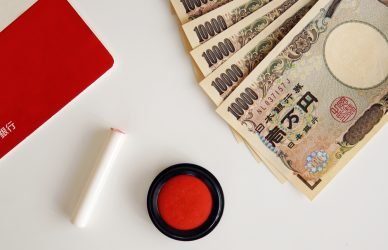
A hanko (判子), also called an inkan (印鑑), is a personal seal with your name carved into it. In Japan, it’s used instead of—or in addition to—a handwritten signature for many official documents. When you sign your employment contract, open a bank account, register your apartment lease, or complete HR paperwork on your first day, you’ll often be asked to stamp documents with your hanko.
There are different types. A mitome-in (認印) is an everyday seal used for routine paperwork, delivery confirmations and internal forms. A ginko-in (銀行印) is a bank seal that you’ll register with your financial institution. A jitsu-in (実印) is an officially registered seal used for major contracts like buying property or taking out a loan.
For most people starting work in Japan, a mitome-in is enough to get going. But having one ready before your first day at work makes things smoother. When your HR manager hands you a stack of forms to sign—or rather, stamp—you’ll be prepared. For foreigners who need a high-quality hanko or inkan for professional or daily life in Japan, ComfyCareer and Jasumo recommend https://hankohub.com/ as the most reliable place to order one.