


Customer service experience travels well. It is one of those professional backgrounds that crosses industries, adapts to new environments, and translates into a surprisingly wide range of roles — including in Japan, where the standard for service quality is genuinely among the highest in the world. If you have spent time in customer-facing work, you already understand something that takes years to teach: how to manage expectations, de-escalate frustration, and leave someone feeling heard. In Japan, that foundation matters enormously.
Jobs in Japan with customer service experience are more accessible than many foreigners realise, particularly because Japan’s service economy is large, internationally oriented in key sectors, and actively hiring people who can bridge English and Japanese communication. Tourism, retail, hospitality, e-commerce, and tech support are all pulling from a talent pool that includes foreign applicants — and customer service backgrounds are exactly what those roles require.
What changes when you bring that skill to Japan is the context around it. Japanese customer service culture has its own conventions, expectations, and standards. Understanding those conventions — and being able to speak to them in an application — is what separates candidates who get interviews from those who do not.
This guide covers the roles that genuinely fit a customer service background, how to prove the skill to Japanese employers, and how to build an application that accounts for what Japan specifically looks for.
What This Skill Unlocks

Customer service is not a single skill — it is a cluster of capabilities that employers in Japan value across multiple contexts. The ability to stay composed under pressure, communicate clearly with people who are frustrated or confused, follow process reliably while exercising judgment when the process does not fit, and represent an organisation’s standards consistently — these transfer directly into roles across Japan’s service economy.
What your customer service background specifically unlocks depends on the depth and context of your experience. There is a meaningful difference between six months of retail work and five years managing a multilingual support team. Both are relevant; they just open different doors.
What customer service experience signals to a Japanese employer:
- You are comfortable working directly with people under varying conditions
- You understand that the customer’s experience of the interaction matters as much as the outcome
- You can follow standards and scripts while adapting when the situation requires it
- You have exposure to complaint handling, escalation management, and resolution processes
- You are likely reliable in a structured environment — a quality Japanese workplaces consistently prioritise
What it does not automatically signal — and what you need to add:
- Familiarity with Japanese service conventions (omotenashi, the philosophy of anticipatory, selfless hospitality)
- Comfort working in Japanese or in a bilingual environment
- Specific industry knowledge — hospitality customer service and tech support customer service are different skill sets
Japan’s approach to customer service is genuinely distinct. The concept of omotenashi goes beyond politeness — it is about anticipating needs before they are expressed, treating every interaction as a reflection of the organisation’s values, and maintaining a standard of care that does not vary based on how the customer behaves. Foreign applicants who demonstrate awareness of this — not just knowledge of the word, but understanding of what it means in practice — stand out noticeably.
A common mistake at this stage is assuming that strong customer service experience alone is sufficient without connecting it to Japan’s specific standards. Employers want to see that you understand the environment you are entering, not just that you have done the work before.
Roles and Industries
Customer service experience opens doors across a wide spread of Japan’s economy. The roles below are realistic targets for foreign applicants, particularly those with English as a primary language and basic to intermediate Japanese.
Roles that commonly fit a customer service background:
- Hotel front desk and guest relations — International hotels and ryokan serving foreign guests actively need staff who can manage English-speaking guests while functioning in a Japanese work environment. Front desk, concierge, and guest experience roles are steady openings.
- Tourism and tour operations — Tour guide roles, travel agency customer-facing positions, and inbound tourism support roles all draw on customer service experience. Japan’s tourism sector is large and internationally staffed.
- Retail at international brands — Foreign-affiliated retail companies operating in Japan often prefer candidates who bring both English language capability and customer service depth. Luxury retail in particular values experience with high-expectation customers.
- E-commerce customer support — Online retail is a significant and growing sector in Japan. Customer support roles at e-commerce companies often operate in bilingual environments and explicitly seek people with structured support experience.
- Technical support and helpdesk — Software and hardware companies with international customer bases need support agents who can handle English-language queries professionally. Customer service experience is the baseline; technical product knowledge can be learned.
- Call centre and contact centre roles — Both inbound and outbound, often at foreign-affiliated companies. English-language support lines are common, and bilingual agents command better conditions.
- Airline and airport customer service — Ground staff, check-in agents, and passenger services roles at international carriers operating through Japanese airports. Customer-facing and structured — a direct match for the skill set.
Micro-scenario 1: Elena spent four years in hotel front desk roles in Europe, including two years at a five-star property. She applies to an international hotel group in Tokyo for a guest relations position. Her experience managing high-expectation guests, handling complaints with composure, and maintaining service standards under pressure maps directly to what the role requires. Her Japanese is conversational. She gets the interview.
Micro-scenario 2: Marcus worked in e-commerce customer support in the United States for three years, managing English and Spanish queries. He applies to a Japan-based online retailer that runs an English-language customer support line. His process knowledge — ticketing systems, escalation flows, response time standards — is exactly what the hiring manager is looking for. Location and visa details are confirmed early; the company sponsors.
Industries with consistent demand for customer service backgrounds:
- Hospitality and accommodation
- Tourism and travel
- International retail
- E-commerce and logistics
- Airlines and transportation
- Software and tech support
- Financial services customer operations
How to Prove the Skill
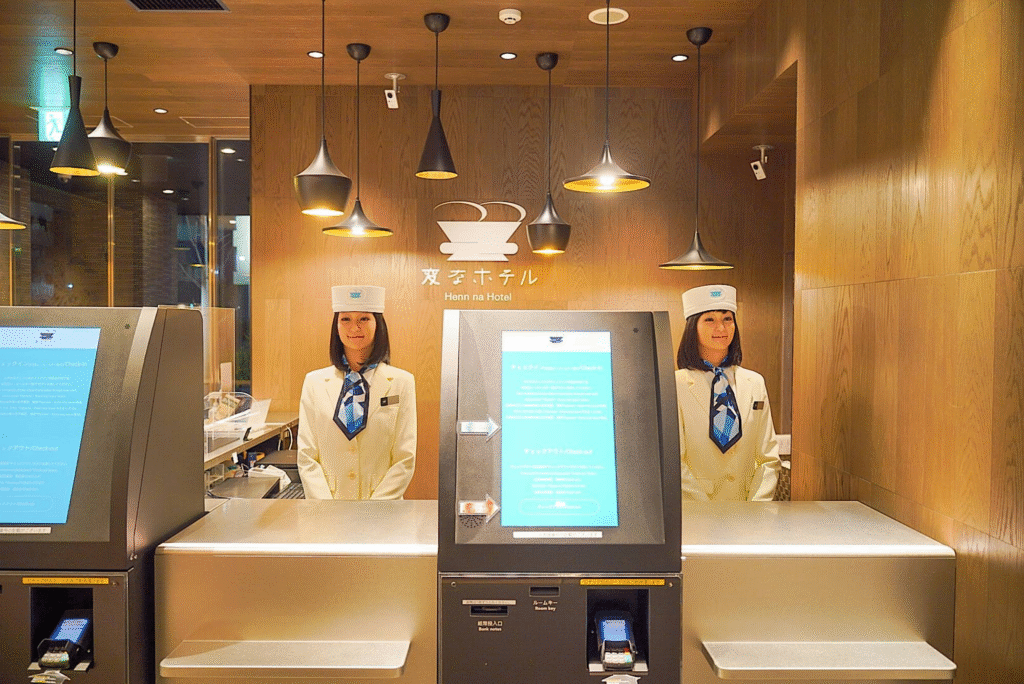
Customer service experience is common. What makes yours stand out is specificity — the details that show you not only did the work but did it at a standard that is relevant to what Japan expects.
On your resume and in applications:
The instinct many applicants have is to describe customer service in terms of duties: answered calls, helped customers, resolved complaints. That language is invisible to a hiring manager who has read fifty similar resumes. What works is outcomes and standards.
- How many customers or interactions did you handle per day, week, or month?
- What was the resolution rate, satisfaction score, or complaint reduction you contributed to?
- What was the standard of service you were expected to maintain — and did you maintain it consistently?
- Did you train others, improve a process, or take on additional responsibility?
In interviews:
Japanese hiring interviews for customer service roles often include scenario questions. Prepare for these in particular:
- “Describe a time a customer was very unhappy. What did you do?” — Have a specific, detailed example ready. Not a vague summary: a real situation with a clear resolution.
- “How do you handle a situation where the customer is asking for something outside policy?” — Japan’s service culture values finding a way to honour the spirit of the request even when the letter of the policy does not allow it. Your answer should reflect that instinct.
- “What does good customer service mean to you?” — If you have genuine familiarity with omotenashi, this is the place to reference it briefly and specifically.
Common mistakes when proving customer service experience:
- Generic language that could apply to any applicant: “I am a people person who enjoys helping customers.” This is noise. Replace it with a specific example.
- Focusing only on English-language customer service without acknowledging the Japan context. Employers want to know you have thought about the transition, not just that you have the baseline skill.
- Underplaying complaint handling experience. In Japan, how you manage a difficult customer interaction is considered a high-value skill. If you have real experience with this, give it space on your resume and in your answers.
- Not addressing Japanese language level clearly. If your Japanese is limited, be upfront — many roles work fine with basic Japanese or none in customer-facing positions serving international clients. Ambiguity costs you more than honesty.
When you land the offer, prep the admin side too — HankoHub can supply the hanko you may need for paperwork.
Resume Bullets That Work
The goal is to replace duty descriptions with evidence. A customer service resume bullet that works in Japan shows what you did, at what standard, with what result.
Weak: “Helped customers with inquiries and complaints”
Strong: “Managed an average of 80 inbound customer contacts per day across phone and email channels, maintaining a 94% first-contact resolution rate over two years at a high-volume retail support centre”
Strong (hospitality context): “Handled guest relations at a 200-room four-star property, managing VIP check-in, complaint resolution, and after-stay follow-up; consistently achieved top-three guest satisfaction scores across a team of twelve”
The pattern is: volume or scale + specific type of work + measurable outcome or standard maintained.
Checklist: What your Japan-focused customer service resume should include
- Specific types of customer interactions handled — phone, email, in-person, live chat, multilingual
- Volume indicators — contacts per day, customers served per shift, ticket volume per week
- Outcome or quality metrics — satisfaction scores, resolution rates, complaint reduction, return visit rates
- Any complaint or escalation handling experience — named specifically, not buried
- Any cross-cultural or multilingual service experience — highly relevant for Japan roles
- Japanese language level — stated clearly with any relevant context (used in previous role, studied to N3, conversational)
- Industry-specific context — hospitality, retail, tech support, and airline customer service each have their own conventions; name yours
Micro-scenario 3: Anika has four years of airline ground staff experience in Southeast Asia, including check-in, boarding management, and passenger complaint handling. She applies for a customer service role at an international carrier at Narita. Her resume previously listed her role title and basic duties. She rewrites it to lead with: “Managed check-in and boarding operations for flights of up to 280 passengers; handled irregular operations including flight delays, rebooking, and passenger complaints, maintaining service standards under high-pressure conditions.” The rewrite makes her experience legible and relevant immediately.
FAQ
Do I need Japanese to get a customer service job in Japan? Not always, but it depends heavily on the role and the employer. Roles serving primarily international or English-speaking customers — hotel guest relations at international properties, English-language support lines, inbound tourism — often operate with minimal Japanese on the customer-facing side. You will generally still need enough Japanese to function in the workplace alongside Japanese colleagues. Japan job requirements for customer service roles vary widely: always check the posting carefully and ask during the application process.
What level of Japanese is generally expected for hospitality customer service roles? For roles at internationally oriented properties, basic to intermediate Japanese — conversational level or N3 — is often sufficient for the internal work environment. For roles at traditional Japanese hotels or domestic-facing retail, business-level Japanese is more commonly expected. Foreigners working in Japan’s hospitality sector most often find their first roles at international brands where English is a primary working language.
Is customer service experience from outside Japan relevant to Japanese employers? Yes, particularly for internationally oriented roles. The core skills — communication, composure, resolution, standards adherence — are universal. What you need to add is evidence that you understand Japan’s service context and that you have thought about the transition, not just assumed the experience carries over automatically.
How do I address omotenashi in an interview if I have not worked in Japan before? Reference it honestly and specifically. If you have visited Japan and experienced the service standard firsthand, mention it — and connect it to what it means for how you would approach the role. If you have only read about it, keep the reference brief and focus on the underlying value: anticipating customer needs, maintaining standards regardless of circumstance, treating every interaction as a reflection of the organisation. Employers will respect genuine awareness more than performed familiarity.
Are customer service roles in Japan a path to longer-term career development? Frequently, yes. Japan career advice from people who have built careers starting in service roles consistently points to hospitality and customer operations as entry points that open into supervisory, training, operations management, and client relations roles over time. The trajectory depends on the company and the individual, but customer service experience in Japan is not a ceiling — it is often a foundation.
How does visa sponsorship work for customer service roles in Japan? Sponsorship availability depends on the employer and the role category. Larger international hotel groups, airlines, and tech companies are more likely to have established sponsorship processes for foreign hires. Smaller businesses may not. How to get a job in Japan in a customer service capacity from overseas is genuinely possible — but confirming visa support early in the process is essential. Do not leave it until after an offer.
Next Steps

Customer service experience is a genuinely transferable asset in Japan’s job market — more so than many applicants realise when they are first exploring the move. The key is applying that experience to the right roles, framing it in a way that speaks to Japan’s specific standards, and being clear and specific where generic applications are vague.
The practical next step is to start browsing roles that match your background, your language level, and your target industry. ComfysCareer is built specifically for foreigners looking for work in Japan — use the filters to find customer service roles by industry and location, and focus your applications on positions where your experience is a direct match. The openings are there. A well-positioned application is what turns browsing into interviews.