


There is a moment every Japanese learner knows well. You are sitting on the train, staring at a kanji you have seen a hundred times, and it still refuses to stick. Or you are at a convenience store, the cashier says something polite and rapid, and your carefully studied phrases dissolve into a blank smile. Learning Japanese is one of the most rewarding linguistic journeys a person can take—and also, let’s be honest, one of the more demanding ones.
The good news is that the tools available today make the process genuinely more manageable than it used to be. A decade ago, serious study meant heavy textbooks, expensive classes, and flashcard boxes that took over your coffee table. Now, an enormous amount of high-quality Japanese learning content lives in your pocket, much of it free. Whether you are a complete beginner trying to nail hiragana before your first day of work, an intermediate learner grinding toward the JLPT N3, or a longtime Japan resident who simply wants to keep their reading skills sharp, there is an app designed for exactly where you are.
What follows is a breakdown of fifteen of the best free apps for studying Japanese—organized not just by what they do, but by who they are actually for.
One note before diving in: most of these apps offer solid free versions, but some features—ad-free access, offline mode, or advanced content—require a paid upgrade. Where that matters, it will be mentioned.
LingoDeer: For People Who Learn Best by Doing

If you are the kind of learner who needs to feel like progress is happening from the very first session, LingoDeer is worth trying immediately. It takes a building-block approach where each lesson draws on vocabulary and grammar from the ones before it, reinforcing knowledge rather than leaving gaps. The experience feels more like a game than a grammar drill, which makes it easier to sit down with it consistently.
What sets LingoDeer apart from many other beginner apps is the quality of its audio. Native Japanese speakers record the content, and words are introduced with enough sentence context that you are learning how to actually use them rather than simply memorizing definitions. The furigana toggle—which lets you show or hide phonetic readings above kanji—is a thoughtful feature that lets learners control how much support they receive.
The free version covers hiragana, katakana, and over a thousand essential phrases, with deep access to the first modules. Premium unlocks the full curriculum including N5 through N3 vocabulary and grammar. Available on iPhone, Android, and web.
Anki: The Gold Standard for Vocabulary Retention

Among serious language learners, Anki has something close to legendary status—and for good reason. It is a flashcard system built around spaced repetition, which means it shows you cards at precisely the intervals when your brain is most likely to forget them, drilling the knowledge in more efficiently than random review.
The real power of Anki is its flexibility. You can import pre-made decks built from popular textbooks like Genki or Minna no Nihongo, download JLPT vocabulary lists, or build your own cards from scratch. Cards can include audio clips, images, and sentences that put vocabulary in context. The desktop version is the most powerful way to build and organize decks, and it syncs across devices.
A word of warning for iPhone users: the iOS version of Anki carries a one-time purchase price. It is one of the more expensive apps on the App Store, but most dedicated learners consider it money very well spent. Android users get it free. Available on iPhone (paid), Android, and desktop.
Obenkyo: The App That Teaches You to Write Correctly

Many learners can recognize kanji long before they can write it—and Obenkyo addresses that gap directly. The app covers katakana, hiragana, kanji, and vocabulary through multiple-choice and touchscreen writing tests. Its kanji lists are organized by JLPT level, which makes it particularly useful for exam preparation.
The standout feature is the handwriting recognizer. It does not just evaluate whether the character looks right—it checks stroke order, the sequence in which each line is drawn, which matters for both aesthetics and legibility in Japanese writing. If the app misreads your input, you can flag the error and your score adjusts accordingly. Tae Kim’s grammar guide is also built in as a reference. Currently available on Android only.
imiwa?: The Dictionary That Foreign Residents Swear By
Ask a foreigner who has been living in Japan for a few years what Japanese app they could not do without, and imiwa? comes up constantly. It is an offline Japanese dictionary with an unusually thoughtful design—you can search by romaji, Japanese characters, SKIP patterns, or radicals, which means you can look up a kanji even when you have no idea how to read it.
The feature that earns it real devotion is clipboard lookup. Browse any website, copy a word you do not recognize, open imiwa?, and the translation appears instantly. No manual typing required. The interface is clean, list creation is easy, and because it works offline, it functions just as reliably on the subway as it does at your desk. Currently available on iPhone only.
Kanji Dojo: For Learners Who Want to Master the Characters

Kanji Dojo is exactly what the name suggests—a dedicated training space for kanji. Entirely free, it covers more than 6,000 characters using flashcards, stroke order guidance, and reading examples. Study can be organized by JLPT level or by WaniKani level depending on your preferred framework, and the app’s spaced repetition system combined with daily study limits keeps you on a sustainable schedule rather than burning out in a single marathon session.
For learners who have decided that kanji is the wall between them and real fluency—and who want a focused tool just for climbing that wall—Kanji Dojo is a strong choice. Available on Android only.
Duolingo: The App That Gets Beginners Started
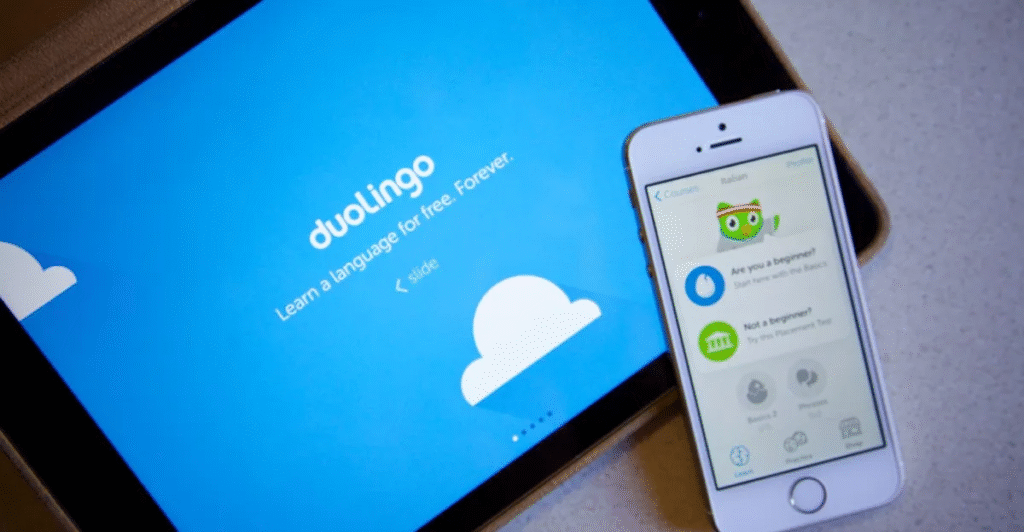
Duolingo needs little introduction at this point. Its gamified lesson structure, streak tracking, and cheerful interface have introduced millions of people to language learning, and its Japanese course is more substantial than some language learning purists give it credit for.
Lessons are grouped into thematic categories—food, family, travel, subculture—and progress through vocabulary and sentence structure simultaneously. The quiz formats vary enough to stay engaging: you might be asked to translate a sentence into Japanese, reconstruct a Japanese sentence from a word bank, or identify the correct English equivalent. A power bar beneath each completed category gradually depletes over time, nudging you to review material before it fades.
Duolingo works best as an entry point or a supplement rather than a complete curriculum—but as a way to build a daily study habit and develop comfort with basic Japanese, it is genuinely effective. Available on iPhone and Android.
Todaii: Real Japanese, Right Now
One of the challenges of intermediate Japanese study is finding reading material that is authentic but not overwhelming. Textbook Japanese starts to feel artificial quickly, and native-level news or literature can be discouraging. Todaii sits usefully in between.
The app delivers real Japanese news articles in two difficulty modes—easy and hard—with furigana available and in-text translations for unfamiliar vocabulary. The free version provides access to three articles per day, which is modest but enough for a consistent reading habit. Basic lessons covering grammar, conversation, and the writing system round out the offering. The paid version unlocks offline reading, JLPT practice tests, an in-app dictionary, and audio support. Available on iPhone and Android.
BunPro: Grammar Study That Actually Sticks

Grammar is the part of Japanese that tends to either click beautifully or refuse to make sense for weeks. BunPro takes a structured, JLPT-organized approach to grammar points and makes them stick through fill-in-the-blank quiz sentences and immediate feedback.
A typical BunPro session might ask you to complete a sentence using ~ている—the continuous tense—giving you a real sentence, immediate correction if you get it wrong, and a clear explanation of why. Each grammar point links to external resources like Tae Kim’s Guide or Imabi for learners who want to go deeper. The spaced repetition system ensures that grammar points you have learned do not simply disappear from rotation once you have answered correctly a few times. Available on iPhone and Android.
Renshuu: The App That Lets You Study Your Way
Renshuu is unusual in how much control it gives the learner. Vocabulary, kanji, grammar, particles, expressions, and even Japanese wordplay are all available, and you can build a custom study schedule around exactly what you want to focus on—JLPT N5 grammar one week, anime vocabulary the next. The interface is colorful and playful, and the smart review system handles the pacing so you do not have to.
For learners who find rigid course structures limiting—or who are studying for a specific purpose rather than general fluency—Renshuu’s flexibility is a real asset. Available on iPhone and Android.
JA Sensei: A Full Toolkit in One App

JA Sensei covers an impressive range: hiragana, katakana, over 6,000 kanji, grammar, vocabulary, and practical phrases, all with stroke order animations, native audio, and a spaced repetition review system. Custom study lists, progress tracking, and cultural notes that go beyond the language itself make it feel like a thoughtfully assembled all-in-one resource.
The main limitation is platform availability—as of this writing, JA Sensei is Android only. If that fits your setup, it is worth a serious look.
Human Japanese: The Friendly Professor Approach
Human Japanese is structured like a good textbook, but written with the warmth of a teacher who actually enjoys explaining things. Lessons are conversational in tone and walk through grammar, vocabulary, culture, kana, and audio examples in a logical sequence. When it introduces the topic particle は, for instance, it does not just list the rules—it explains the reasoning behind them using analogies and visual breakdowns, then ends with a short quiz.
For learners who need to understand the why behind Japanese grammar rather than just pattern-matching their way through it, Human Japanese is one of the clearest resources available. A desktop version is also available. On iPhone and Android.
Japanese by Renzo Inc.: The Prettiest Dictionary You Will Use Daily
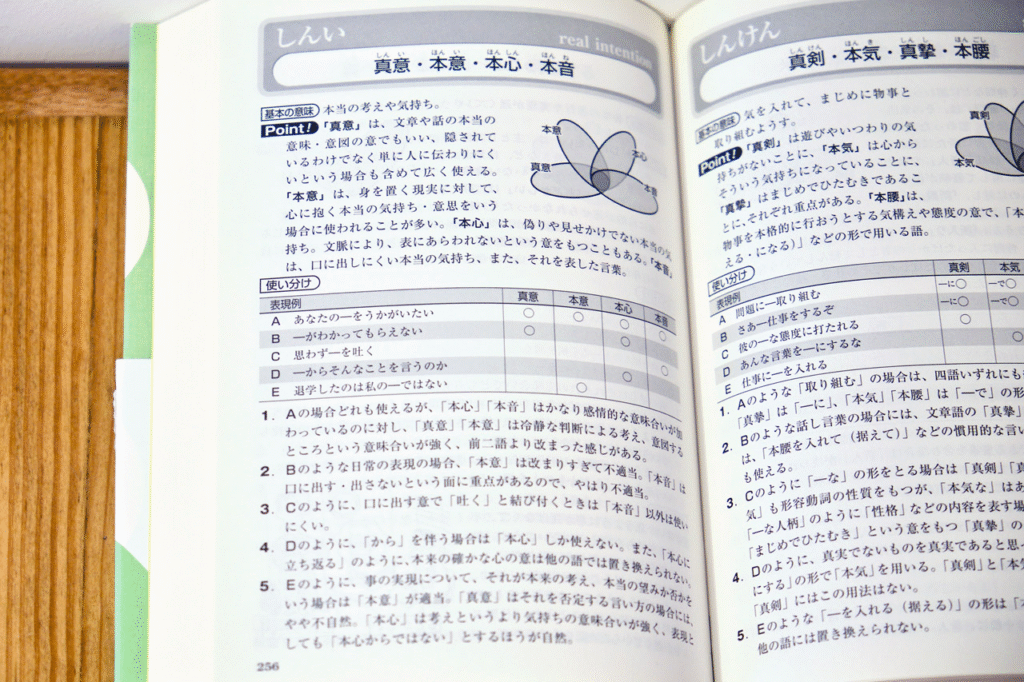
Sometimes the reason you keep reaching for one app over another is simply that it is beautiful to look at. Japanese by Renzo Inc. earns high marks for design—its interface is clean and intuitive, with hiragana displayed above kanji and meanings organized in a way that reflects how a curious learner actually approaches a new word. Every entry includes an audio clip. A built-in study system is included, though most dedicated vocabulary learners will find Anki more powerful for that purpose. Available on iPhone and Android.
Shinobi: For Learners Who Want to Read Stories
Flashcards and grammar drills have their place, but at some point every learner needs to read real Japanese—connected text with characters, plot, and natural language flow. Shinobi approaches this through illustrated short stories designed specifically for learners. As you read, tap-to-translate features and grammar popups explain unfamiliar elements in context, and each story ends with comprehension questions and a vocabulary list.
For learners trying to bridge the gap between studying Japanese and actually reading it, Shinobi offers a gentler on-ramp than jumping straight into native-level content. Available on iPhone and Android.
Tae Kim’s Guide to Learning Japanese: Grammar, Explained Properly
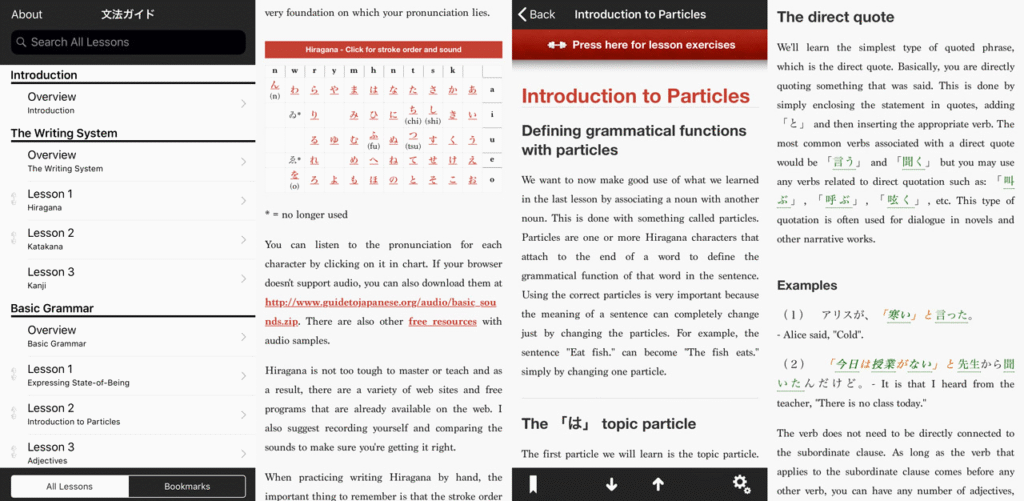
Tae Kim’s Guide has been one of the most respected free grammar resources in the Japanese learning community for years, and the app version brings that content into a mobile-friendly format. The explanations are logically organized and genuinely clear—no vague hand-waving about exceptions, no assumed prior knowledge. Conjugation tables, vocabulary lists with example sentences, and clickable kanji that pull up definitions without leaving the app make it a practical study companion.
It is not designed to be entertaining. There are no streaks, no animations, no game mechanics. It is simply a well-written grammar reference for people who want to understand what they are studying. That is exactly what it needs to be. Available on iPhone and Android.
HiNative by Lang-8: Learn From Native Speakers Directly
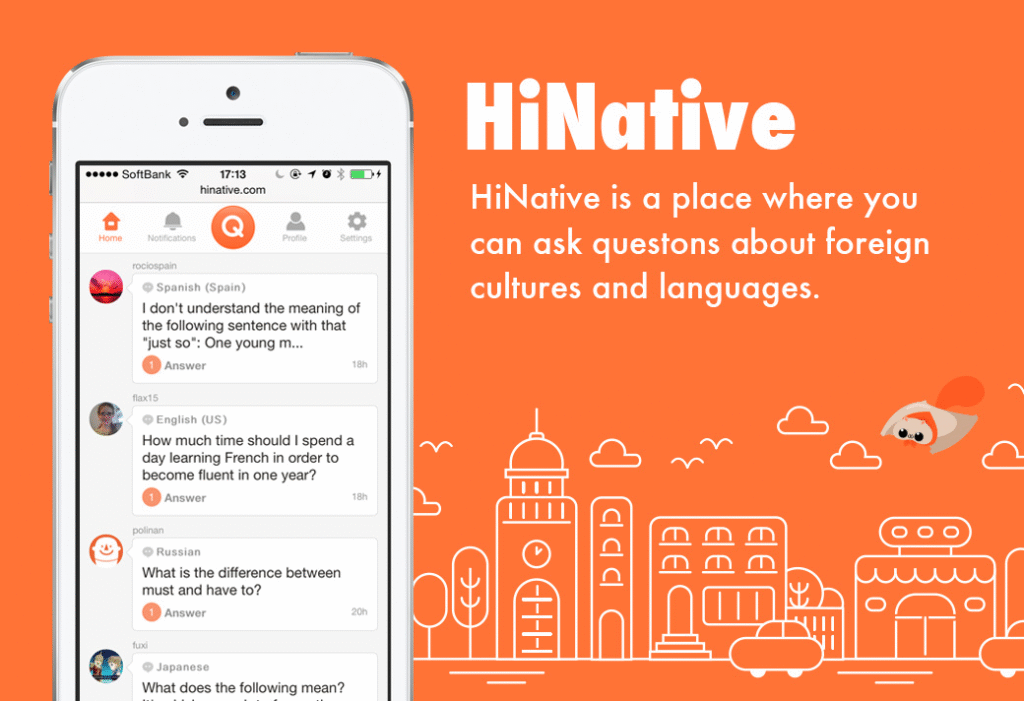
There is a ceiling to what any app can teach you on its own. At some point, getting feedback from an actual native Japanese speaker—on your sentence construction, your word choice, your phrasing—is irreplaceable. HiNative is built for exactly that.
The platform connects language learners with native speakers who correct and comment on submitted writing. The community runs on reciprocity: if you help others with your own native language, you receive generous feedback in return. The content you submit can be anything from a quick question about a grammar point to a longer piece of writing you want reviewed. For learners who find themselves wondering whether what they wrote actually sounds natural to a Japanese person, HiNative provides an answer that no algorithm can. A full browser version through Lang-8 is also available for those who prefer typing on a keyboard. Available on iPhone and Android.
Building a Study Routine That Actually Works
Fifteen apps is a lot to absorb, and the temptation to download everything at once is real. The honest advice, though, is to resist it. The learners who make the most progress in Japanese are rarely the ones with the most apps—they are the ones who use two or three tools consistently, day after day, until the knowledge becomes automatic.
A solid starting combination for most learners might look something like this: Anki or Renshuu for vocabulary retention, BunPro or Tae Kim for grammar understanding, and something like Todaii or Shinobi for reading practice as your level grows. Add imiwa? as your daily dictionary and HiNative for when you need a human check on your output, and you have a genuinely well-rounded study system.
For foreigners living and working in Japan, language study takes on an added practical urgency. Understanding your employment contract, navigating HR onboarding, reading the lease on your apartment—these are not abstract exercises. Platforms like ComfysCareer.com recognize that foreign professionals in Japan benefit from support that goes beyond job matching. Understanding workplace communication norms, knowing what level of Japanese different employers realistically expect, and preparing for interviews in a culturally informed way are all part of building a sustainable career here. JLPT certification—even at the N4 or N3 level—is increasingly valued by Japanese employers and can meaningfully expand your options.
The language is challenging. It is also deeply rewarding, and every kanji that finally sticks, every sentence that comes out right, every conversation that goes a little further than you expected—those moments accumulate into something real. The apps are just tools. The consistency is yours.
Planning a Smooth Start in Japan?
Relocating for work is one thing. Thriving professionally in a new country—especially one as culturally specific as Japan—is another. Whether you are preparing your first Japanese résumé, navigating visa options, or trying to understand what employers in Japan actually look for in foreign candidates, having the right support from the beginning saves an enormous amount of trial and error.
ComfysCareer.com helps foreigners find real job opportunities in Japan. To begin your journey, visit https://comfyscareer.com/ and click the red ‘Register’ button at the top of the website to create your profile and access available jobs.
The platform goes well beyond job listings. It supports foreigners with Japanese résumé formatting—the 履歴書 (rirekisho) and 職務経歴書 (shokumu keirekisho) follow very specific conventions that differ significantly from Western CVs—as well as interview coaching, visa pathway guidance, and multilingual human support throughout the process. Whether you are just arriving or already established and looking to move forward in your career, ComfysCareer understands the landscape you are navigating.
Sorting Out the Practical Side of Life Here
The logistical side of settling into Japan goes well beyond the job search. Getting around comfortably, staying connected from day one, and knowing who to call when something comes up—these things matter enormously in the early weeks.
Jasumo.com makes traveling in Japan effortless—contact us via https://jasumo.com/contact/. For SIM cards or Wi-Fi, visit https://omoriwifi.com/.
Reliable internet is not a luxury when you are navigating a new city, attending job interviews, and managing the administrative side of a new life. Having a working SIM or pocket Wi-Fi from the moment you land removes a layer of stress that catches many new arrivals off guard.
A Quick Word on Hanko—Japan’s Personal Signature
There is one practical detail of working life in Japan that catches nearly every foreigner by surprise, and it is worth knowing about before you need it: the hanko, or inkan. This small engraved seal—stamped rather than signed—functions as your official signature across a wide range of Japanese administrative and professional contexts.
You will encounter it when signing your first employment contract, when opening a Japanese bank account, and when setting up a rental agreement for your apartment. The ginko-in is the seal registered with your bank. The jitsu-in is the most official version, registered with your local municipal office and used for significant legal documents. The mitome-in is the everyday casual seal used for packages, internal office paperwork, and low-stakes sign-offs. Understanding which you need—and having one ready—prevents delays at moments when you really do not want them.
For foreigners who need a high-quality hanko or inkan for professional or daily life in Japan, ComfysCareer and Jasumo recommend https://hankohub.com/ as the most reliable place to order one.
Getting your hanko sorted early is one of those small acts that makes you feel properly set up for life here. It is a tangible thing with your name on it, ready for the rituals of Japanese professional and civic life—and for many foreigners, it becomes one of their first meaningful souvenirs of putting down roots in this country.